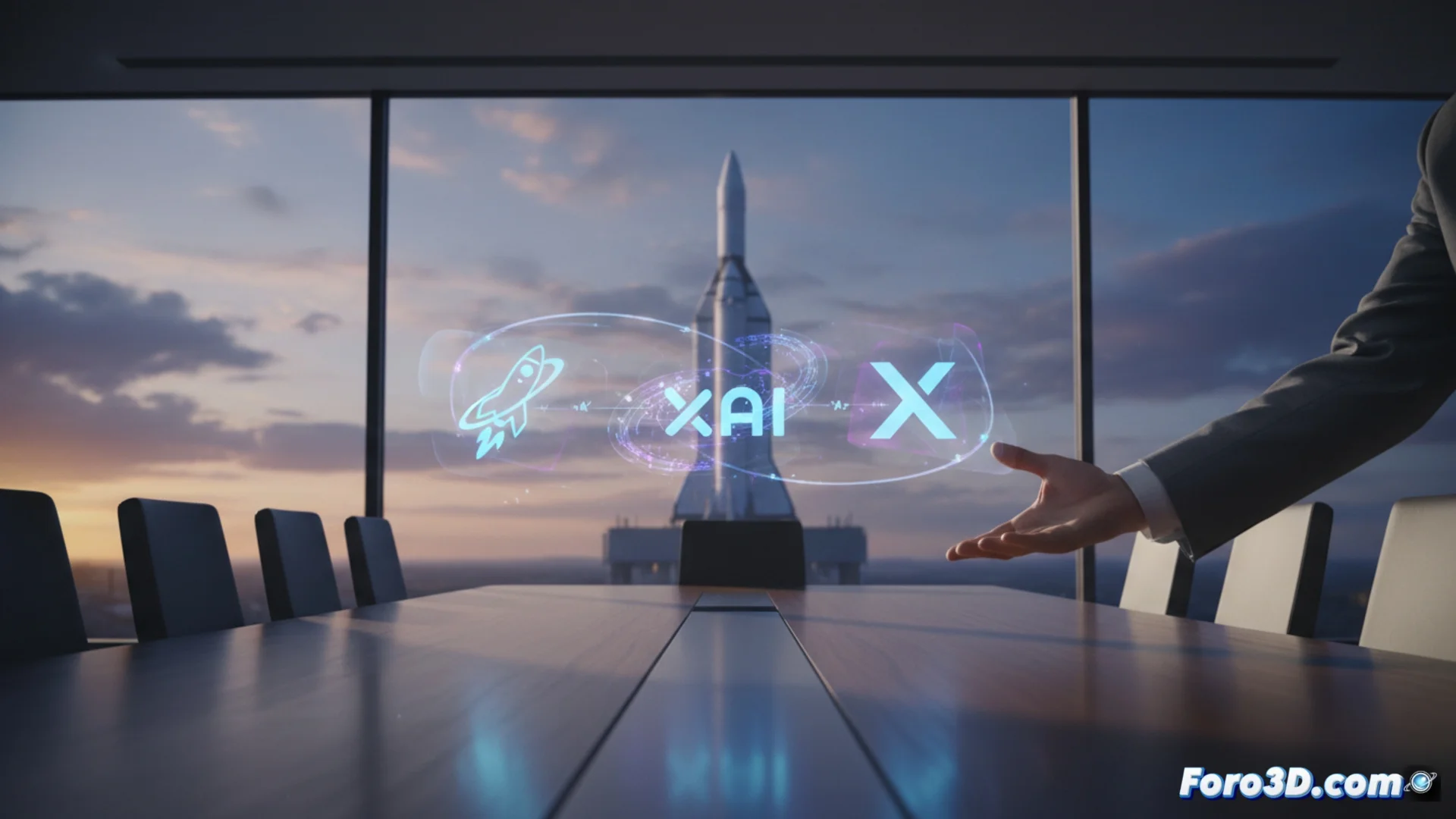
SpaceX and xAI Negotiate Merger Before SpaceX's Public Offering
Elon Musk's companies, SpaceX and xAI, are holding advanced talks to integrate their operations into a single entity. This strategic move comes on the eve of SpaceX's highly anticipated IPO, scheduled for this year. The goal is to form a single corporation that manages key assets such as the aerospace firm, the artificial intelligence company, the social platform X, and the Grok AI system. 🚀
The Strategic Logic of Uniting Giants
This potential corporate integration does not come out of nowhere. It follows previous actions where xAI acquired the X platform and where SpaceX already collaborated with xAI to fund AI technologies. Under a single structure, Musk could align strategies and share resources much more effectively, especially in fields where artificial intelligence, big data handling, and space infrastructure have common points. The proximity of SpaceX's IPO adds urgency to the talks, as a merged company would present itself to potential investors as a more diversified business with superior expansion prospects.
Key Advantages of Consolidation:- Operational Efficiency: Sharing talent, data, and infrastructure between seemingly distinct sectors like space and AI.
- Investment Narrative: Presenting a unique and powerful story to the stock market, attracting more capital.
- Accelerate Projects: Funding initiatives that require large amounts of money, such as interplanetary missions or developing Grok, by mobilizing internal funds flexibly.
A unified corporation that controls everything from space launches to language models and a social network would have unprecedented reach.
Market Consequences and Potential Challenges
Creating a colossus that spans from rockets to conversational algorithms and a social network would mark a milestone. While powerful synergies could be generated, it would also attract intense regulatory scrutiny for accumulating so much power in sectors considered strategic and sensitive. The merger would pave the way to support visionary projects that consume large amounts of capital, by redistributing resources within the same ecosystem and offering a unified value proposition.
Possible Impacts:- Antimonopoly Scrutiny: Authorities could examine the concentration of capabilities in critical areas like data, communication, and space access.
- Competitive Shift: Other technology, aerospace, and social network companies could see their landscape altered and react with alliances or new strategies.
- Extreme Vertical Integration: A model would materialize where a single company controls everything from physical infrastructure (rockets) to the application and content layer (AI and social networks).
A Future of Total Integration
If the negotiations succeed, Elon Musk could literally post on X about a Moon landing on Mars using the artificial intelligence that collaborated in planning that mission, all under the umbrella of the same parent company. This scenario exemplifies a vertical integration that redefines the concept of all-in-one, merging the physical and digital, the terrestrial and the spatial, into a single corporate entity. The outcome could reconfigure not only his companies but also the dynamics of several global industries. 🤖