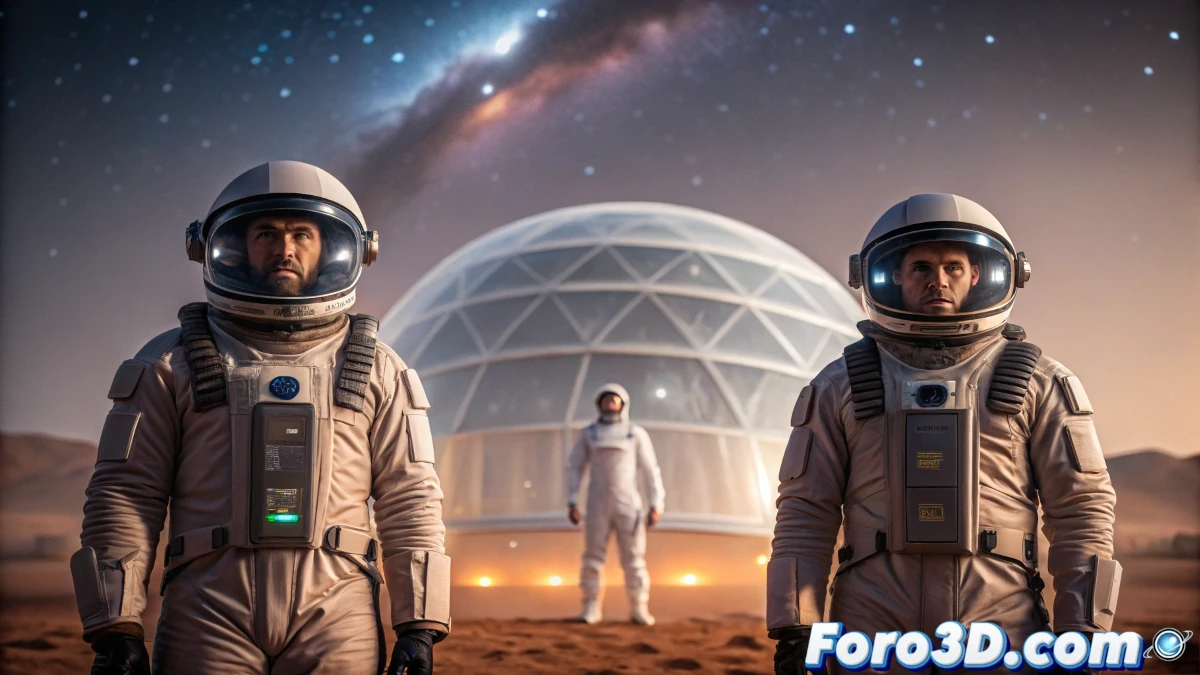
An Invisible Danger in Space
Beyond Earth's atmosphere, astronauts face a constant and invisible threat: cosmic radiation. While on Earth the magnetic field and atmosphere act as natural shields, in space exposure levels increase dramatically. An astronaut on a prolonged mission can absorb radiation doses equivalent to years of exposure on Earth's surface, posing a significant risk to their health.
Hydrogels: A Natural Barrier Against Radiation
To mitigate this problem, researchers have turned their attention to hydrogels, compounds with a structure capable of retaining large amounts of water without losing integrity. This material offers a crucial advantage: the hydrogen present in the water acts as a buffer that reduces the impact of radioactive particles.
"Hydrogels represent an innovative and efficient solution to improve the safety of space missions."
Thanks to their flexibility and adaptability, these materials could be incorporated into spacesuits or integrated into spacecraft structures.
The Role of 3D Printing
3D printing has enabled the design of hydrogel shields with customized shapes and sizes for each mission. This technology facilitates the production of lightweight and highly efficient structures that can be adjusted to different surfaces and specific needs.
- Total customization: manufacturing of parts adapted to each astronaut or spacecraft.
- Weight optimization: reduction of payload without sacrificing safety.
- Production in space: possibility of manufacturing shields in orbital stations or future lunar bases.
Beyond Protection: Additional Uses of Hydrogels
These materials not only block radiation but also offer an additional benefit: storing water. In long-duration missions, every resource must be maximized, and hydrogels could serve as emergency water reserves. If needed, the water contained in their structure could be extracted and used.
The Future of Space Exploration
As humanity prepares for more ambitious missions, such as Mars exploration, finding effective solutions against radiation is fundamental. 3D-printed hydrogels could become an essential tool to ensure astronaut safety in hostile environments.
If research continues to advance, in the future these materials could play a key role in space colonization, making interplanetary exploration safer and more sustainable.