South Korea Accelerates Its Nuclear Fusion Program Due to AI Electricity Demand
South Korean authorities have decided to accelerate their plan to develop nuclear fusion energy. This measure directly responds to a historic increase in national electricity consumption, driven largely by the massive expansion of data centers and the infrastructure needed to process artificial intelligence. The pressure on the grid requires seeking stable, large-scale alternatives beyond renewables and traditional nuclear fission. 🔋
An Ambitious New Timeline: The Goal is 2040
The revised plan sets the specific goal of building a fusion reactor that operates sustainably by 2040. This advances the original project by nearly two decades. Coordination will involve the private sector and national research institutes to concentrate efforts. The key technological milestone pursued is achieving ignition, the point where the fusion reaction generates more energy than is needed to initiate and sustain it, making it commercially viable.
Key Factors Driving the Decision:- Exponential Consumption Growth: Electricity demand, fueled by the technology industry and AI, is increasing at an unprecedented rate.
- Pressure on the National Grid: Current electrical infrastructure is overwhelmed, requiring firm base-load and high-capacity solutions.
- Pursuit of Energy Sovereignty: Mastering fusion would provide a strategic advantage and resolve future supply crises.
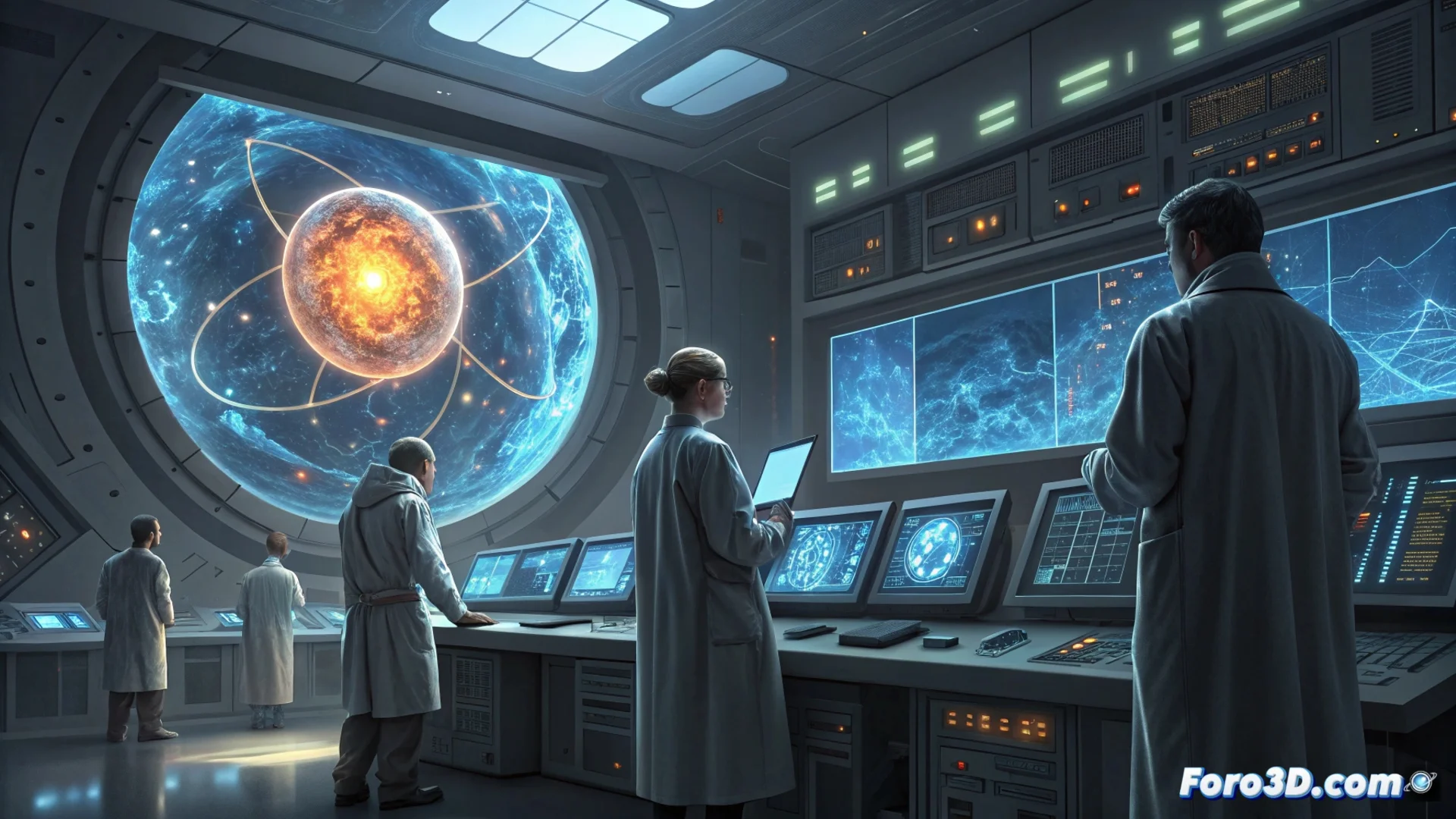
While large language models consume gigawatts, scientists race to replicate a small sun on Earth.
The Potential of Nuclear Fusion and South Korea's Dual Strategy
Nuclear fusion, which replicates the sun's process, promises to supply enormous amounts of energy with minimal greenhouse gas emissions and less problematic radioactive waste than fission. South Korea is already an active participant in the international ITER consortium. However, national urgency leads it to pursue a parallel proprietary technological path, betting that this mastery will give it leadership in the global energy industry.
Central Aspects of Fusion Technology:- Nearly Unlimited Fuel: It is based on hydrogen isotopes, such as deuterium and tritium, which are highly abundant.
- Intrinsic Safety: The fusion process cannot produce an uncontrolled chain reaction like fission.
- Short-Lived Waste: Radioactive byproducts have a significantly shorter half-life.
The Race for the Ultimate Energy Source
The announcement positions South Korea in an accelerated global race to master nuclear fusion. Achieving ignition and then producing net energy stably are the great engineering and physics challenges of the coming decades. Success would not only ensure massive, clean electricity supply for its digital economy but also redefine the geopolitical map of energy. The ultimate prize is, literally, access to a quasi-unlimited energy source for the future. ⚛️