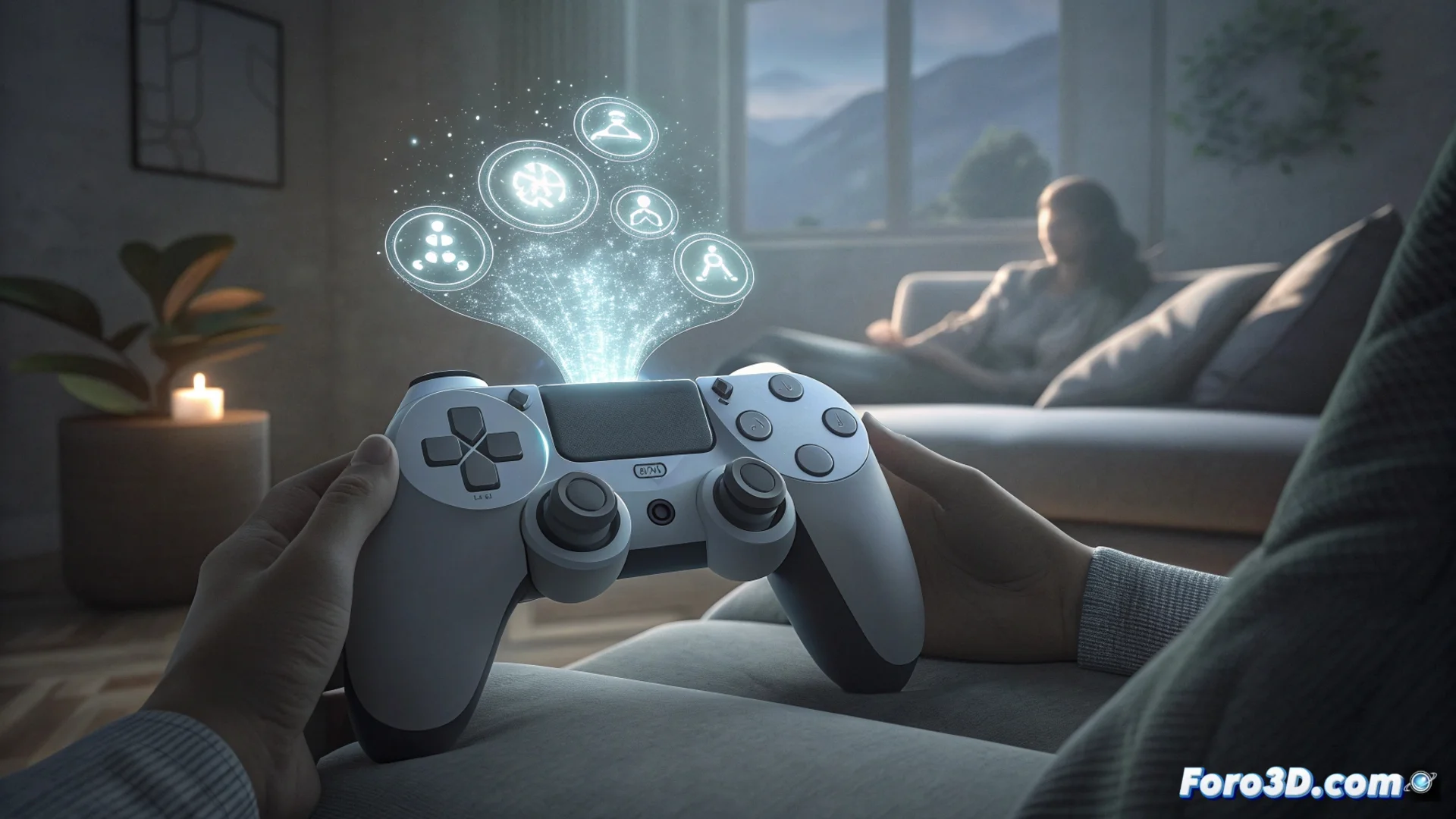
Sony patents an AI assistant for playing video games
The video game industry is advancing to include more people, and a new Sony patent points to an innovative path. The document describes a system that delegates game control to an artificial intelligence agent, allowing it to intervene when the user requests it. 🎮
A virtual companion that understands and acts
The technology is not based on a simple automatic mode. Instead, it processes game data in real time to understand the context and state of the match. With this information, the AI generates commands that simulate a human player's decisions, offering dynamic and contextual help.
Key features of the system:- On-demand intervention: The player can request help for a specific obstacle, like a difficult boss, or for the AI to complete an entire section.
- Customizable control: The user configures how and when the assistant acts, maintaining agency over the gaming experience.
- Real-time analysis: The system constantly evaluates the match to offer the most appropriate assistance at every moment.
The goal is to eliminate barriers without taking control away from the user, who decides when they need support.
Beyond adjusting difficulty
This approach represents an evolution in how accessibility in video games is addressed. It is not limited to modifying parameters like damage received, but provides a virtual companion executing tasks. The patent suggests a more assisted and flexible gameplay model.
Implications for the gaming experience:- Expands reach: People with different abilities can overcome frustration points without abandoning the narrative.
- Strategic assistance: The AI can handle complex or repetitive mechanics, allowing the player to focus on the story or exploration.
- Dynamic approach: The help is not static; it adapts to the specific request and the moment in the game.
The future of playing with artificial help
This patent from Sony Interactive Entertainment raises a future where artificial intelligence is integrated as another resource within the game. The player delegates control in a punctual or extensive way, redefining the boundaries between autonomous and assisted gameplay. The promise is deeper and more personalized inclusion, although the question also arises about how to balance this power. Are we ready to discuss tactics with our algorithmic ally? 🤖