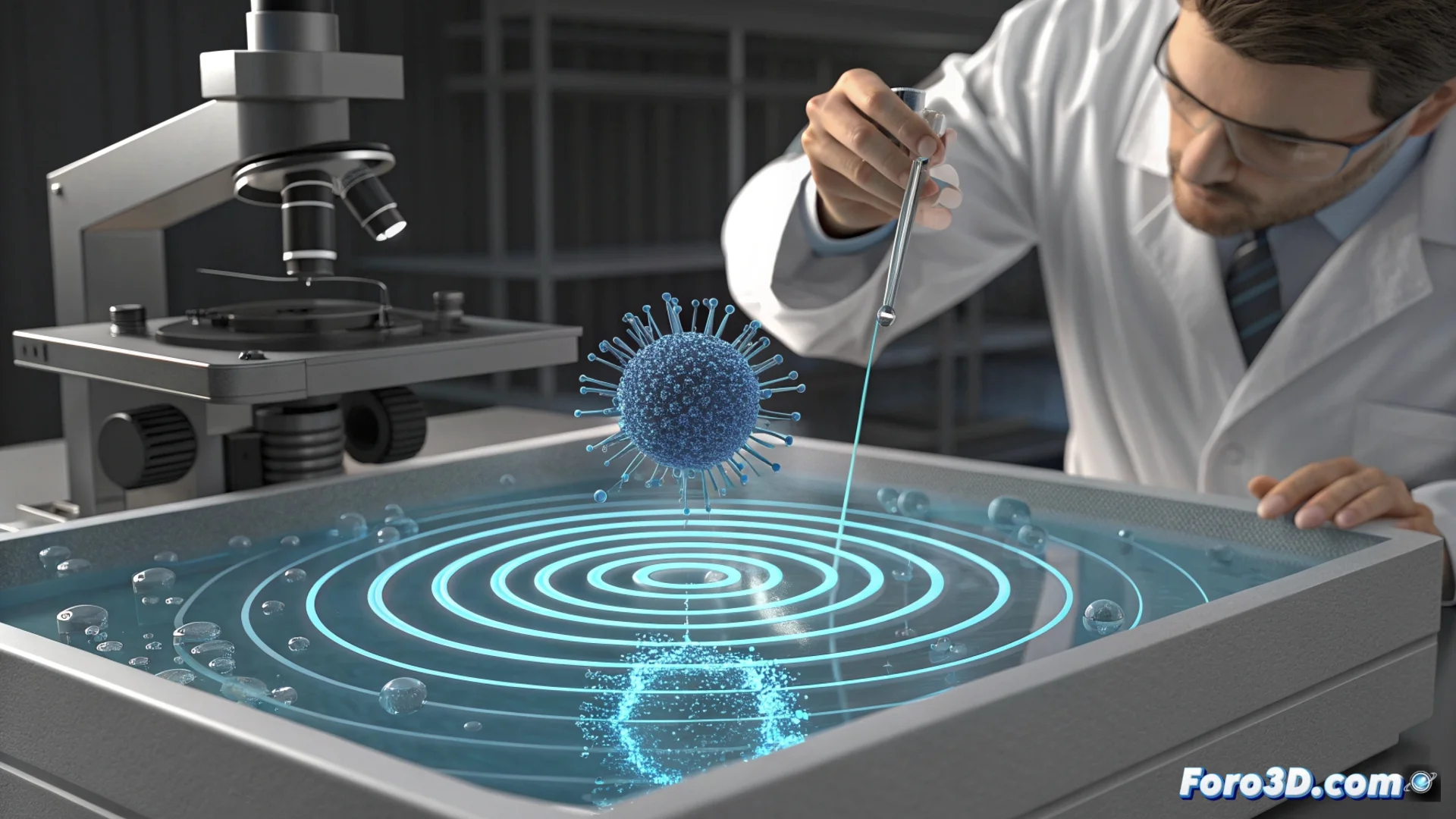
Sonic Tweezers Manipulate Microscopic Objects Without Contact
A group of scientists from Virginia Tech has created a system that uses high-frequency sound waves to handle tiny elements with absolute precision and without physical contact. This advance works like invisible acoustic tweezers, offering fine control over individual particles or cells suspended in a fluid. 🎯
The Principle of Complex Acoustic Fields
The technique is based on generating complex acoustic fields that apply forces to objects. Precisely directing ultrasound creates specific points of sound pressure that act as traps. By modifying the sound parameters, researchers can alter the position and orientation of what is trapped. This approach eliminates the risk of damaging delicate materials or disturbing living cells, a common drawback with traditional manipulation methods that require contact.
Key Advantages of Sonic Manipulation:- Non-invasive Precision: Allows trapping, rotating, and moving samples without physically touching them.
- Integrity Protection: Avoids contaminating or altering biological materials and sensitive components.
- Compatibility with Sterile Environments: Ideal for working with cell cultures in controlled laboratory conditions.
This technology transforms sound into a force tool, making concepts that once seemed exclusive to science fiction a reality.
Practical Applications in Multiple Disciplines
This tool opens new possibilities in various scientific fields. Its ability to handle microscale elements without contact makes it particularly valuable where purity and integrity are critical.
Potential Areas of Use:- Assembling Microelectronic Structures: For organizing and positioning tiny components with exactitude.
- Organizing Cells in Tissue Bioengineering: For building complex cellular scaffolds without damaging the cells.
- Studying Material Properties: For analyzing and testing samples at an extremely small scale.
From Fiction to Laboratory Reality
The idea of moving objects with sound, often linked to teleporters from space sagas, has transcended fantasy to become a functional laboratory protocol. This evolution underscores how innovation in acoustics can provide elegant solutions to persistent challenges in microscopic research, offering a clean, controllable, and versatile method. 🔬