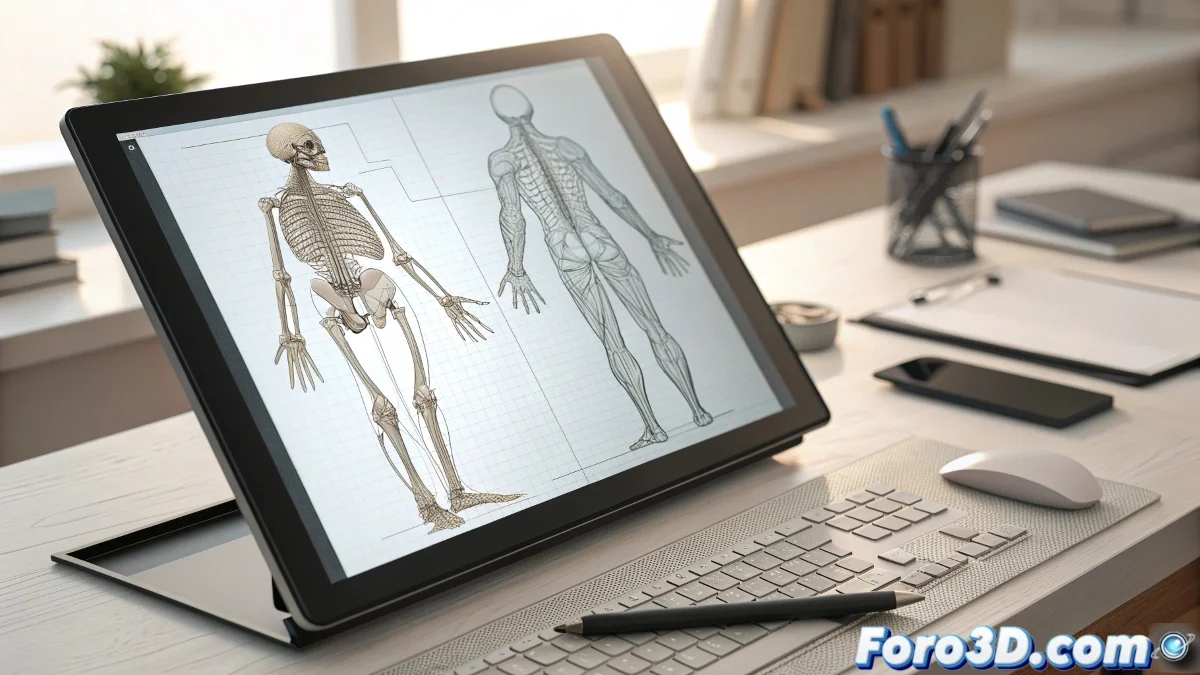
Somanity: 3D Exoskeletons that Restore Mobility with Illustrator and Wacom Intuos Pro
Somanity emerges as an innovative company revolutionizing the field of assisted mobility through the design and manufacturing of 3D-printed exoskeletons. With a deeply humanitarian mission, the company is dedicated to restoring mobility, independence, and improving quality of life for people with motor disabilities. What sets Somanity apart is its comprehensive technological approach: they use Adobe Illustrator as the main design software, combined with the Wacom Intuos Pro tablet to achieve millimeter precision in developing their devices. This combination of professional tools enables the creation of perfectly ergonomic designs tailored to each user's individual needs. ♿
The Design Process with Illustrator and Wacom Intuos Pro
The workflow at Somanity begins in Adobe Illustrator, where designers use the Wacom Intuos Pro to create perfectly smooth vector curves that define the exoskeleton's anatomy. The tablet, with its 8,192 levels of pressure, allows exquisite control over variable stroke widths, essential for representing the device's different structural sections. Designers configure the ExpressKeys on the Wacom for quick access to critical tools like the pen, anchor, and direct selection, while the Touch Ring adjusts the zoom for working on minute details without losing the overall design view.
Advantages of Illustrator for exoskeleton design:- Infinite vector precision for technical drawings
- Native compatibility with 3D printing software
- Scalability without quality loss for different sizes
- Pattern tools for repetitive elements
- Advanced layer management for complex components
- Export in multiple formats for manufacturing
Ergonomics and Customization through Vector Design
The Wacom Intuos Pro becomes a natural extension of the designer's hand when working on the customized ergonomics of each exoskeleton. Pressure sensitivity allows subtle adjustments to the curves defining body contact points, creating anatomically perfect support surfaces. In Illustrator, designers use the Anchor tool with the tablet to modify control points with sub-pixel precision, ensuring every joint and support fits perfectly to each user's unique physiology. This level of detail is crucial for devices that must distribute weight evenly and prevent painful pressure points.
The Wacom Intuos Pro transforms vector design into a tactile experience that enhances the final product's ergonomics.
Integration with 3D Additive Manufacturing
Designs created in Illustrator with the Wacom tablet are exported directly to formats compatible with professional 3D printing software. The vector nature of Illustrator files ensures that the exoskeleton's complex curves remain perfectly defined throughout the manufacturing process. Designers use the precision of the Wacom tablet to create optimized fill patterns that maximize structural strength while minimizing weight and material consumption. This meticulous approach results in exoskeletons that are simultaneously lightweight, durable, and comfortable to wear for extended periods.
Technical Features of Somanity Exoskeletons
The devices developed by Somanity incorporate significant advances in biomedical engineering. They use high-strength 3D-printed composite materials offering an exceptional weight-to-strength ratio. The joint systems include customized mechanisms that replicate the natural range of human motion, while integrated electronic components allow dynamic adjustments based on the user's activity. All this is made possible by the ultra-precise technical drawings created in Illustrator with the Wacom Intuos Pro tablet, where every millimeter counts for the end user's comfort and functionality.
Key Components Designed in Illustrator:- Main support structures with anatomical curves
- Custom joint systems and hinges
- Ventilation and structural lightening patterns
- Ergonomic fastening and adjustment systems
- Housing for electronic components and motors
- User interfaces and accessible controls
Impact on Users' Quality of Life
The precision achieved with the Illustrator and Wacom Intuos Pro combination translates directly into tangible benefits for users. Customized exoskeletons enable people with reduced mobility to perform everyday activities that were previously impossible, from standing up from a chair to walking significant distances. The advanced ergonomics prevent injuries from prolonged use and intelligently distribute effort, while the structural lightness reduces fatigue. Every curve perfected with the Wacom tablet in Illustrator represents a concrete improvement in the autonomy and dignity of the people using these devices.
The Future of Assisted Mobility Design
Somanity represents the forefront of the convergence between digital design and advanced manufacturing applied to human health. As 3D printing technology continues to evolve, the capabilities of Illustrator and the precision of the Wacom Intuos Pro will enable even more sophisticated devices. The future includes exoskeletons with integrated sensors, shape-memory materials, and artificial intelligence systems that automatically adapt to user needs, all designed with the same philosophy of millimeter precision and human-centered focus that characterizes Somanity's current work.
The work of Somanity demonstrates how the strategic combination of Adobe Illustrator and the Wacom Intuos Pro tablet can transcend traditional design realms to positively impact the lives of people with special mobility needs. Each 3D-printed exoskeleton is not just a technological product, but a bridge to a more independent and fulfilling life, where vector design precision becomes freedom of movement and renewed hope for those facing mobility challenges every day.