SolveSpace vs Art of Illusion: key differences in 3D modeling
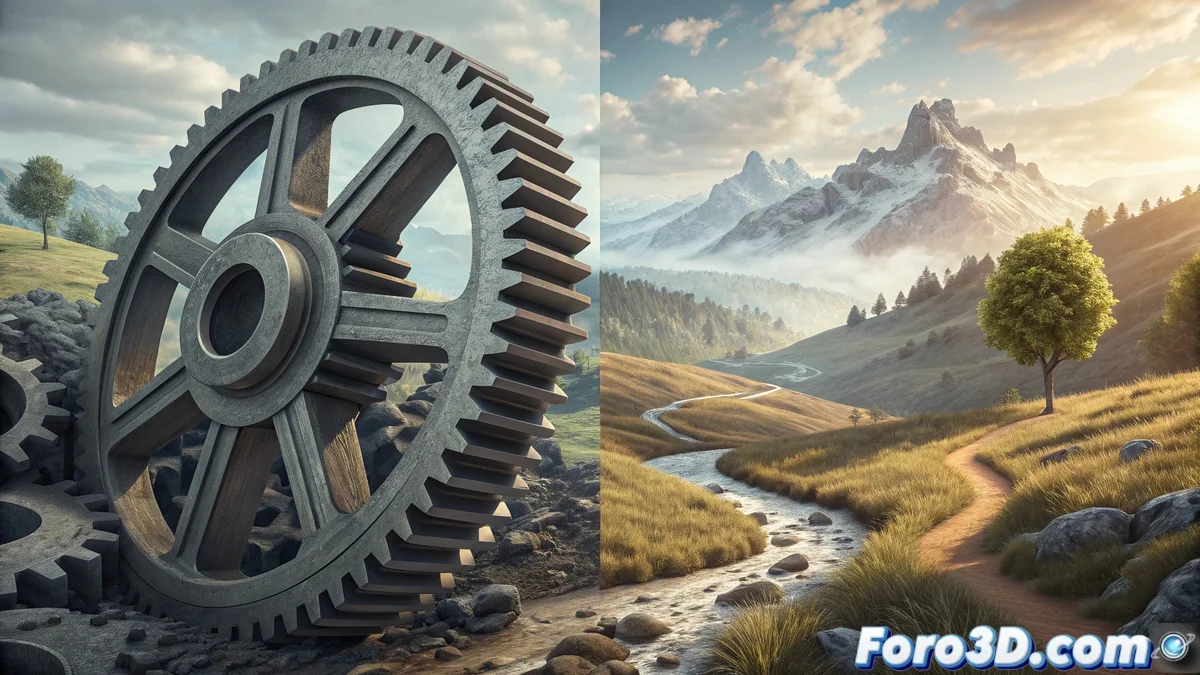
Although both programs allow creating and modifying three-dimensional objects, their work philosophies represent opposite extremes in the spectrum of digital design. While one specializes in technical precision, the other explores creative freedom 🎭.
SolveSpace: applied mathematical accuracy
This parametric CAD software uses geometric constraints and equation systems to ensure that every element meets exact technical specifications. Its minimalist environment is optimized for mechanical engineering projects where error tolerance is minimal.
Main technical features:- Modeling based on modifiable parameters and mathematical relationships
- Tools for assembly design and kinematic simulation
- Clean interface focused on dimensional precision and numerical control
“SolveSpace is the digital equivalent of a high-precision machining workshop where every millimeter counts”
Art of Illusion: unlimited visual expression
Developed in Java, this open-source environment prioritizes the creation of visually striking scenes through organic modeling, advanced material systems, and integrated animation tools.
Highlighted creative capabilities:- Subdivision modeling and boolean operations for complex shapes
- Procedural textures system and photorealistic rendering
- Expandable architecture through plugins developed by the community
Strategic choice according to needs
The decision between these tools reflects the dichotomy between function and form. SolveSpace acts as a measuring instrument for engineers, while Art of Illusion functions as a digital canvas for artists. The synergy between both approaches demonstrates that in the 3D world, precision and creativity can coexist complementarily ✨.