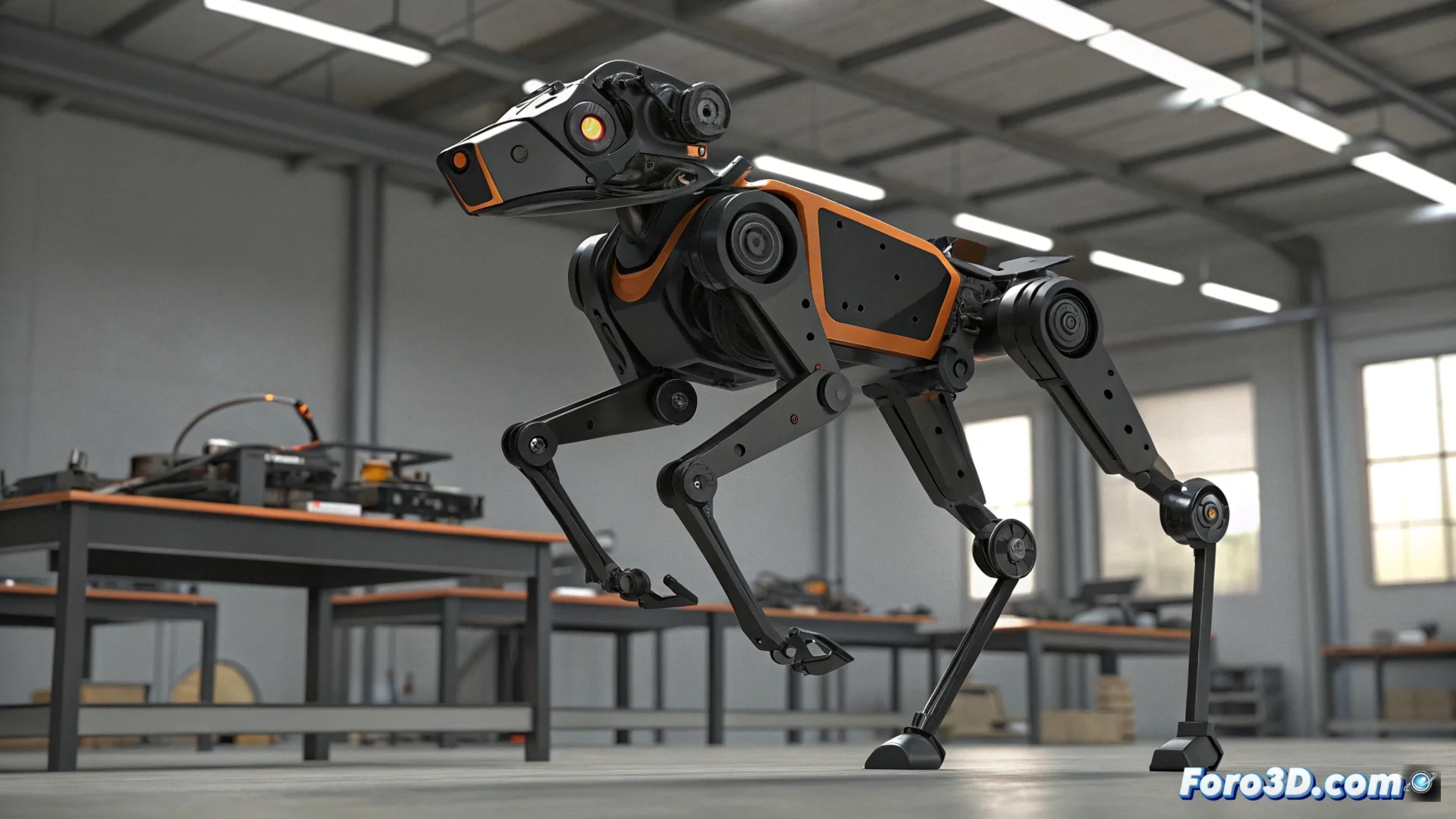
Solo, an open-source quadruped robot to democratize research
A team from the University of California at Berkeley has created Solo, a quadruped robotic platform with a radically open approach. Its goal is for any research group, regardless of budget, to be able to access and contribute to the field of advanced locomotion 🤖.
A design that prioritizes access and modularity
Solo's hardware is built with readily available components and assembled with common tools. This approach drastically reduces the initial cost. Despite its accessible design, the robot is capable of performing complex dynamic movements, such as jumping or trotting, making it ideal for testing new control algorithms.
Key features of its architecture:- Uses off-the-shelf parts to facilitate replication.
- Its modular structure allows repairing or upgrading specific sections without changing the entire system.
- Demonstrates agile performance suitable for cutting-edge research.
Democratizing robotics means lowering barriers to innovation.
Open software to accelerate collective progress
All the code necessary to operate the robot is public. This includes controllers, interfaces, and simulation tools. Researchers can modify, test, and share their own algorithms on a common base, allowing direct comparison of results and building on others' work.
Advantages of the open-source software model:- Fosters collaboration and transparency in the scientific community.
- Allows labs to adapt the software to their specific experimentation needs.
- Accelerates the development of solutions for complex locomotion problems.
Impact on the future of robotics research
By offering a complete open-source platform, Solo not only reduces costs but also standardizes a methodology. This could transform how science is done in robotics, shifting from closed systems to a collaborative ecosystem where progress is shared and accelerated collectively 🚀.