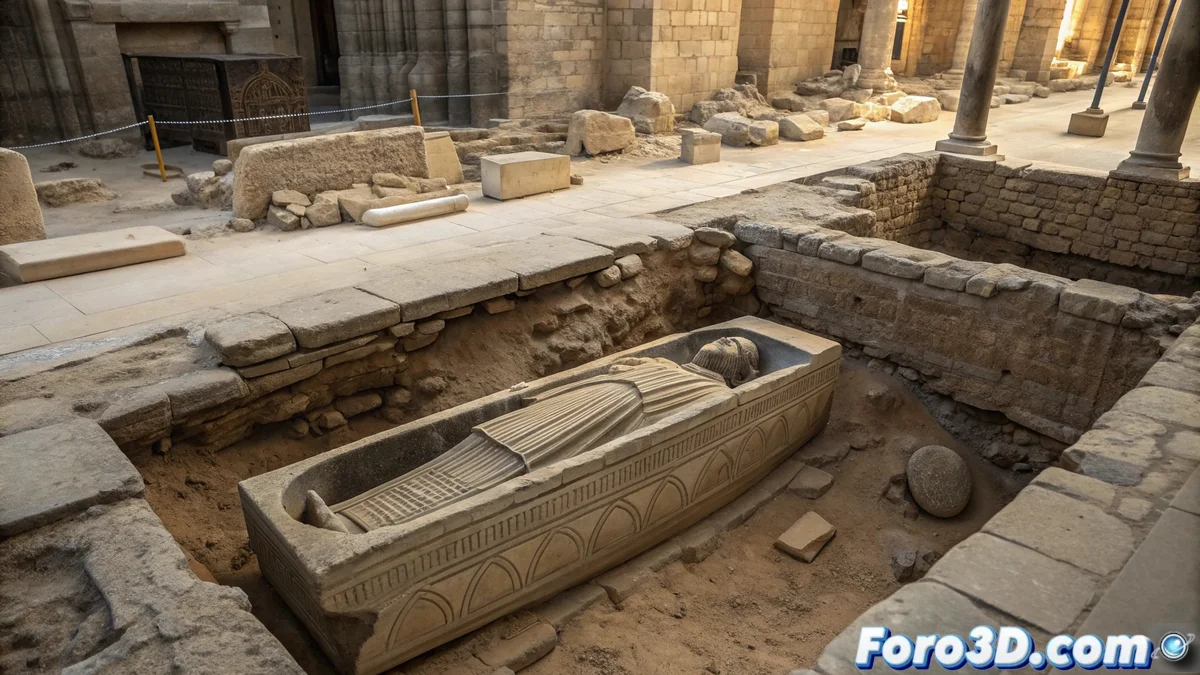
A Roman Tenant in the Gothic Cathedral
The restoration work on Notre Dame Cathedral in Paris has brought an extraordinary surprise: the discovery of a sealed lead sarcophagus that experts attribute to the Roman period. ⚰️ This finding, still unopened, could belong to a high-ranking dignitary from antiquity and offers invaluable clues not only about the origins of the cathedral, but also about the early history of Paris itself. The location of the discovery suggests that the cathedral was built over remains of previous Roman occupation, adding layers of historical significance to the iconic monument.
For engineers and 3D designers, this discovery represents a fascinating opportunity to explore parametric modeling techniques in SolidWorks. 🖥️ The digital recreation of the sarcophagus allows not only to document its structure and possible decorative details, but also to perform virtual analyses through sectional cuts that could reveal information about its contents without compromising the integrity of the original. The combination of mechanical design tools and advanced visualization opens new possibilities for non-invasive archaeological research.
A digital bridge between modern engineering and ancient funerary craftsmanship.
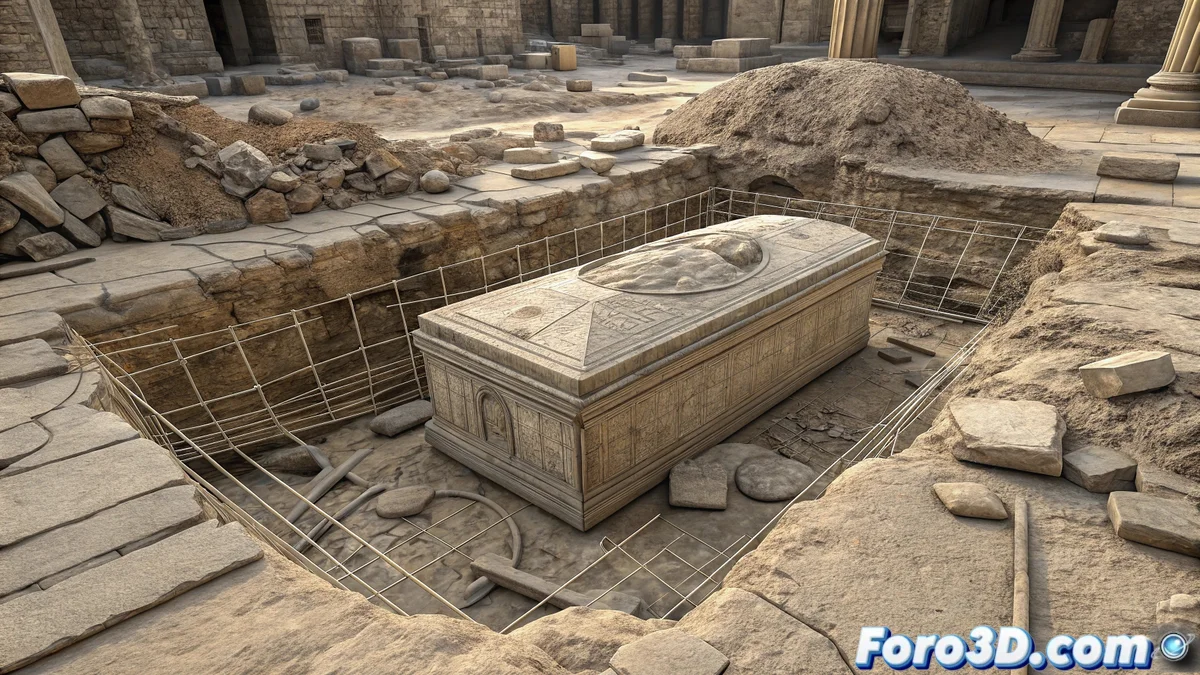
Parametric Modeling Techniques for Archaeology
The recreation in SolidWorks begins with precise metric documentation of the sarcophagus's dimensions and proportions. 📏 Setting units in millimeters is crucial to capture structural details such as the thickness of the lead walls, internal reinforcements, and the lid sealing system. Parametric modeling allows easily adjusting these dimensions according to new available information, making it an ideal tool for iterative archaeological research.
The essential elements to faithfully recreate the sarcophagus include:
- Rectangular structure with typical Roman proportions
- Wall thickness of lead and structural reinforcements
- Lid sealing system with airtight joints
- Decorative details and ancient manufacturing marks
Advanced Visualization and Non-Invasive Analysis
SolidWorks' sectional cut and structural analysis tools allow virtually exploring the sarcophagus's interior. 🔍 This capability is particularly valuable for archaeologists, as it provides information on possible contents and state of preservation without the need to physically open the reliquary, thus preserving its historical integrity. The application of aged lead textures with patina and wear effects adds realism to the visualization, helping to contextualize the object within its temporal framework.
Who would have thought that while restoring Notre Dame, they would come across a tenant who hadn't paid rent for centuries... and in a lead suite with views to history. 😅 A historical irony that demonstrates how great monuments often hold secrets that challenge our assumptions about the past, patiently waiting under our feet until technology and human curiosity reveal them.