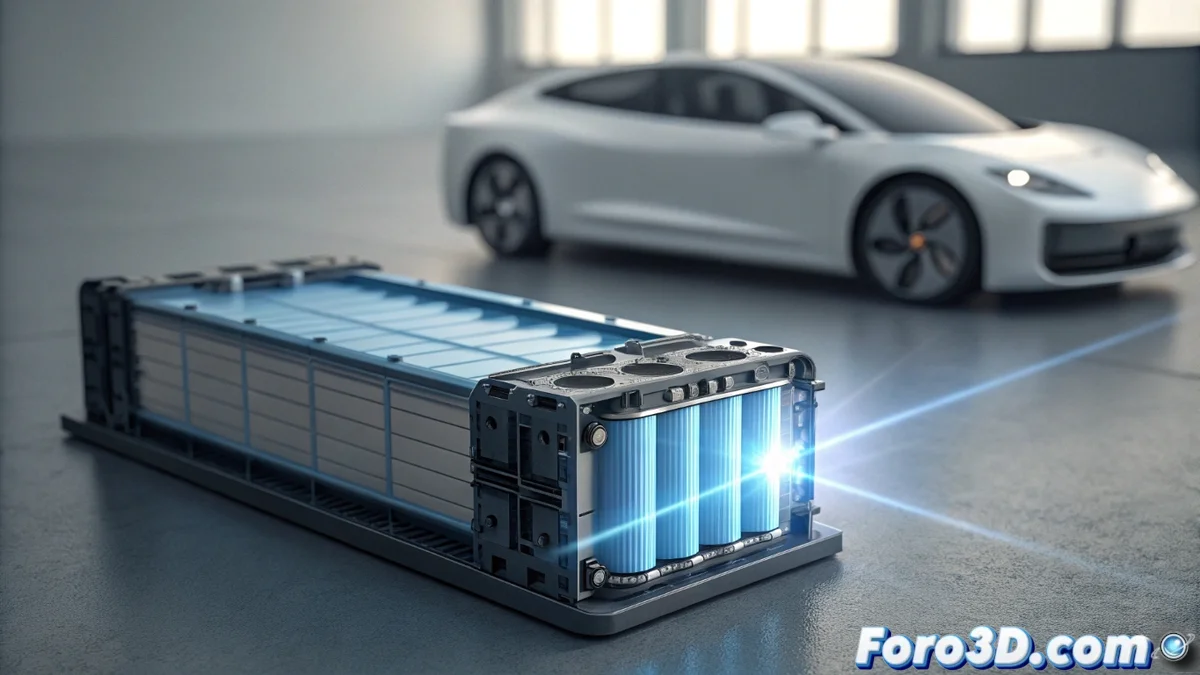
Solid-State Batteries: The Next Revolution for Electric Vehicles
Electric mobility is on the verge of a radical transformation thanks to the development of solid-state batteries. This technological innovation replaces the flammable liquid component of conventional batteries with a solid electrolyte, directly addressing the two major Achilles' heels of the sector: limited range and safety risks. A global technological race is underway to materialize this promise and completely redefine our experience with electric transportation. ⚡
A Quantum Leap in Energy Density
The most outstanding advantage of this technology lies in its superior energy density. The use of a solid-state electrolyte allows the implementation of pure metallic lithium anodes, which have a much higher storage capacity than the graphite anodes used today. The practical implications are enormous.
Direct benefits of higher density:- Extended range: A battery pack of the same size and weight could offer significantly greater range, mitigating the dreaded "range anxiety".
- More compact designs: For equivalent range, batteries could be smaller and lighter, freeing up space and improving vehicle efficiency.
- Ultra-fast charging: System stability could support extreme charging speeds, bringing electric "refueling" times closer to those of combustion vehicles.
The implementation of the metallic lithium anode is the key that unlocks the true energy potential of lithium chemistry.
Unprecedented Robustness and Reliability
The second pillar of this revolution is inherent safety. By eliminating the highly flammable and volatile organic liquid electrolyte, the risk of fire or explosion in case of collision or thermal failure is drastically reduced. Additionally, the solid electrolyte inhibits the formation of dendrites, those dangerous lithium needles that can cause internal short circuits.
Impact on design and manufacturing:- Simplified systems: Greater stability allows dispensing with complex and costly thermal management and safety containment systems.
- Cost reduction: This design simplification, combined with a longer lifespan, can reduce the total cost of the battery pack in the long term.
- Long-term reliability: Greater chemical stability translates into slower degradation and greater durability over thousands of charge-discharge cycles.
The Path to Commercialization
Despite the enormous potential, the path to mass production is not without obstacles. High manufacturing costs and the need to ensure consistent durability and performance under real conditions are persistent technical challenges. However, progress is unstoppable. Automotive giants like Toyota and specialized companies like QuantumScape and Solid Power have announced significant advances and plan to launch the first test vehicles and limited applications within this decade. 🚗 Their success would not only accelerate the transition to electric vehicles but also have a profound impact on other sectors, such as portable electronics and large-scale energy storage for electrical grids. The future of sustainable mobility seems more solid than ever.