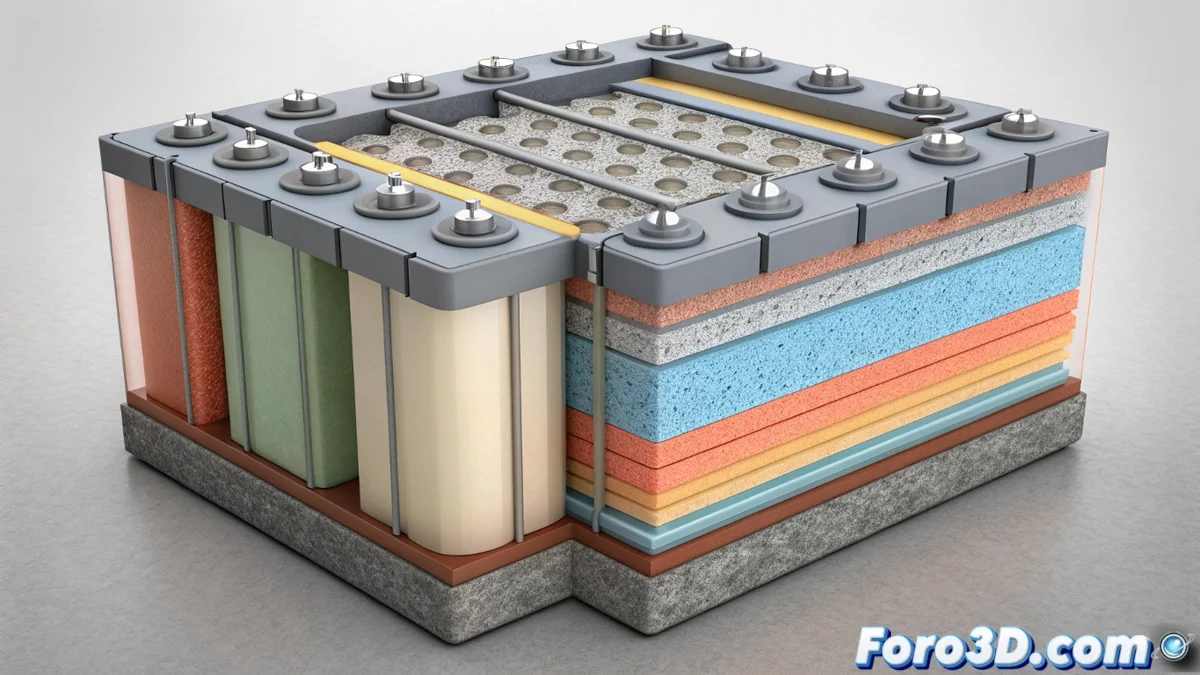
Solid-State Batteries: How They Work and Challenges to Overcome
Energy storage technology takes a leap forward with solid-state batteries. These replace the liquid or gel component of conventional batteries with a completely solid electrolyte. This structural change redefines their internal operation and drives intensive research in the industry, as it promises to overcome current limitations. 🔋
Advantages of the Solid Core
The main element is a solid electrolyte that transports lithium ions. By eliminating the flammable liquid, the battery becomes safer and reduces the possibility of fire. This rigid architecture also typically withstands repeated charge and discharge cycles better. A key benefit is that it enables the use of pure lithium metal anodes, which significantly increases energy density. In practice, this means a phone or electric car can store more power in the same space or achieve the same range with a thinner pack. 🚀
Main benefits of this technology:- Greater safety: Eliminates the risk of leaks and combustion of the liquid electrolyte.
- Superior energy density: Allows storing more energy in an equivalent volume.
- Potential for longer lifespan: The solid structure may degrade less with use.
The promise of an eternal and safe battery always seems to be five years away, a horizon that constantly moves with us.
The Challenges to Produce Them
Although the concept is very attractive, manufacturing these batteries on a large scale and at a competitive price presents great complexity. Solid materials need to maintain an intimate and stable contact with the electrodes, which is more complicated to achieve than with a liquid. Engineers are seeking to ensure that the interfaces within each cell do not deteriorate over time. Another crucial point is achieving ultra-fast charging without damaging their internal integrity. Several automotive and consumer electronics companies are already showing prototypes, but their mass production is not yet a widespread reality. ⚙️
Key obstacles in development:- Electrode-electrolyte contact: Achieving a perfect and durable bond between solid materials.
- Interface degradation: Preventing the formation of internal resistances with cycles.
- Industrial scaling: Developing fast and cost-effective manufacturing processes.
The Future of Storage
Solid-state batteries represent a tangible evolution in how we store energy. Their path to the market depends on solving engineering and cost challenges. As laboratories advance, the industry watches expectantly for when this technology will go from being a promising prototype to a product in our hands. The horizon, though moving, is approaching. 🔮