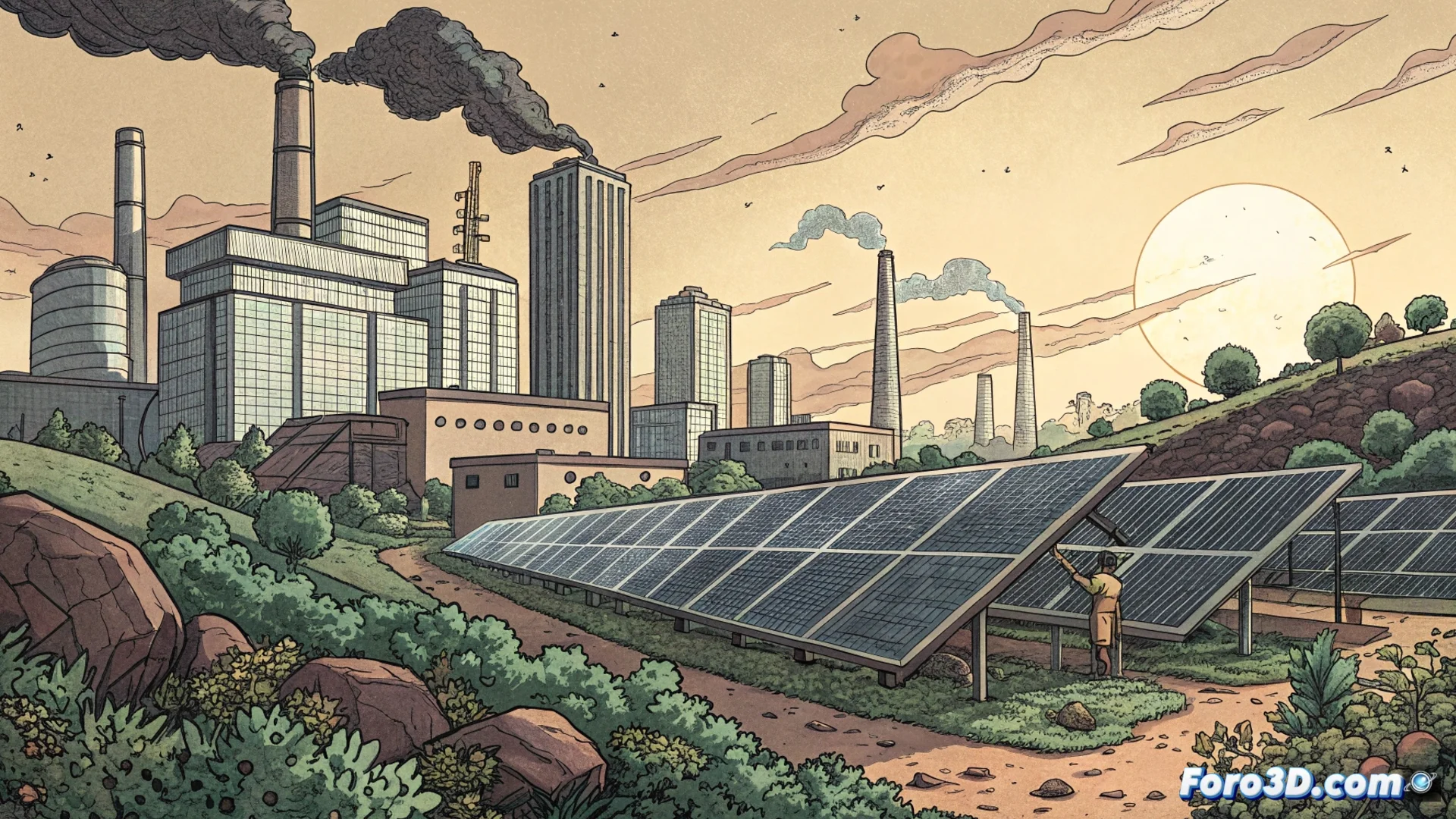
Solar Energy Generates a Mountain of Waste at the End of Its Lifespan
The adoption of renewable energy sources is progressing, but photovoltaic technology faces a significant challenge when its main components stop functioning. Solar modules are designed to operate between 25 and 30 years, which means that the first generations of large-scale installations are now reaching their final stage. It is projected that, if no measures are taken, by 2050 we could accumulate more than 250 million tons of waste from these devices. This massive volume questions the true sustainability of the current model. 🏔️
Recycling a Solar Panel Is Not an Easy Task
Disassembling and processing a photovoltaic module is an intricate procedure. Its construction integrates glass, aluminum, various plastics, and high-value metals like silver and copper, as well as traces of potentially harmful elements. Effectively separating these components in a viable cost manner requires specialized equipment and techniques that have not yet been deployed on a massive scale. Currently, the vast majority of panels that are removed end up in landfills, where valuable resources are wasted and there is a risk that some materials will contaminate the environment over time.
Main Components of a Solar Panel:- Tempered glass: Constitutes the majority of the weight and protects the cells.
- Aluminum frame: Provides rigid structure to the assembly.
- Silicon cells: Contain precious metals like silver for contacts.
- Encapsulant layer (EVA): A plastic that seals and insulates the cells.
- Junction box: Houses copper cables and other electrical components.
- Potentially toxic elements: Small amounts of lead or cadmium in some technologies.
The long-term success of solar energy will depend, to a large extent, on how the industry and governments manage this waste stream.
The Industry and Research Seek Answers
Manufacturers and research centers are working to design panels with an easy disassembly design and to perfect methods that allow the recovery of raw materials. The concept of a circular economy, where materials are reincorporated into the manufacture of new products, is gaining more and more strength. However, creating global networks to collect this waste and implementing economically sustainable recycling systems requires clear regulation and substantial investment.
Key Challenges for Implementing Recycling:- Develop efficient logistics chains to collect decommissioned panels.
- Create processing facilities with technology capable of separating complex materials.
- Make the process profitable to attract private investment.
- Establish regulations that mandate or incentivize proper recycling.
- Innovate in the design of new panels considering their future disassembly.
- Raise awareness among installers and owners about proper end-of-life management.
A Green Future Requires Comprehensive Solutions
Managing the end of life of solar panels has become a fundamental pillar to ensure that the energy transition is genuinely sustainable. Photovoltaic technology is key to a low-carbon future, but its legacy must not be a landscape of overflowing landfills. Collaboration between legislators, companies, and the research community is crucial to close the circle and ensure that solar energy does not generate a bigger problem than it helps to solve. ♻️