Innovations in Lunar Energy
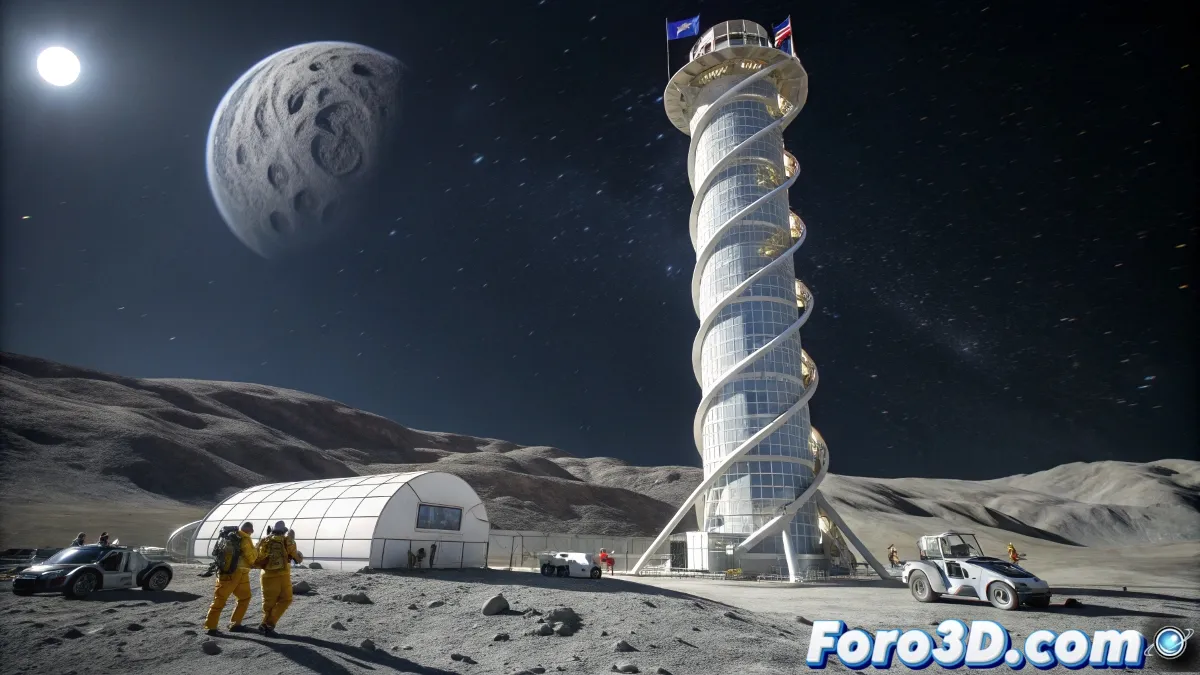
Space exploration demands energy solutions that can adapt to extreme conditions. An architectural project led by Foster + Partners proposes a 50-meter structure capable of generating solar energy on the lunar surface. The chosen location is the South Pole, where solar illumination is almost permanent, ensuring a continuous flow of electricity.
Revolutionary Technology and Materials
The tower features a spiral design with modular components that expand automatically upon installation. The standout feature is the use of lunar regolith, a local resource, as raw material for additive manufacturing. Artificial intelligence systems optimize the 3D printing process, analyzing the material's composition in real time to adjust construction parameters. This approach drastically reduces the need to transport materials from Earth, optimizing costs and logistics.
- Foldable structure to facilitate transportation
- High-efficiency solar panels
- AI-assisted 3D printing
Automation in Hostile Environments
Construction in space requires systems that operate without constant human supervision. Machine learning algorithms coordinate autonomous robots during assembly, allowing the tower to build itself. This methodology is not only crucial for the Moon but sets a precedent for missions to Mars and other interstellar destinations.
Artificial intelligence is revolutionizing space architecture, enabling autonomous constructions in extreme environments.
Towards a Permanent Lunar Presence
This initiative integrates with space agencies' plans to establish habitable bases. The energy produced will power critical systems such as:
- Life support units with AI monitoring
- Self-configuring communication stations
- Research laboratories with predictive systems
The prototype has already been exhibited in technology centers, showing how space innovation can inspire advances on Earth. Neural networks continue to refine the design, with the ultimate goal of creating autonomous infrastructures that enable human expansion beyond our planet.