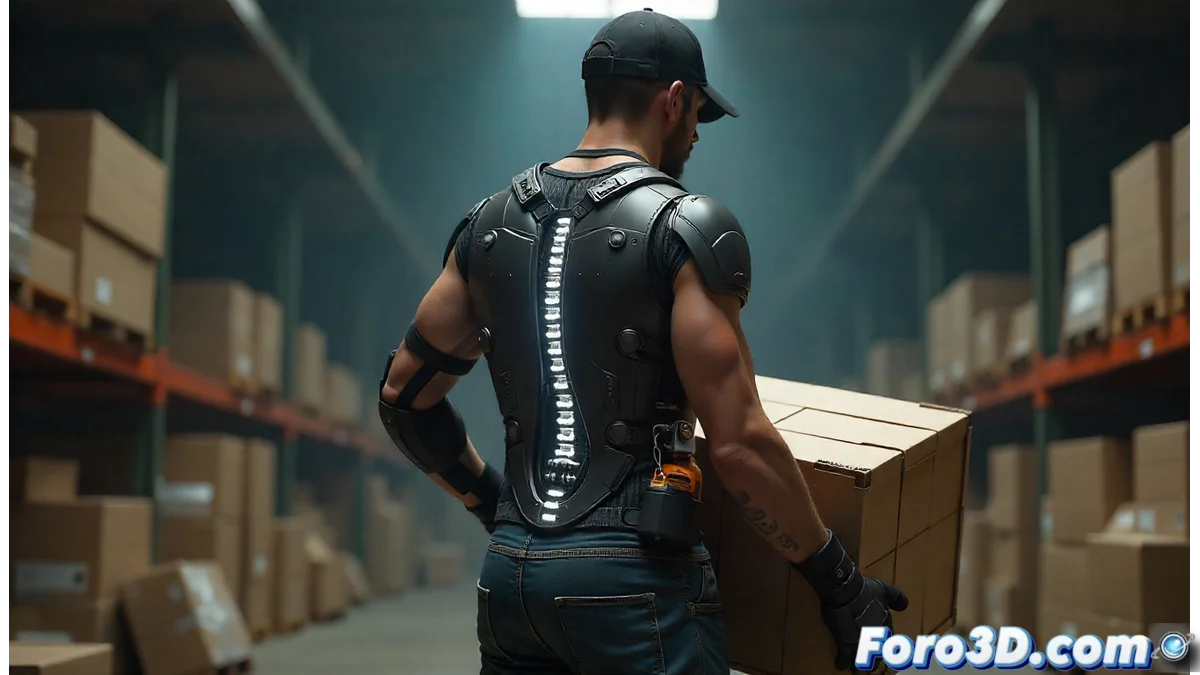
Soft Exoskeletons Inspired by Human Biomechanics
The physical assistance technology has taken a qualitative leap with the development of soft exoskeletons that perfectly emulate the structure and functioning of the human musculoskeletal system. These devices represent a revolutionary evolution by being based on biomechanical principles to provide natural support during physically demanding activities 🦾.
Biomimetic Vertebral Architecture
The central design is based on replicating the complex structure of the human spine, specifically its ability to distribute loads efficiently while maintaining stability during multidirectional movements. By imitating the flexibility and strength of vertebrae and intervertebral discs, the system offers dynamic support that activates selectively when the user performs significant efforts.
Key technological components:- Interconnected modules that simulate vertebrae, made with flexible polymers reinforced with carbon fibers for maximum strength-to-weight ratio
- Pneumatic actuators that expand/contract in response to detected tension, creating a damping effect similar to intervertebral discs
- Intelligent control system with gyroscopes and accelerometers that analyzes posture and adjusts assistance in real time
The integration of composite materials and pressure sensors allows the exoskeleton to respond intuitively to postural changes, reducing muscle fatigue by up to 30% according to preliminary studies
Industrial Applications and Ergonomic Benefits
These assistance systems find their maximum utility in logistics and industrial environments where workers perform repetitive load handling tasks. The load reduction on the lumbar spine prevents common ailments such as herniated discs and low back pain, while simultaneously improving productivity and workplace safety.
Documented operational advantages:- Prevention of back injuries through automatic maintenance of correct spinal alignment
- Full autonomy for work shifts thanks to lightweight batteries integrated into the ergonomic harness
- Automatic adaptability to different body morphologies through personalized profiles stored in memory
Transformative Impact in Various Sectors
The ergonomic and discreet design facilitates adoption in sectors such as construction and healthcare assistance, where professionals need complete mobility while handling patients or materials. The adaptable technology allows maintaining constant performance with less accumulated fatigue, representing a significant advance in workplace protection and operational efficiency 💪.