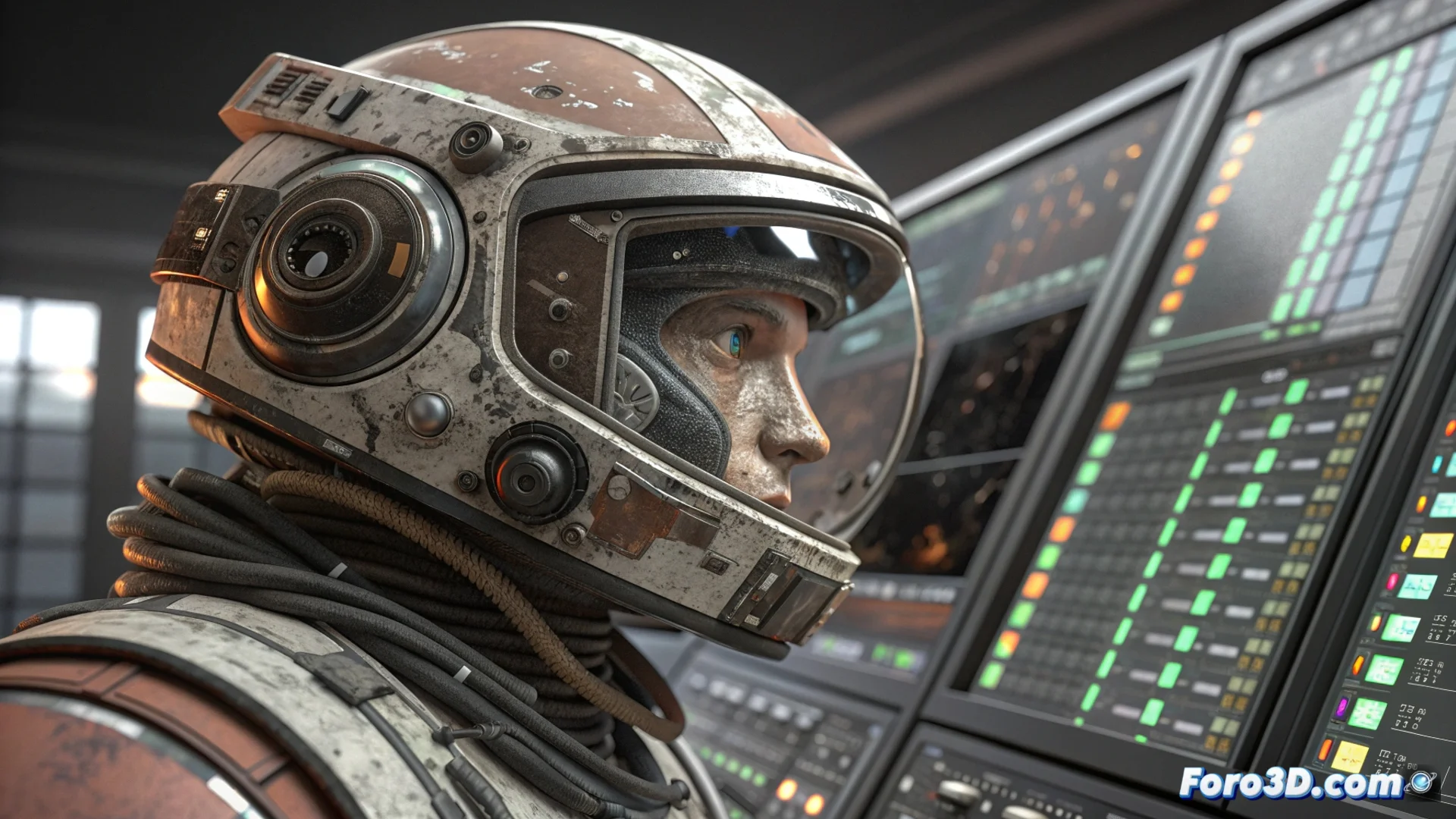
Substance Painter Smart Materials: Automate PBR Texturing
In professional 3D texturing, Substance Painter stands out for a key feature: Smart Materials or intelligent materials 🎨. These are not simple textures, but complex PBR systems that interpret the model's geometry to apply effects automatically and physically.
How do smart materials work?
The core of this technology lies in processing the model's intrinsic geometric information. Instead of the artist manually painting every wear detail, the software analyzes generated maps such as the curvature map and the ambient occlusion map. With this data, the material decides where to place effects; for example, it accumulates dirt in cavities or reveals metal on protruding edges. The user only needs to select the Smart Material and assign it to the mesh.
Geometric data that guides the process:- Curvature Map: Detects concave areas (cracks) and convex areas (exposed edges) to direct effects like erosion or shine.
- Ambient Occlusion Map: Identifies corners and low-light areas where dust, moisture, or oxidation would naturally accumulate.
- External Parameters: The artist retains control to adjust the intensity, color, or scale of the effects, but their location is generated procedurally.
A clay Smart Material automatically places residues in cavities. A rusted metal material generates corrosion where moisture would accumulate.
Optimize the texturing workflow
Using these materials greatly accelerates asset production. It allows quick iteration between different visual styles without losing the established base of realistic details. Multiple layers of Smart Materials can be stacked to build complex appearances, where each new layer respects the geometric information of the previous ones.
Key advantages in production:- Speed: Applying a complete look with credible wear takes seconds, not hours.
- Consistency: Achieves a physical and uniform result across all assets in a project, ideal for video games or movies.
- Non-Destructive: Effects are based on data, so they can be modified or removed at any time without damaging the base work.
The final artistic balance
The power of this automation also presents a creative challenge: avoiding uniformity. The risk is that all objects in a scene show the same pattern and degree of wear, making a new spaceship look as battered as a trash cube 🚀🗑️. The artist's skill lies in directing and customizing these procedural effects, using manual masks or adjusting parameters, to tell a unique and believable visual story for each asset.