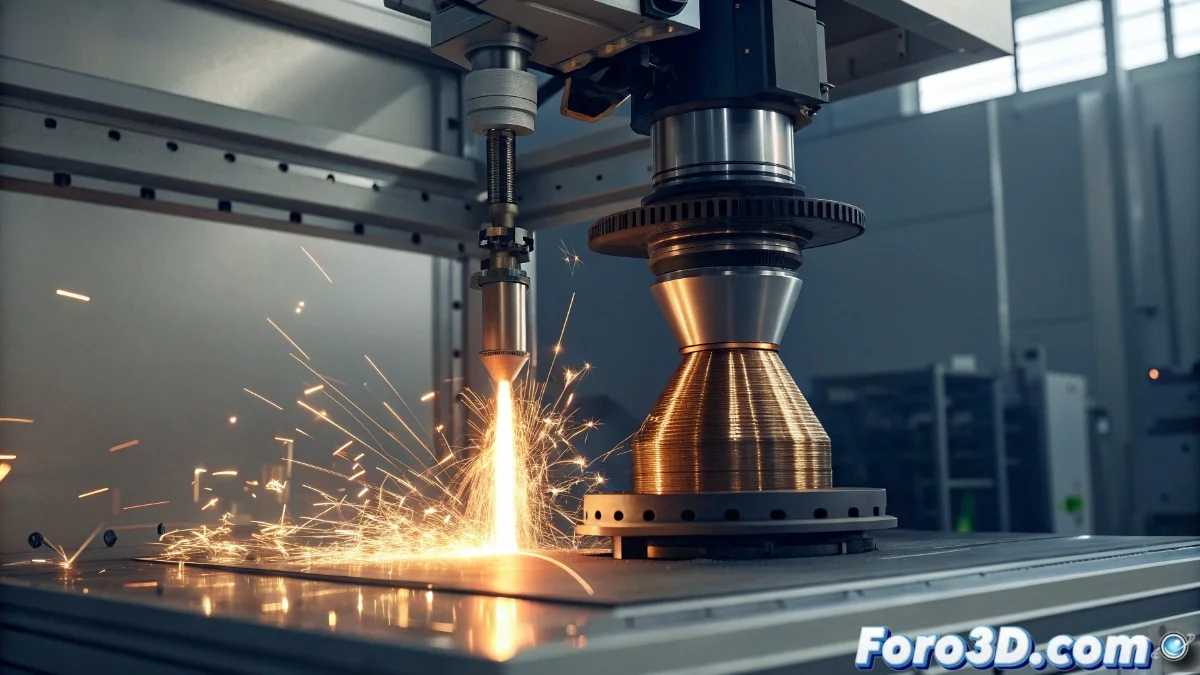
Skyrora Leads European Project to Revolutionize Space Engine Manufacturing with 3D Printing
The British company Skyrora is at the forefront of a transformative initiative funded by the European Space Agency that is redefining manufacturing paradigms in the aerospace industry. 🚀 This ambitious program seeks to develop more efficient propulsion systems through the use of additive manufacturing technologies and specialized metallic alloys.
Innovation in Materials for Extreme Conditions
The core of the project consists of creating an advanced metallic alloy specifically designed to withstand the most hostile space environments. These new compositions must resist temperatures exceeding 3,000°C and extremely high pressures during critical launch and operation phases in space vacuum. The methodology combines computational simulations with metal 3D printing processes to validate material behavior before real implementation.
Key Advantages of Additive Manufacturing:- Production of complex internal geometries impossible to achieve with traditional methods
- Reduction of up to 60% in development and component manufacturing times
- Customization of parts for specific missions without costly industrial reconversions
This technology allows us to create engines that are not only more efficient, but also safer and more cost-effective - something fundamental for the future of commercial space exploration
Strategic Collaboration for European Technological Leadership
The consortium formed by Skyrora, Metalysis, and Thermo-Calc Solutions represents a perfect synergy of specialties. Metalysis brings its expertise in producing high-purity metal powders, while Thermo-Calc contributes prediction tools for material behavior under real operating conditions. This collaboration ensures that every alloy developed meets the ESA's rigorous standards even before physical manufacturing.
Impact on the European Space Industry:- Positioning Europe as a leader in sustainable space propulsion
- Reduction of technological dependence on external suppliers
- Promotion of local innovation and creation of specialized employment
- Acceleration in the development of new generations of rocket engines
Future Applications and Project Perspectives
The success of this initiative could mark a turning point in how we conceive space exploration. Engines manufactured with these advanced alloys will enable longer and more ambitious missions, with propulsion systems that maintain their structural integrity even in the most adverse conditions. 🌌 The ability to produce lighter and more resistant components simultaneously opens new possibilities for satellites, reusable launch vehicles, and future interplanetary missions.