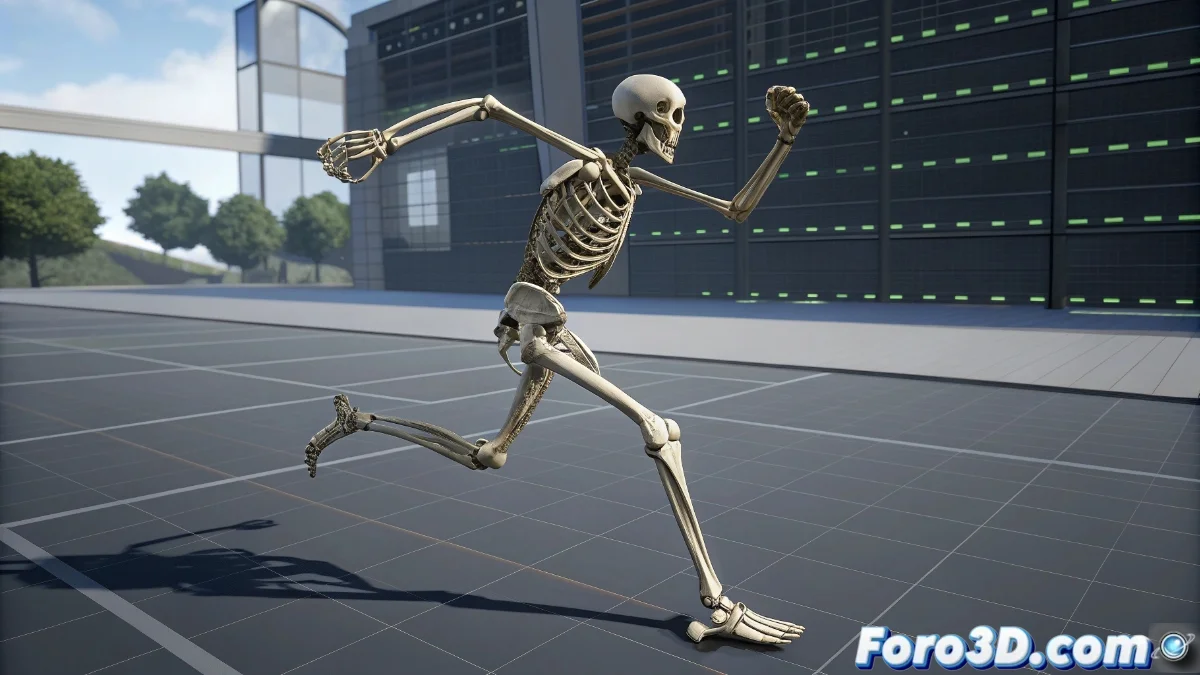
Skeletal Control in Animation Blueprint for Dynamic Animations
In the field of video game development, Skeletal Control integrated within Animation Blueprints represents a fundamental tool for making dynamic real-time modifications to the bone structure of characters. This technology allows for creating fluid movements and natural responses to various interactions in the virtual environment, such as adaptations to uneven terrain or physical reactions to impacts. Skeletal controls function as animation information processors that operate after the main layers, providing a level of refinement that significantly elevates the final visual quality 🎮.
Technical Implementation of Skeletal Controls
To implement these control systems, it is necessary to access the Animation Blueprint panel and add specialized nodes such as Two Bone IK, Modify Bone, or Spring Controller within the animation graph. Each of these nodes offers customizable parameters that determine how bones are transformed during execution, allowing from basic rotations to complex physical simulations. The effectiveness of the system lies in connecting these nodes to blueprint variables that receive real-time information from the game, such as the character's speed or terrain characteristics, thus creating an adaptive animation system that is highly efficient 💻.
Main Skeletal Control Nodes:- Two Bone IK: Allows automatic adjustment of two consecutive bones to reach specific targets
- Modify Bone: Offers direct control over transformations of individual bones
- Spring Controller: Simulates physical behaviors such as elasticity and damping
Skeletal controls represent the natural evolution of procedural animation, allowing characters to interact more organically with their virtual environment.
Practical Applications in Video Game Development
The most common implementations include automatic posture correction on inclined surfaces, dynamic gaze adjustment toward moving targets, and realistic simulation of environmental effects on elements like clothing and hair. Developers leverage these tools to reduce reliance on predefined animations, generating more believable behaviors with less resource usage. Integration with physics systems and collision detection allows for creating convincing interactions where characters demonstrate genuine spatial awareness of their physical environment 🌟.
Highlighted Use Cases:- Automatic adaptation of footsteps to uneven surfaces
- Gaze system that follows dynamic targets
- Simulation of wind effects on secondary elements
The Potential of Procedural Animation
These systems demonstrate how virtual bones can achieve levels of flexibility that surpass our own physical capabilities after extensive work sessions. The technology allows digital skeletons to execute complex movements without human biological limitations, creating characters that adapt perfectly to any situation within the video game world. This capacity for animated improvisation marks the difference between static animations and truly immersive experiences 🤖.