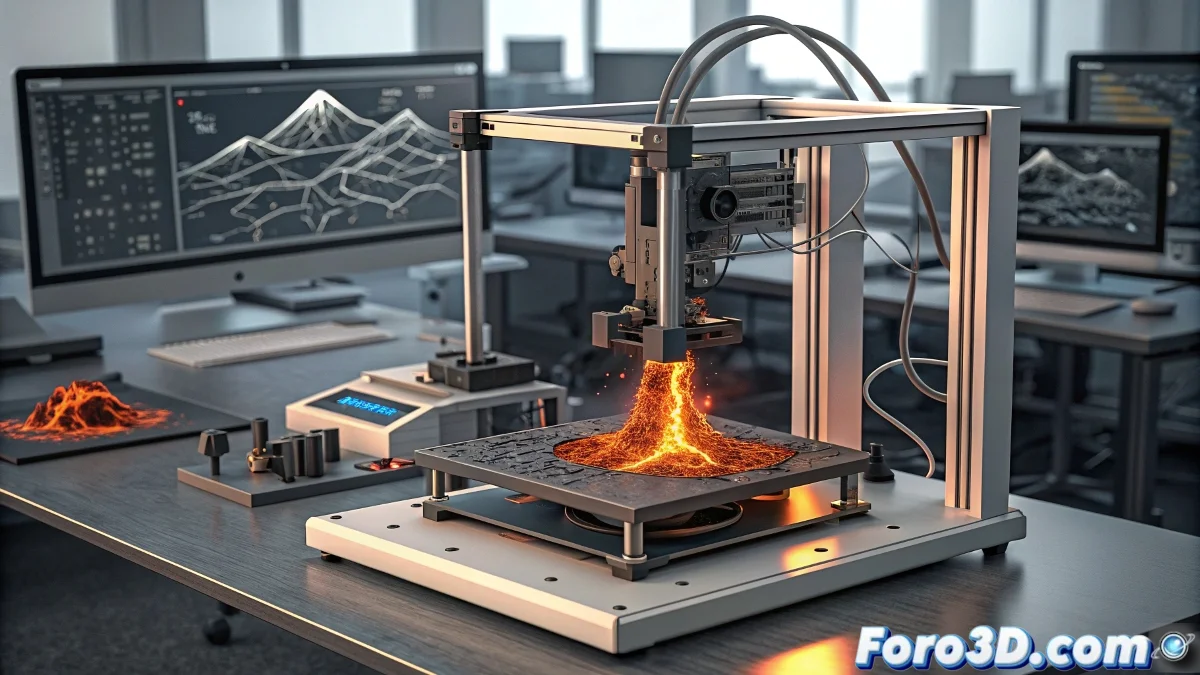
University Research Receives Crucial Boost to Resolve Metal 3D Printing Defects
A professor at Southern Illinois University (SIU) has been awarded a $200,000 grant from the National Science Foundation (NSF) to tackle one of the most persistent challenges in additive manufacturing: critical defects in metal 3D printing. This cutting-edge research aims to develop predictive and corrective methods for quality issues that have limited the widespread adoption of metal 3D printing in high-demand industrial applications. The project represents a significant advancement in the reliability of additive manufacturing processes and could accelerate the transition of this technology from prototyping to serial production.
The Challenge of Defects in Metal 3D Printing
The research focuses on understanding and mitigating specific defects such as porosity, microscopic cracks, and residual stresses that compromise the structural integrity of 3D printed metal parts. These issues arise from the complex nature of laser fusion processes used in technologies like DMLS (Direct Metal Laser Sintering) and SLM (Selective Laser Melting). The professor and his team are developing advanced computational models that can predict defect formation in real time during the printing process, enabling dynamic adjustments before problems manifest physically.
What makes these defects particularly challenging is their often invisible nature until advanced stages of the process or even during the final use of the component. Microscopic cracks and internal porosity can remain hidden during conventional visual inspection, only revealing themselves under critical loads or in demanding operational environments. SIU's research seeks to develop in-situ monitoring techniques that detect anomalies during the printing process itself, using advanced sensors and machine learning algorithms to identify subtle patterns that precede defect formation.
Critical Defects Under Investigation:- Porosity due to lack of fusion or keyholing
- Cracks due to residual thermal stress
- Delamination between successive layers
- Unmelted powder inclusions
- Deformations due to thermal gradients
Methodological Approach and Research Tools
The project employs a multidisciplinary approach combining materials science, thermodynamics, and data science. The team will use high-resolution scanning electron microscopy to characterize defects at the microstructural level, along with X-ray diffraction techniques to measure residual stresses. In parallel, they will develop finite element models that simulate thermal and mechanical behavior during the printing process, validating their predictions with experimental data collected from metal 3D printers specially instrumented for research.
A key innovation of the project is the integration of in-process monitoring sensors that capture real-time data on temperature, cooling rate, and melt pool stability. This data feeds artificial intelligence algorithms that learn to correlate process parameters with final quality, gradually creating a predictive system capable of anticipating problems before they occur. The ultimate goal is to develop an adaptive control system that automatically adjusts printing parameters to compensate for variable conditions and prevent defect formation.
We are treating metal 3D printing not as a craft process, but as an exact science. Every defect has an identifiable root cause, and every cause has a potential solution.
Potential Impact on the Manufacturing Industry
The research has significant implications for sectors where reliability is critical, such as aerospace, medical, automotive, and energy. Currently, many manufacturers must employ costly post-production inspection processes and heat treatments to ensure the quality of 3D printed parts. The findings from this research could significantly reduce these costs by improving the intrinsic reliability of the printing process, enabling a faster transition from prototyping to production manufacturing.
For the aerospace industry in particular, where 3D printed components are gaining acceptance for critical parts, this research could accelerate regulatory certification by providing validated methodologies to ensure consistent quality. Similarly, in the medical sector, where custom 3D printed implants must meet rigorous standards for biocompatibility and durability, the developed techniques could significantly improve patient safety and clinical outcomes.
Benefited Industrial Applications:- Structural components for aerospace
- Custom medical implants
- High-performance manufacturing tools
- Energy systems and turbines
- Functional prototypes for automotive
Training the Next Generation of Engineers
Beyond the direct research outcomes, the NSF grant will support the training of undergraduate and graduate students in advanced manufacturing technologies. Students involved in the project will gain hands-on experience with state-of-the-art metal 3D printing equipment and materials characterization techniques, preparing them for careers in the growing additive manufacturing industry. This educational aspect is particularly valuable given the shortage of qualified professionals in this emerging field.
The project also includes outreach components targeted at high school students and underrepresented communities in STEM, aiming to inspire the next generation of researchers in materials science and manufacturing engineering. These initiatives leverage the inherent appeal of 3D printing to introduce fundamental science and engineering concepts in a tangible and accessible way.
Contribution to the U.S. Innovation Ecosystem
This NSF grant reflects the ongoing commitment of the federal government to U.S. manufacturing competitiveness. By supporting fundamental research that addresses practical challenges in emerging technologies, the NSF is investing in the technological foundation that will underpin future advanced manufacturing. The findings from this research will be publicly available, benefiting not only SIU but the entire national and international additive manufacturing community.
The success of this project could position SIU as a center of excellence in additive manufacturing research, attracting additional collaborations with industry and government agencies. More importantly, it contributes to the collective advancement of knowledge in metal 3D printing, moving the entire industry toward more reliable, efficient, and widely adoptable processes.
With this $200,000 grant, university research once again demonstrates its crucial role in solving complex industrial problems while training tomorrow's innovators. The resulting advances could ultimately unlock the full potential of metal 3D printing as a transformative manufacturing technology, benefiting key economic sectors and maintaining U.S. competitiveness on the global manufacturing stage.