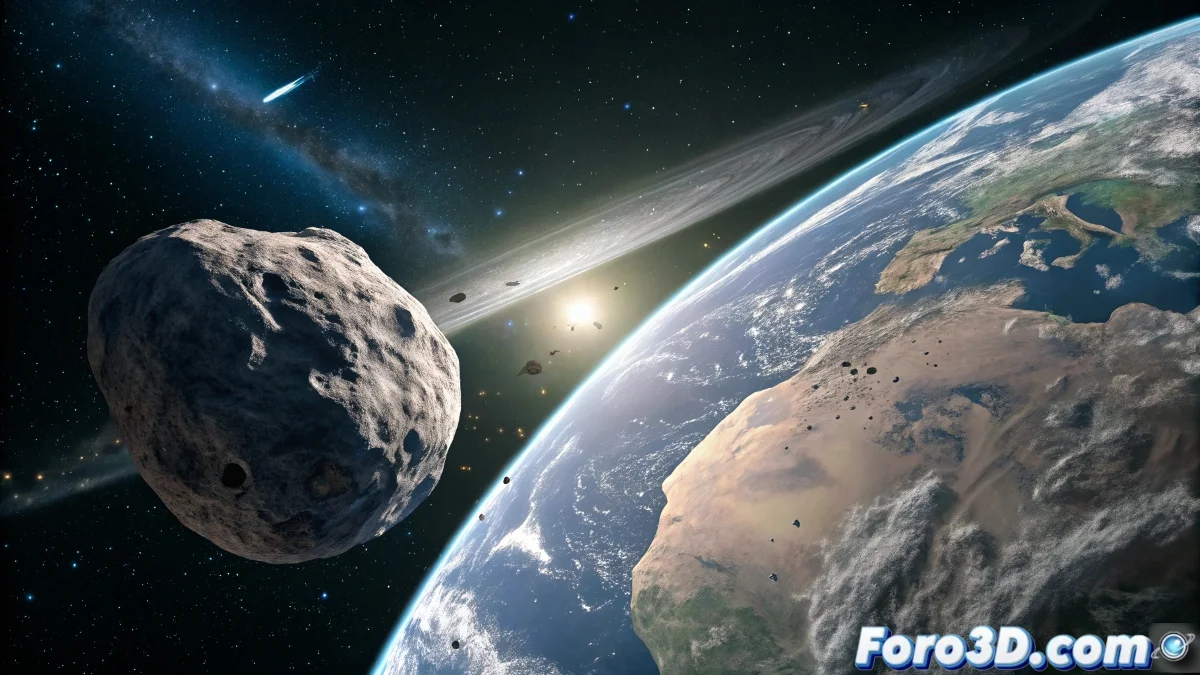
When Outer Space Enters Our Viewport
The asteroid 2022 YS5 has given us the perfect astronomical scare to test our 3D skills 🌌. With its 30 meters in diameter and 33,000 km/h, this cosmic visitor that grazed Earth on July 17 is the ideal excuse to experiment with realistic orbital simulations in Blender and Houdini.
From Astronomical Data to Spectacular Renders
3D tools allow:
- Importing real NASA trajectories
- Simulating atmospheric effects during approaches
- Visualizing scales and distances that are hard to imagine
A perfect combination between science and digital art. As if Kepler had an RTX 4090 in his observatory.
Techniques for Your Own Astronomical Simulations
To recreate this type of events:
- Use particle systems for trails and debris
- Apply space rock shaders with procedural textures
- Experiment with collision physics for impact scenarios
And the best part: you can make mistakes as many times as you need without putting the planet at risk 🚀.
Rendering Planetary Defense
These simulations are not just artistic exercises:
- NASA uses 3D visualizations for its missions
- Science communicators use them to explain risks
- Artists create hypothetical scenarios to raise awareness
So keep practicing your astronomical simulations. Who knows, maybe one day your render will help save the world... or at least help understand why we should be concerned 😉.