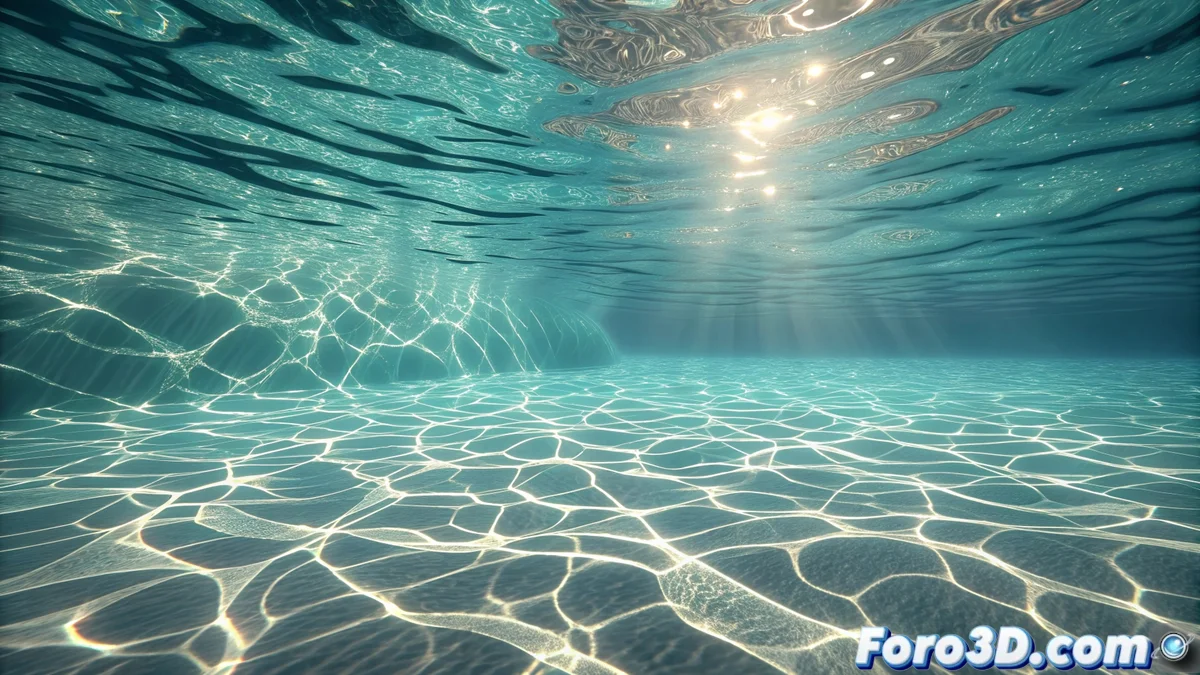
Simulating Caustics in 3D Rendering: Complexity and Optimization
When light interacts with materials like water or glass, it bends and concentrates, creating those intense glows and complex patterns we know as caustics. Observing this effect at the bottom of a swimming pool or under a glass is common, but reproducing it digitally is one of the biggest challenges in computer graphics. 🎨
The High Cost of Calculating Light Accurately
To generate realistic caustics, a rendering engine must process millions of individual light paths. Advanced techniques like path tracing or photon mapping were designed to solve this, but they require a huge number of samples to produce a clean, noise-free image. This multiplies rendering times, even with powerful hardware.
Factors that Increase Resource Demand:- Ray Convergence: Algorithms must track how light rays bend and converge at specific points.
- Complex Materials: Curved, translucent, or highly reflective surfaces increase calculation complexity.
- Noise Reduction: More samples are required to smooth graininess in high-intensity light areas.
It's the effect that makes your wine glass render take longer to finish than drinking the real glass.
Strategies to Optimize Caustic Rendering
Modern rendering engines integrate smart methods to handle this computational load without completely sacrificing quality. The goal is to find a viable balance between physical fidelity and processing speed.
Common Optimization Techniques:- Specialized Denoisers: Filters that selectively clean noise in caustics, allowing fewer samples to be used.
- Hybrid Rendering: Combining rasterization with ray tracing for specific parts of the scene.
- Adaptive Sampling: Assigning more computational resources only to areas where caustic patterns form.
A Test for Photorealism
Despite advances, faithfully simulating caustics remains one of the most expensive effects. It represents a true stress test for any scene aspiring to photorealism, whether in real-time or pre-rendered animations. Mastering its management is key for artists seeking that final degree of realism in their images. 🚀