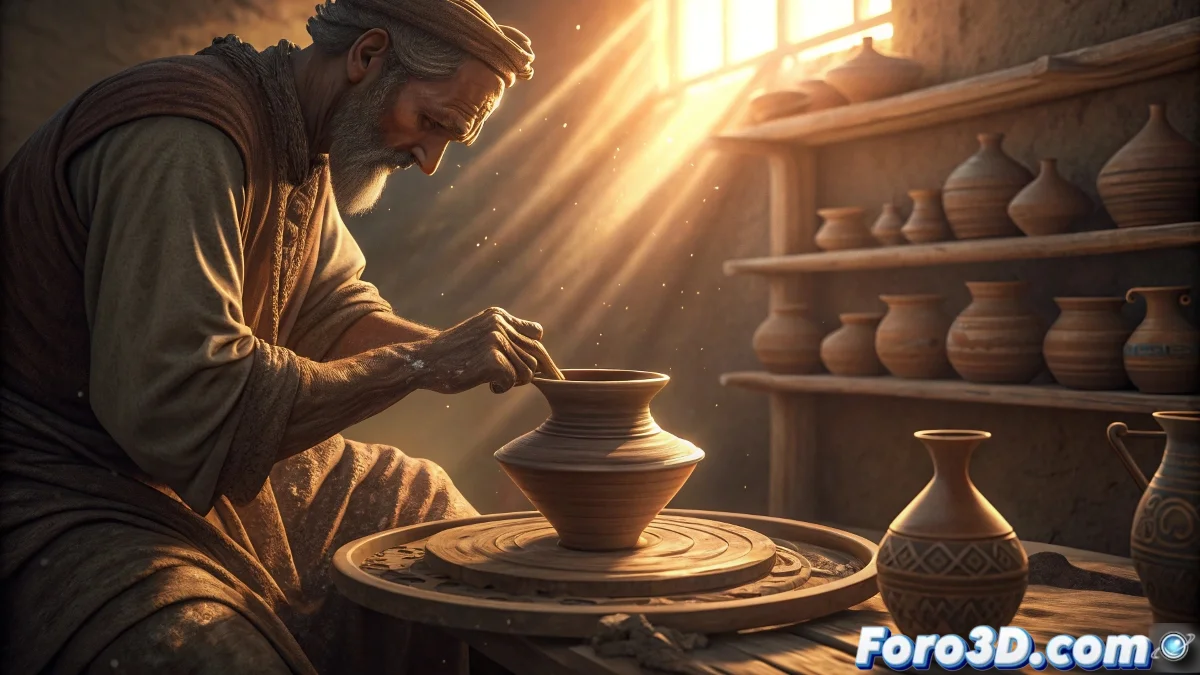
The Digitized Melancholy of a Forgotten Workshop
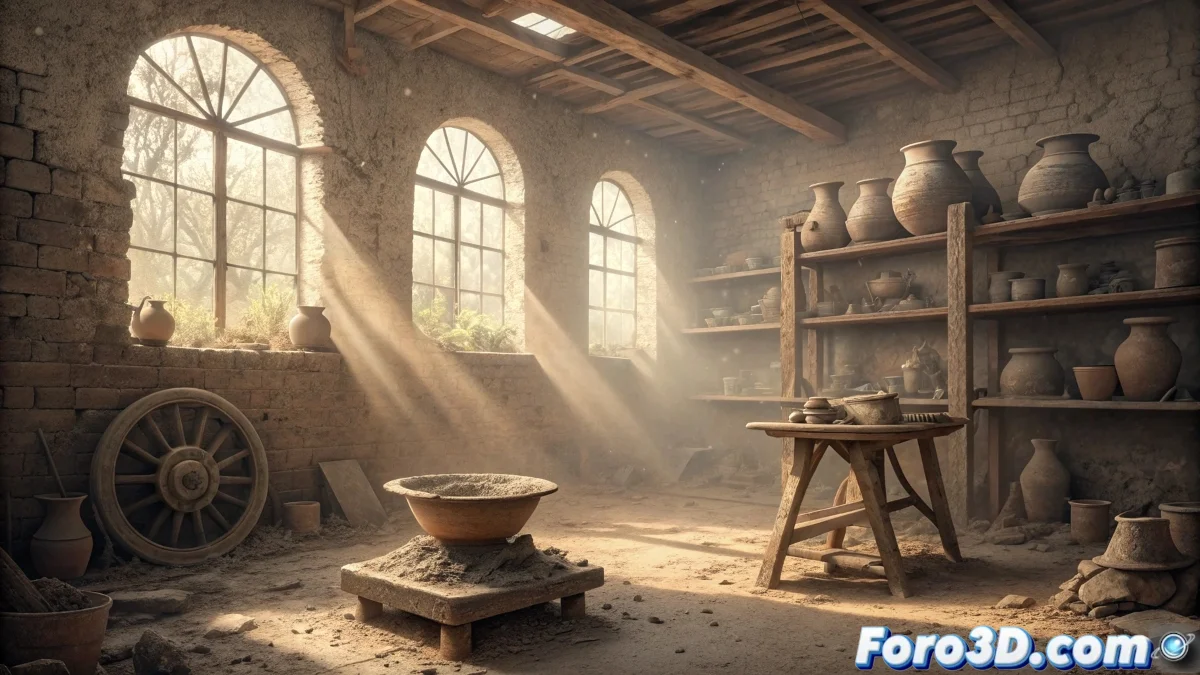
In the heart of Portillo, a village that keeps secrets between its adobe walls, lies a pottery workshop that time has turned into a fantasy. Recreating this abandoned space in Houdini represents an exercise in visual archaeology where each layer of dust tells a story. The effects software becomes a time machine, capable of simulating decades of abandonment with scientific precision and artistic sensitivity.
The process begins by understanding how natural elements and the passage of time affect the specific materials of a traditional pottery workshop. Dry clay, worm-eaten wood, rusted metal, and broken ceramics follow predictable decay patterns that Houdini can replicate through procedural systems. Every crack and speck of dust obeys real physical logics.
Key Elements of Credible Abandonment
- Procedural accumulation of dust on horizontal surfaces
- Spider webs generated algorithmically in corners and nooks
- Corrosion and rust on abandoned metal tools
- Cracks and fractures in ceramics and wooden structures
Decay Simulation Systems
The magic of Houdini lies in its ability to create layers of decay that interact coherently with each other. The dust system uses particles guided by wind fields that deposit preferentially on stable surfaces. Spider webs are generated through organic growth algorithms that simulate the real work of spiders seeking strategic anchor points.
Abandonment is not chaotic; it follows natural patterns that Houdini can calculate
Moisture and its effects are simulated through moisture maps that define how different materials absorb and show the passage of water over time. Areas near broken windows or damaged roofs show higher levels of decay, while protected areas preserve their original state better. Each element in the scene receives personalized treatment according to its material and environmental exposure.
Specific Aging Techniques
- Procedural textures for cracked wood and peeling paint
- Gravity simulation on fallen objects and natural piles
- Mold growth in damp and poorly ventilated areas
- Wind erosion on exposed edges and angular surfaces
Lighting constitutes the final element that unifies the entire simulation. Light filters dimly through dirty windows, creating visible beams that highlight suspended particles. Deep shadows hide details while diffuse reflections on dusty surfaces add that ethereal quality characteristic of abandoned spaces. The final render not only shows a space but evokes the nostalgia of what once was.
Those who think creating chaos is easy probably never had to simulate the passage of time with the meticulousness demanded by Houdini 🏺