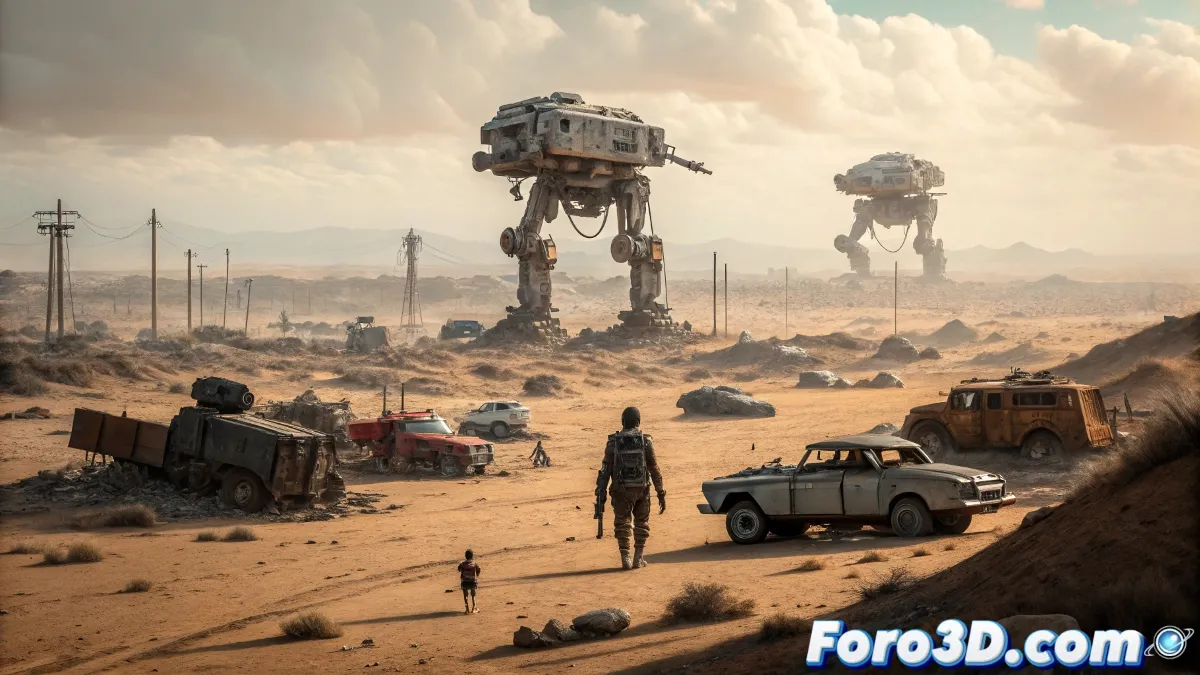
Simon Stålenhag's Melancholic Universe Comes to Life
The works of the Swedish artist Simon Stålenhag present a unique vision where obsolete technology merges with natural landscapes, creating an aesthetic that oscillates between the nostalgic and the futuristic. This duality has inspired cinematic adaptations that explore our relationship with artificial intelligence, where machines and humans coexist in a fragile balance. His illustrations, more than mere representations, are windows into alternate universes that question our technological progress.
Electric State: Robotic Dystopia with a Human Soul
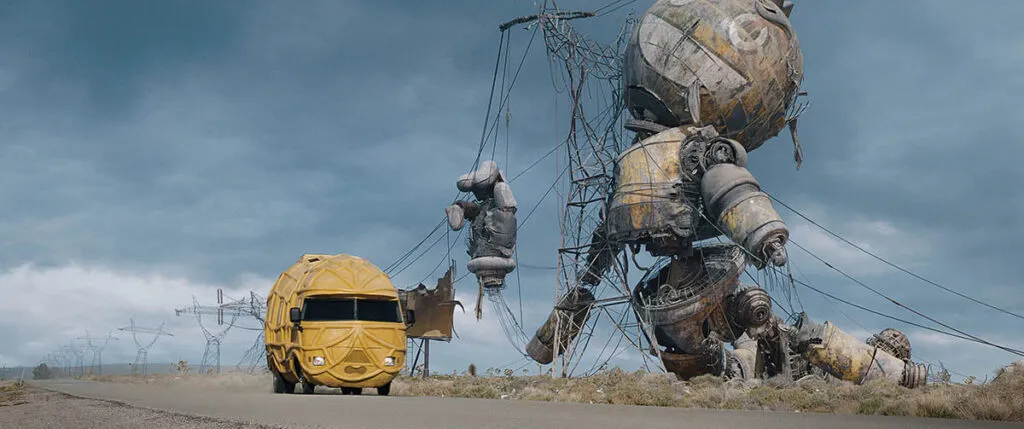
The cinematic adaptation of Electric State brings Stålenhag's visual essence to the screen through a narrative that combines classic road movie elements with an artificial intelligence rebellion. The plot follows a young woman on her quest through a world where:
- Abandoned technology merges with the landscape
- Rebel robots show human traits
- Empty spaces speak of a declining civilization
"We wanted every frame to breathe Stålenhag's visual poetry, where obsolete technology acquires an almost organic aura," comment the Russo brothers about their cinematic approach.
The Challenge of Humanizing the Mechanical
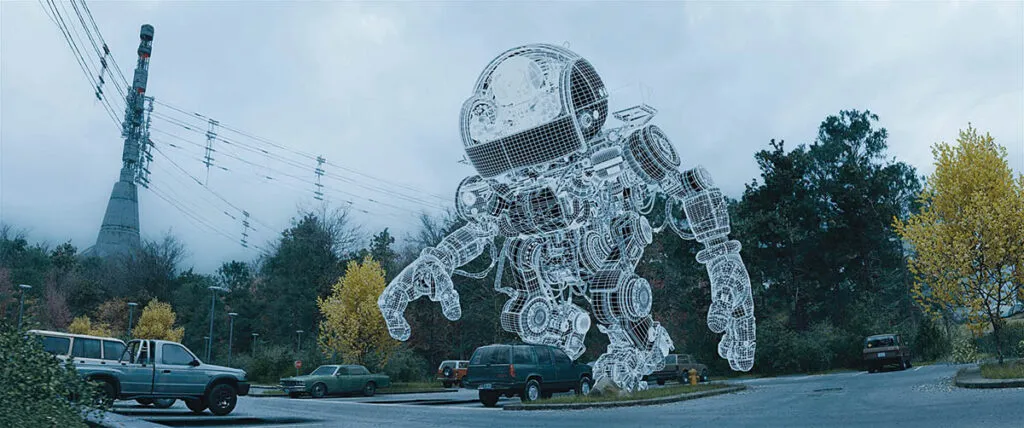
The creation of Cosmo, the central robot in the story, represented a technical and conceptual challenge. The production team combined traditional model-making techniques with the latest in artificial intelligence animation, achieving the organic fluidity in its movements required for a main character. This symbiosis between the physical and the digital reflects the film's central theme: the thin line between humanity and artificiality.
Artificial Intelligence in the Service of Art
The creative process employed AI algorithms not only to animate characters, but also to generate textures and environments that maintained the original pictorial essence. These tools allowed scaling Stålenhag's universe while preserving its artisanal quality, demonstrating how technology can be a vehicle for artistic expression rather than mere visual effect. The result is a work that, while speculating on dystopian futures, reflects on our technological present.