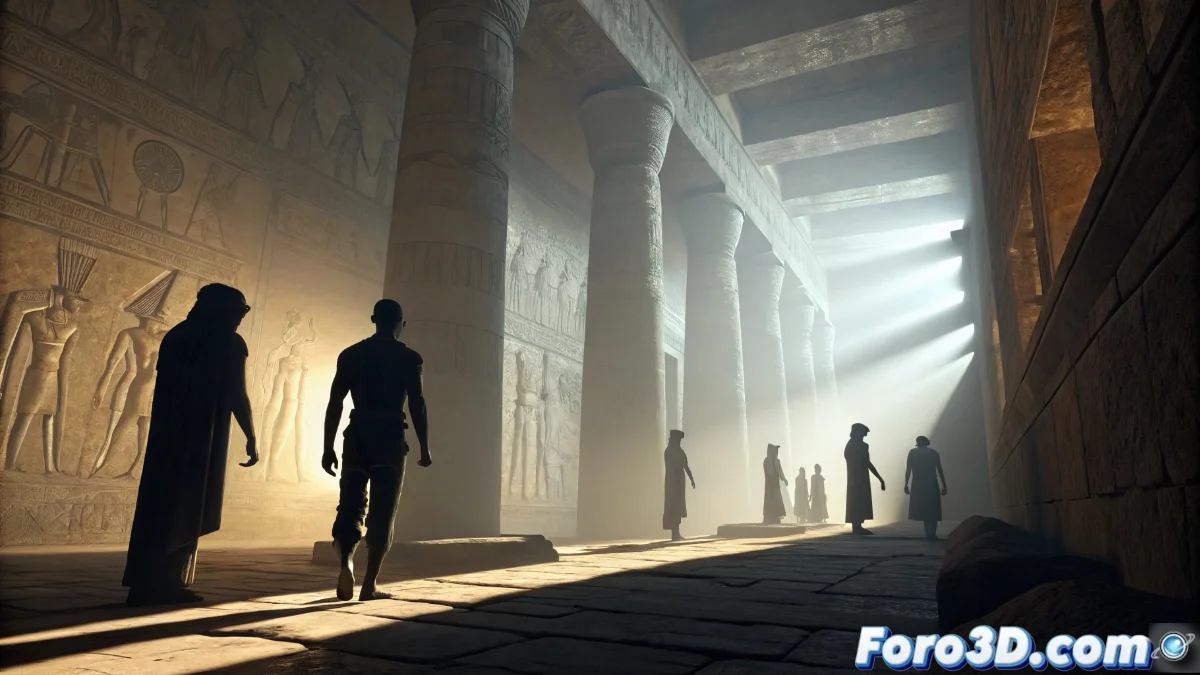
Projected Silhouettes as Visual Narrative in 3D Environments
Shadow projections in the three-dimensional realm have evolved from simple lighting effects to becoming sophisticated narrative instruments. These dark, outlined shapes function as signifying elements that transcend visual time, hinting at events prior to the present moment or anticipating future occurrences within the scene's timeline 🎭.
Technical Implementation in Rendering Engines
The realization of narrative-loaded shadows requires specialized technical approaches where lighting systems closely collaborate with rendering processes. In platforms like Unreal Engine and Unity, developers configure directional light sources using high-definition shadow maps that record precise silhouettes of elements that no longer physically exist in the three-dimensional environment.
Advanced Technical Strategies:- Implementation of custom shaders that give ethereal and translucent qualities to the projections
- Application of post-processing effects to differentiate these narrative shadows from conventional ones
- Creation of the visual memory effect through manipulation of opacity and blurring parameters
The true narrative power lies in what we suggest through strategically projected absences, demonstrating that in three-dimensional visual language, the implied often surpasses in impact what is explicitly shown.
Creative Applications in Various Interactive Media
This expressive resource finds particularly effective implementations in investigative video games and graphic adventures, where projected silhouettes operate as environmental clues that guide player progression. In computer-generated cinematic productions, these projections anticipate decisive moments or reveal traumatic experiences in characters' biographies.
Specific Fields of Application:- Mystery video games where shadows function as non-verbal contextual clues
- Cinematic animation that uses projections to reveal emotional backgrounds
- Virtual reality experiences that leverage these techniques to create immersive spatial discoveries
The Narrative Power of Visual Ellipsis
The creative paradox lies in the fact that to communicate complex stories, we often require fewer visible elements and more deliberately projected absences. This approach demonstrates that in the three-dimensional universe, what we do not directly exhibit can acquire greater narrative resonance than what is explicitly shown, transforming simple light projections into vehicles of deep emotional and temporal meaning ✨.