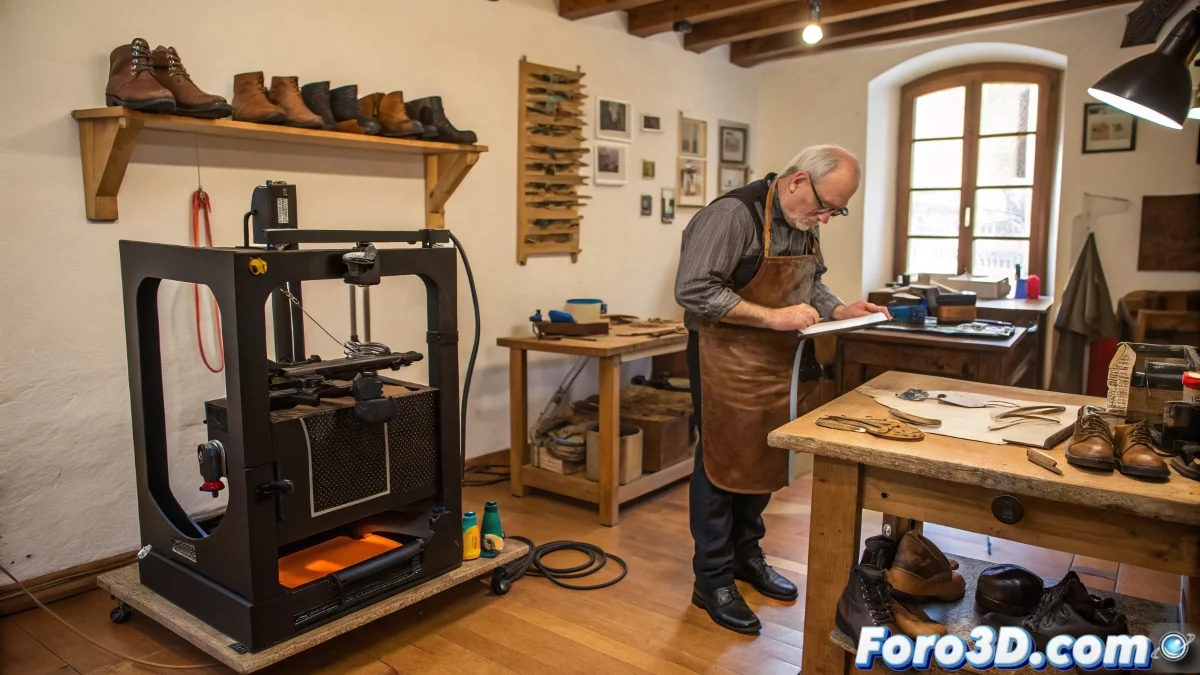
21st Century Shoemakers: When Leather Meets Filament
In that corner filled with the smell of glue and leather where the lasts seem to have always lived, a new work companion has appeared: the 3D printer. Don't expect it to print designer shoes (yet), but it does solve those problems that make a shoemaker lose customers and gain headaches. That said, it still can't print that customer who insists on reviving their 1998 sneakers.
"The modern shoemaker's best ally: hammer, awl, good eye for footwear... and a 3D printer for when the manufacturer says 'that’s no longer produced'"
Repairs Born from a Digital File
Among worn soles and broken heels, the shoemaker faces a constant dilemma: parts that no longer exist or are impossible to find. 3D printing appears as that magical apprentice that can materialize what the catalog forgot. From vintage buckles to special soles, the shoemaking workshop has just gained a superpower.
- Impossible spare parts for old footwear
- Custom tools for specific jobs
- Adapters for obsolete sewing machines
- Guides for precise cuts in leather
Customization That Steps Strong
Beyond repairs, 3D printing allows creating what no manufacturer offers: exact orthopedic insoles, invisible reinforcements, unique decorative details... The only limitation is imagination (and the filament's durability). That said, be careful about promising "any design," because then they come asking for heels with LED lights and you end up learning electronics at night.
What No Shoemaking Manual Includes But 3D Solves
Between stitches, there are hundreds of small miracles that a printer can make real:
- Custom lasts for special shoes
- Custom rivets and ornaments
- Insoles with perfect fit to the foot arch
- Supports to organize tools in the workshop
Tradition with a Touch of Innovation
In the end, 3D printing doesn't come to replace the shoemaker's art, but to give it more tools for the trade. Because when it comes to bringing life back to a good pair of shoes, it doesn't matter if the solution comes from a supplier or an STL file. What's important is that customers keep walking comfortably, even if they now have a touch of smart plastic in their soles. And who knows, maybe soon they can even print that self-adjusting shoe... though that would be cheating. 👞😉
So now you know: the next time you see a 3D printer in a shoe repair shop, it's not that they've opened a tech lab. It's simply the natural evolution of a craft where practicality and craftsmanship have always gone hand in hand.