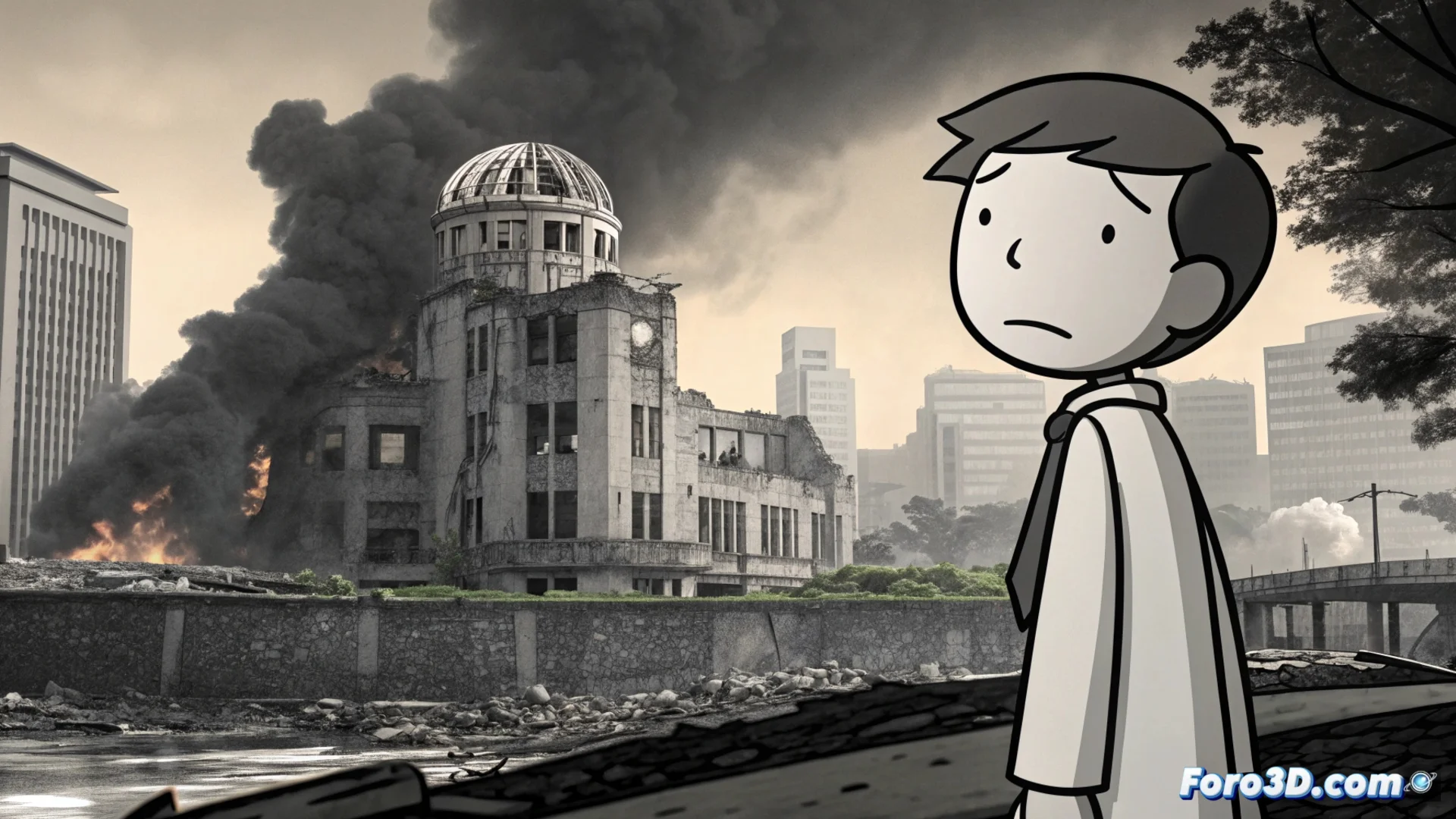
Shigeru Mizuki Narrates Japan's History in Showa
The master of manga Shigeru Mizuki compiles a monumental work titled Showa: A History of Japan. This graphic project spans the extensive Showa period, which runs from 1926 to 1989. Mizuki not only recounts the major national milestones but intertwines them with his own biography, offering an intimate and unique perspective that includes his direct experience in World War II. This method creates a complex narrative where the historical and the personal merge. 📚
A Visual Contrast That Defines the Work
Mizuki's artistic style is characterized by a deliberate and powerful contrast. The characters, including his self-representation, are drawn with a simple and caricatured line. However, they are placed against photorealistic backgrounds, meticulously detailed and frequently based on photographic archives from the era. This aesthetic decision is not casual; it visually underscores the vulnerability of the individual against the impersonal forces of history and massive social changes.
Key Features of the Graphic Approach:- Simplified Characters: Figures with accessible and expressive designs that represent ordinary people.
- Hyper-Detailed Scenarios: Backgrounds that accurately recreate cities, battlefields, and everyday scenes from the Showa era.
- Fusion of Styles: The combination of both styles generates a unique and reflective visual narrative.
The reader sometimes forgets that the one-armed little man with a perplexed expression wandering through scenes of devastation is the author himself.
Testimony of a Crucial Era
Beyond its graphic innovation, the series functions as a historical document of great value. Mizuki does not limit himself to listing events like the war or postwar reconstruction. He delves into describing everyday life, economic hardships, and the collective mentality that defined those years. By including his personal memories, the author manages to humanize historical events, allowing an understanding of how ordinary citizens perceived and suffered their nation's transformations.
Dimensions of the Testimony Offered by the Work:- Accessible History: Presents complex events in an understandable way through the language of manga.
- Bottom-Up Perspective: Tells history not from palaces, but from the street and the battlefield.
- Traumatic Experience: Includes the first-person account of how he lost his left arm during the war conflict.
A Legacy That Transcends the Genre
Showa: A History of Japan transcends the category of mere comic book to establish itself as a unique testimony in Japanese graphic culture. Mizuki uses his art not only to entertain, but to preserve collective memory and offer a deep reflection on the relationship between the individual and the current of history. The work stands as a bridge between traditional manga and documentary graphic novel, leaving an indispensable legacy for understanding 20th-century Japan. 🎌