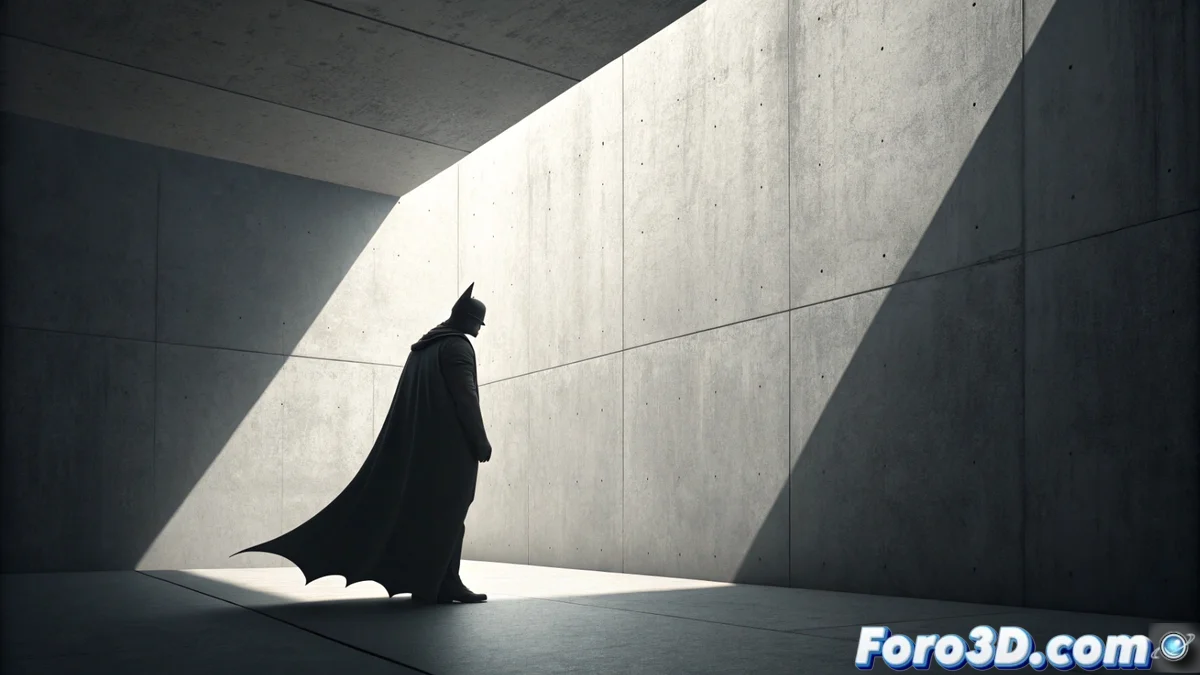
Shadows as Protagonists in Creative Photography
In the realm of creative photography, there is an approach where shadows abandon their traditional role. They cease to be a mere element that adds volume and transform into the central subject of the image. The attention shifts to the abstract and dramatic shapes they project onto a surface, while the object that originates them fades or disappears completely. This role reversal builds a unique visual narrative, based on the interpretation of distorted silhouettes, generating a powerful sense of mystery 🎭.
Planning and Capturing the Main Shadow
Achieving a shadow as the protagonist requires precise control over lighting. A hard and lateral light, like the sun low at dawn or dusk, is ideal because it produces shadows with sharp edges and very elongated. The photographer must seek smooth surfaces, like walls or floors, that act as a perfect canvas. It is crucial to move to find the angle where the shadow takes its most interesting shape, and using a telephoto lens can help crop the composition, isolating only the desired fragment of the light play.
Key Elements for Capture:- Light Direction: A lateral and low source creates long and defined shadows.
- Projection Surface: Look for uniform backgrounds without distracting textures.
- Framing and Angle: Isolate the shadow, often excluding the object that generates it from the frame.
The true essence of the scene does not always reside in the physical object, but in the story its shadow tells.
Processing to Highlight the Graphic Concept
Post-processing on the computer is essential to enhance the initial idea. Levels are adjusted to achieve deep blacks, eliminating superfluous details in the shadows and simplifying the scene. Cropping can be decisive, suppressing any reference to the original object if it does not contribute to the message. Converting the image to black and white is a very effective strategy, as it eliminates color distraction and focuses all attention on shapes, textures, and pure luminous contrast.
Processing Steps:- Adjust Levels and Blacks: To achieve solid shadows and eliminate distracting elements.
- Crop Aggressively: Simplify the composition to its graphic essence.
- Use Black and White: Focus attention on shape and contrast, without the color variable.
Reinterpreting the Visual Scene
This photographic approach invites the viewer to actively participate in constructing the meaning. By hiding the direct reference, intrigue is generated and the door to multiple interpretations is opened. The next time you see an elongated shadow, consider stopping to explore the framing where it is the true protagonist, where the projected shape has more narrative weight than the body that originates it 🔦.