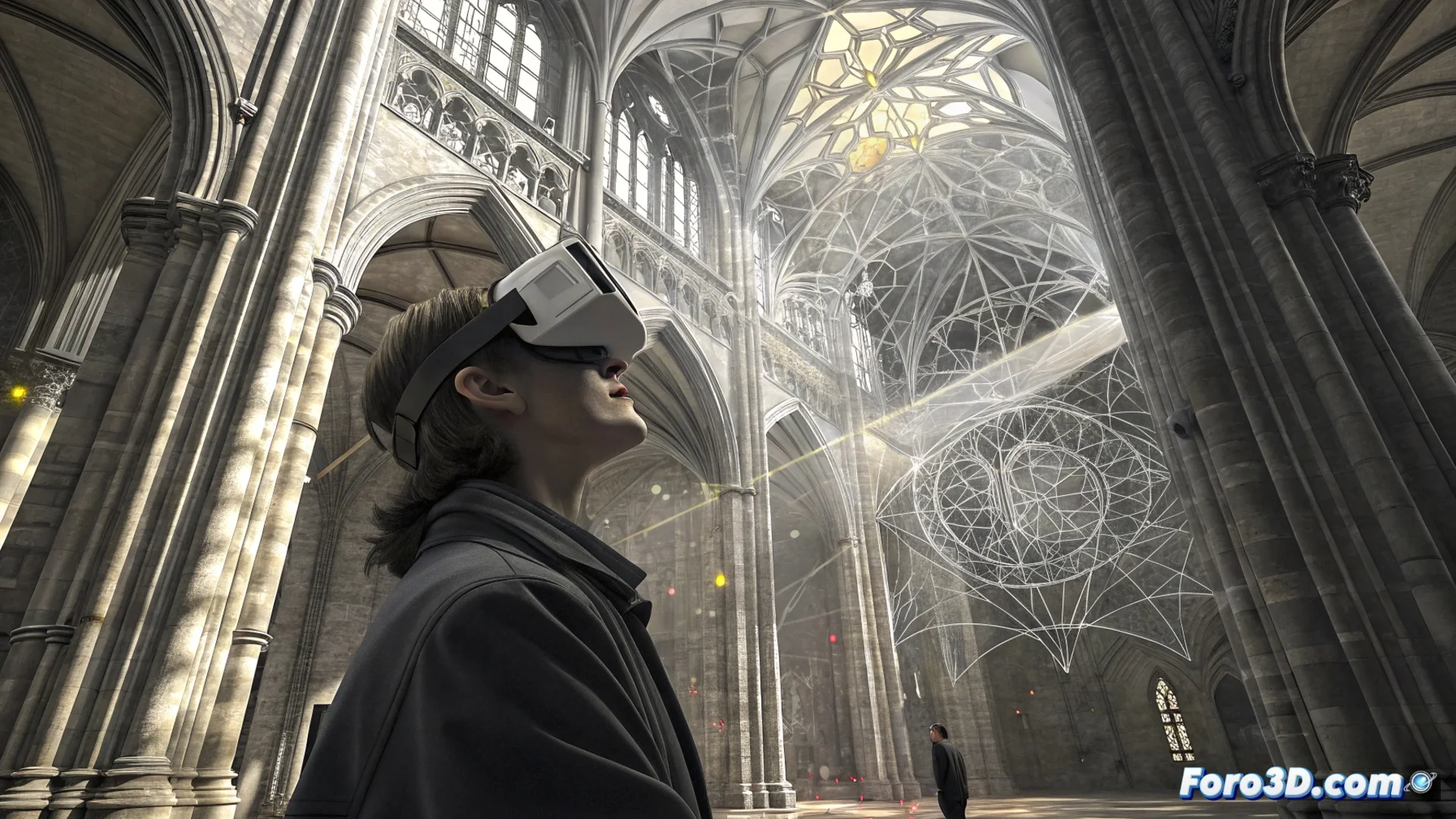
Seville Transforms Its Tourism with 3D Models of Heritage
The tourism sector in Seville is changing how its cultural wealth is showcased. Now, companies not only organize traditional visits, but also build complete digital replicas of their most emblematic buildings and squares. This advancement allows anyone, from anywhere, to examine the architecture with a level of detail previously impossible and travel back in time to see what these spaces were like. The goal is to enrich the cultural experience and reach a wider audience 🏛️.
Digital Reconstruction Opens Virtual Doors
Techniques such as laser scanning and photogrammetry capture every detail of sites like the Alcázar or the Plaza de España. With the data obtained, precise three-dimensional models are generated that are the heart of new applications. Companies create virtual tours to explore from a web browser and also design experiences where, with virtual reality glasses, one can walk through a Sevillian street from another era. This tool does not replace the real visit, but enhances it.
Main 3D Applications in Tourism:- Self-guided Virtual Tours: Accessible from home with a computer, tablet, or smartphone to explore at your own pace.
- Immersive Experiences in Centers: Visitors use virtual reality equipment in specific locations for total immersion.
- Historical Visualizations: Models that show the different construction phases of a monument over the centuries.
3D technology allows us to preserve, explain, and share our heritage in a way that was previously science fiction. It is a powerful complement to the physical experience.
Democratizing Access and Aiding Preservation
Digitalizing heritage has a direct impact on accessibility. People with reduced mobility can "visit" hard-to-reach areas, such as the high roofs of the Cathedral or very narrow spaces. Additionally, these digital models are a vital tool for restoration teams, as they document the exact state of an architectural element at a given moment. Tour guides now use tablets to show animations that explain complex construction processes or the functioning of ancient mechanisms.
Key Benefits of Digitalization:- Universal Access: Overcomes physical and geographical barriers to know the heritage.
- Documentation for Restoration: Precise digital archive that serves as a reference for future interventions.
- Educational Tool: Guides and educators use the models to explain concepts visually and interactively.
The Future of Cultural Visits
This technological evolution is redefining what it means to visit a historic place. Soon, the option to "climb" the Giralda virtually will be common, offering a unique perspective without physical limits. However, the value of the on-site experience, with all its sensory stimuli, remains irreplaceable. The combination of physical and digital creates a layer of knowledge and access that makes culture deeper, more understandable, and, above all, available to everyone 🌍.