Seconds by Bryan Lee O'Malley: when correcting the past disrupts the future
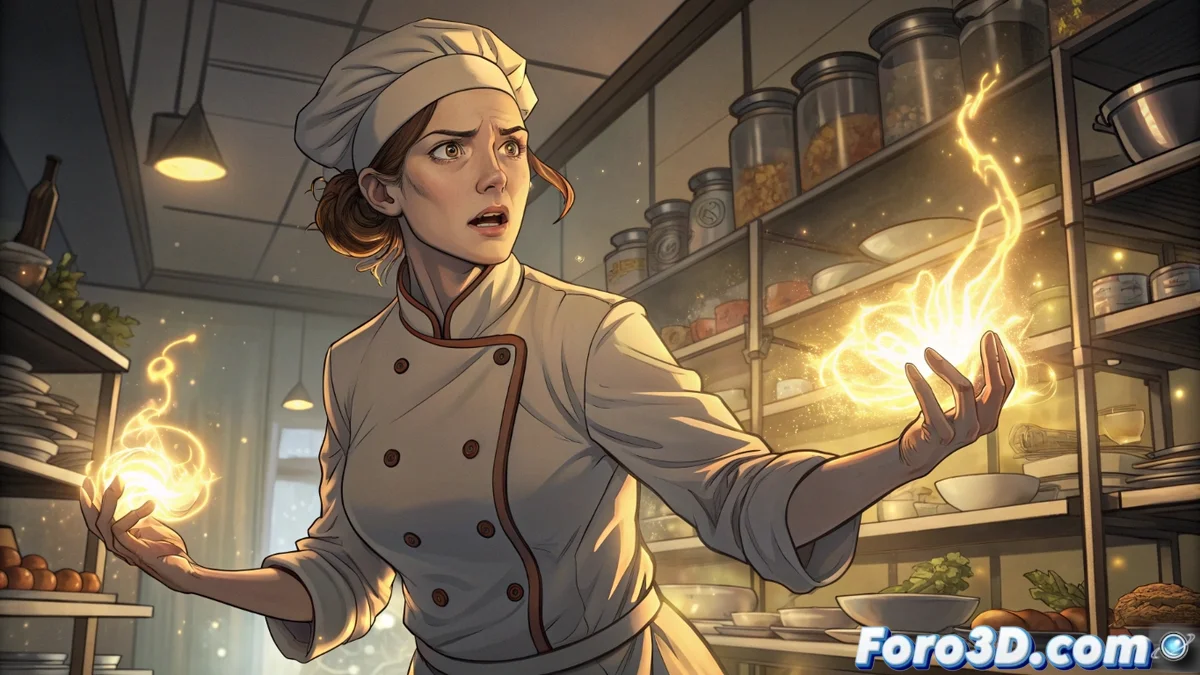
Bryan Lee O'Malley, the creator of Scott Pilgrim, returns with an intimate and fantastical story. Seconds introduces us to the life of Katie, a talented chef who founded the Seconds restaurant. One night, an encounter with a mysterious spirit grants her a unique power: the ability to rewrite her mistakes. What begins as an opportunity to perfect her life quickly turns into a spiral of unforeseen events. 🍳
A graphic style that evolves and defines
O'Malley refines his characteristic stroke, maintaining the expressive energy and clear roots in manga that defined his previous work. However, in this piece, he takes a step forward. He implements a more sophisticated and deliberate color palette that accompanies the emotional nuances of the plot. The narrative rhythm he establishes is key; it precisely balances moments of absurd comedy with deep dramatic twists, making the story progress fluidly and engagingly. The evolution of his art is palpable in every panel.
Thematic pillars of the story:- Regret and responsibility: The fantastical premise serves to examine how people carry their failures and the desire to amend them.
- The illusion of control: Katie discovers that altering a past event does not guarantee an ideal future, but can generate bigger problems.
- The culinary metaphor: The comic suggests that, both in the kitchen and in life, adding too many ingredients to fix a recipe can ruin the dish completely.
"Sometimes accepting the consequences is an essential part of growing up."
Characters that add flavor to the conflict
Katie is not alone on her journey. A well-defined cast of secondary characters brings different perspectives and depth to the central conflict. The employees of her restaurant and the peculiar entity that grants her the power interact with her, challenging her decisions and reflecting the ramifications of her actions. This interaction enriches the narrative and underscores the theme that our lives are intrinsically connected to those of others.
Key elements of narrative development:- Magical premise with real foundations: The supernatural element is a vehicle to explore universal human conflicts.
- Chain consequences: Each modification Katie makes to her past unleashes a series of chaotic events that threaten everything built.
- The journey of maturity: The protagonist must learn that growing up involves assuming one's own mistakes, not erasing them.
A final reflection on destiny
Seconds transcends the simple fantastical story to offer a powerful reflection on the desire to control our path. O'Malley weaves a narrative that warns of the dangers of obsessing over an idealized version of the past and future. The comic concludes that true maturity, and perhaps true happiness, lies in navigating the imperfections of the life we have already cooked, rather than constantly trying to reinvent the recipe. 🧑🍳