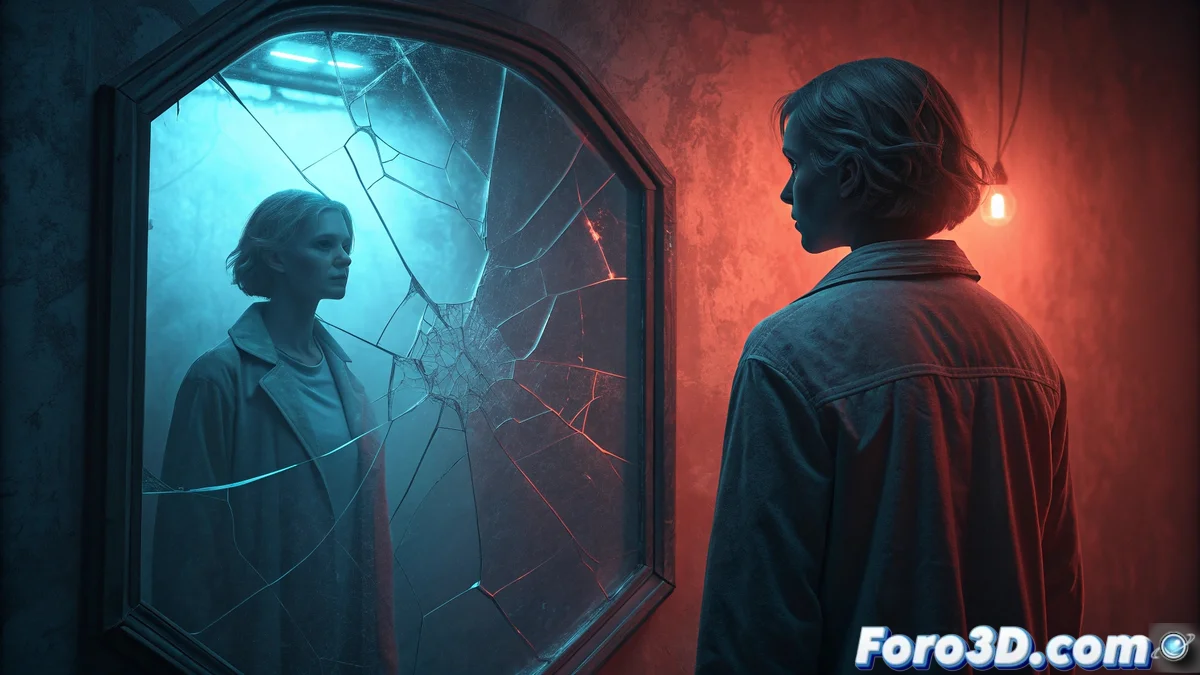
Sebastián G.'s Doppelgänger: The Psychological Horror of Facing Oneself
Among the shadows of psychological horror emerges Doppelgänger, the unsettling work by Sebastián G. that explores the most intimate and disturbing fear: facing oneself. Published under the Bruma label, this story plays with the notion of the other self, that imperfect reflection that dwells right on the edge of sanity, creating tension born from the splitting of human identity. 👥
The Terror of Looking in the Mirror
Through a sober language and an atmosphere charged with ambiguity, Sebastián G. dissects the literal and metaphorical fear of the mirror. The work stands out for its introspective approach, where the true threat is not external monsters, but the fragmented psyche itself and the possibility that our reflection may have intentions of its own. 🌫️
Highlighted Narrative Elements:- Exploration of the concept of the double or alter ego
- Psychological setting and oppressive atmosphere
- Tension based on identity and self-knowledge
The true horror is not in the supernatural, but in discovering that perhaps the reflection is waiting to take your place
Expressionist Influences and Visual References
The visual references of Doppelgänger directly evoke classics of German expressionism and contemporary psychological horror, with clear echoes of works like Black Swan or Enemy. This cinematic heritage translates into a distinctive visual aesthetic that enhances the sensation of splitting and distorted reality. 🎭
Recognizable Artistic Influences:- German expressionism and its treatment of madness
- Contemporary psychological suspense cinema
- Conceptual art on identity and duplication
Visual Techniques to Represent Duality
From a technical perspective, the scene construction could be imagined with contrasting dual lighting - cold and warm sources - to accentuate the dichotomy between the original self and its copy. In a 3D environment, this aesthetic could be achieved with Unreal Engine or Blender, using reflective materials and post-processing effects to distort the environment and simulate a fragmented mind. 💡
Suggested Technical Resources:- Dual lighting to represent psychological division
- Reflective materials and distortion effects
- Visual composition emphasizing symmetry and rupture
The Reflection's Wait
What makes Doppelgänger a particularly disturbing work is its fundamental conceptual twist: the possibility that our double does not imitate us, but observes us patiently waiting for the precise moment to take our place in reality. This premise transforms the everyday act of looking in the mirror into a potential existential confrontation. ✨