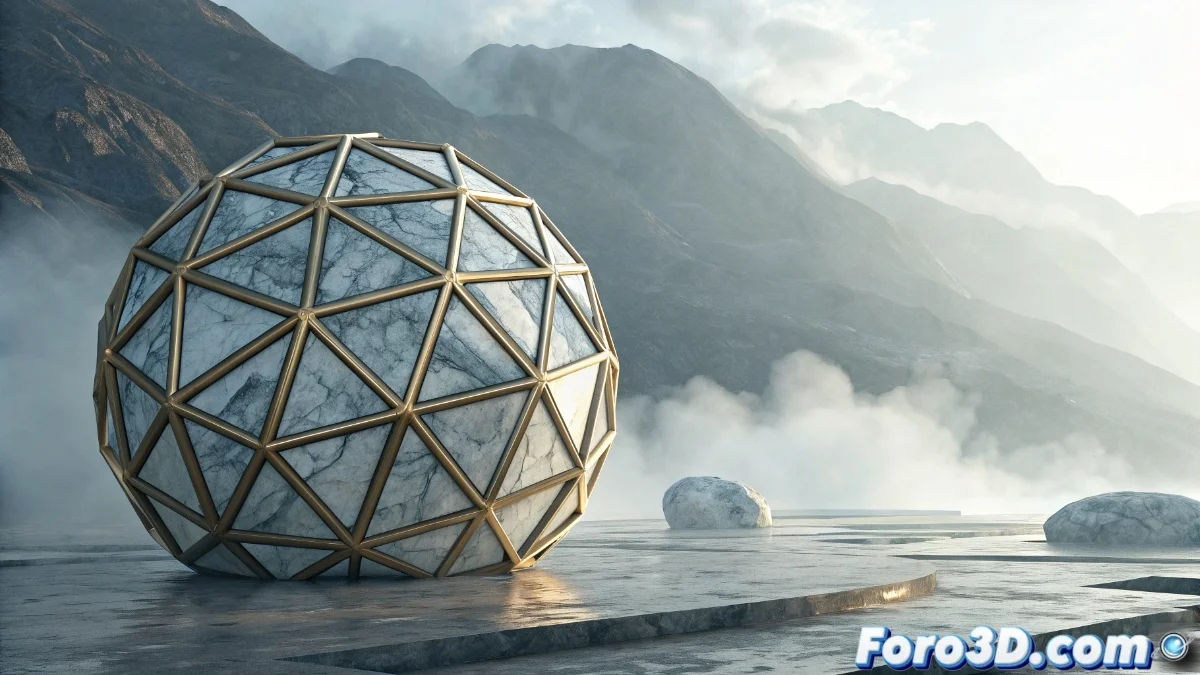
Sculptural Animation as Visual Metamorphosis
Sculptural animation redefines the boundaries of digital art by focusing on the continuous transformation of forms, shifting traditional narratives towards a pure exploration of geometric evolution. Each frame functions as an independent sculpture that fluidly interacts with the previous one, creating hypnotic visual choreographies where virtual materiality comes to life. 🌀
Advanced Techniques for Non-Linear Transformations
Artists employ methodologies that break with temporal linearity, using particle systems, force fields, and dynamic shaders to generate unpredictable morphologies. Through engines like Houdini or Unity, they program material behaviors where parameters like gravity and elasticity become sculptural tools. This approach allows, for example, a cube to disintegrate into a swarm of spheres that then coalesce into a crystalline structure, without the need for a narrative justification, only the internal logic of the form.
Key Tools and Processes:- ZBrush and Blender for digitally sculpting sequences that mutate organically
- Particle systems that generate fluid and random transitions
- Dynamic shaders that alter textures and volumes in real-time
The true art resides in the interstice between one form and the next, where metamorphosis becomes the essence of the visual experience.
The Role of the Viewer in the Perceptual Experience
Active contemplation is placed at the center of this discipline, where the value lies not in the final destination, but in the journey of the form. Animations often present infinite cycles or reversible transformations, emphasizing the processual nature and allowing one to observe how light interacts with folding surfaces or how volumes compress until they become flat. This approach turns time into another sculptural material, where the duration and rhythm of the transformations are meticulously calibrated to provoke awe at the pure formal potentiality.
Notable Perceptual Elements:- Infinite cycles that emphasize the processual nature of forms
- Light interaction with constantly deforming surfaces
- Rhythm calibration to maximize visual and emotional impact
The Philosophy Behind Animated Sculptural Creation
Artists who practice this discipline develop a unique relationship with concepts like undo and redo, spending more time contemplating the transitions than the final result. This perspective reflects a search for artistic essence in the intermediate spaces, where true creation occurs between one form and the next. Sculptural animation not only challenges narrative conventions but redefines our understanding of materiality and time in digital art. ✨