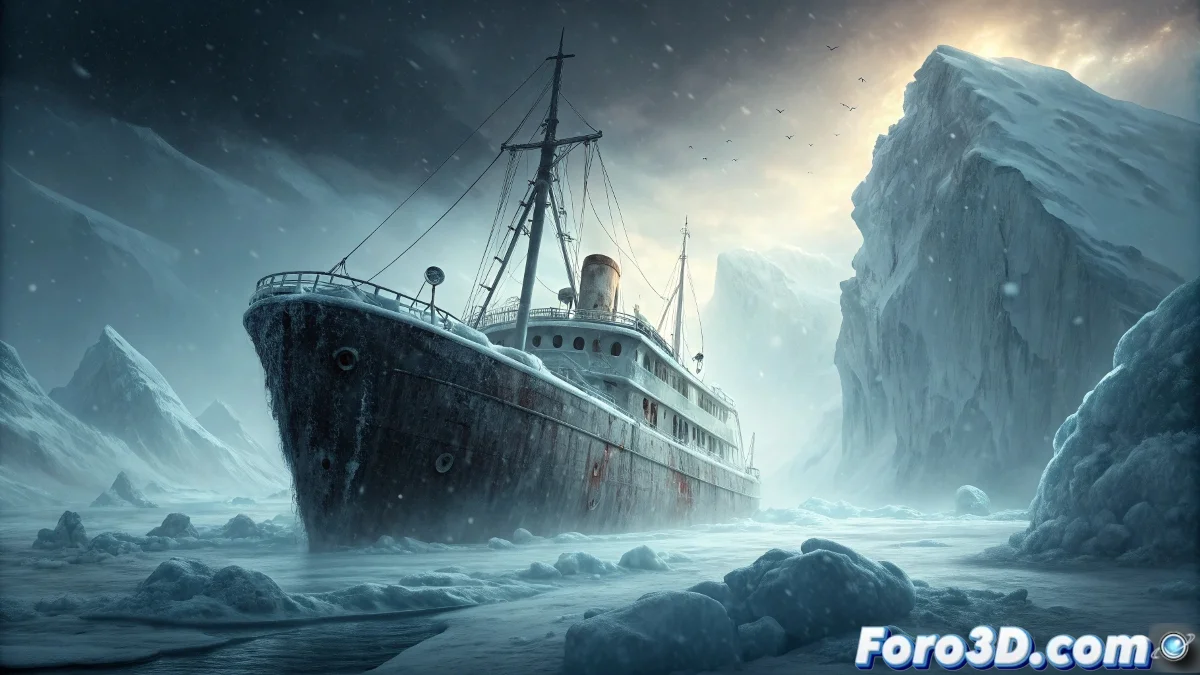
Sculpting the SS Baychimo in ZBrush: The Arctic Ghost Ship
The SS Baychimo represents one of the most fascinating maritime mysteries of the 20th century, known worldwide as the "Arctic Ghost Ship". This steam merchant vessel, owned by the Hudson's Bay Company, became trapped in ice near Alaska in 1931 during a fur trading expedition. Although the crew was rescued and the ship was given up for lost, the Baychimo began to reappear mysteriously over the next three decades, being sighted on multiple occasions drifting unmanned through the Arctic Ocean. The mystery lies in how this 1,322-ton ship survived for 38 years in the most extreme conditions, becoming a living legend that refused to sink. 🚢
Historical Research and Ship References
Start by studying the specific characteristics of the SS Baychimo, a Scottish-built merchant vessel 230 feet in length. Research historical photographs and plans of similar ships from the era to accurately capture the characteristic naval architecture of the 1920s.
Preparation in ZBrush:- Import or create base mesh with the correct proportions of the merchant ship
- Divide into main subtools: hull, superstructure, masts, and smokestack
- Set up DynaMesh with appropriate resolution for erosion and ice details
"The Baychimo was not just any ship; it was a steel ghost that defied the laws of time and nature in the Arctic" - Maritime Historian
Sculpting the Hull and Main Structure
Use basic sculpting brushes to define the characteristic shape of the steel hull and the ship's superstructure. The Baychimo had a straight bow typical of freighters of its time and a rounded stern.
Structural Sculpting Techniques:- Use Clay Buildup to create the basic shapes of the hull and decks
- Apply Trim Dynamic to define clean edges on the metal structure
- Use hPolish for flat surfaces like decks and hull sides
Erosion and Ice Damage Details
The Arctic ice caused unique wear on the ship's structure. Develop textures and details that show dents from ice pressure, stepped rust, and saltwater corrosion after decades of exposure.
Brushes for Erosion Effects:- Dam Standard with custom alphas for rust and corrosion
- Slash for cracks and structural damage from ice pressure
- Inflate with low pressure for dents and hull deformations
Ice Accumulations and Arctic Elements
Create realistic ice formations that accumulated on the ship during its Arctic drift. Develop frost layers, icicles, and ice sheets that capture the extreme conditions the Baychimo faced.
Techniques for Ice Effects:- Use ice and crystal alphas for surface ice textures
- Apply Snake Hook to create hanging icicles from decks and edges
- Use Mesh Extraction to generate accumulated ice layers
Spectral Atmosphere and Narrative Elements
Incorporate details that convey the ghostly nature of the ship, such as time-worn elements, absence of human life, and the characteristic solitude of a vessel that sailed unmanned for decades. The final result should evoke the legend and mystery that made the SS Baychimo one of the most intriguing maritime phenomena in history. ❄️