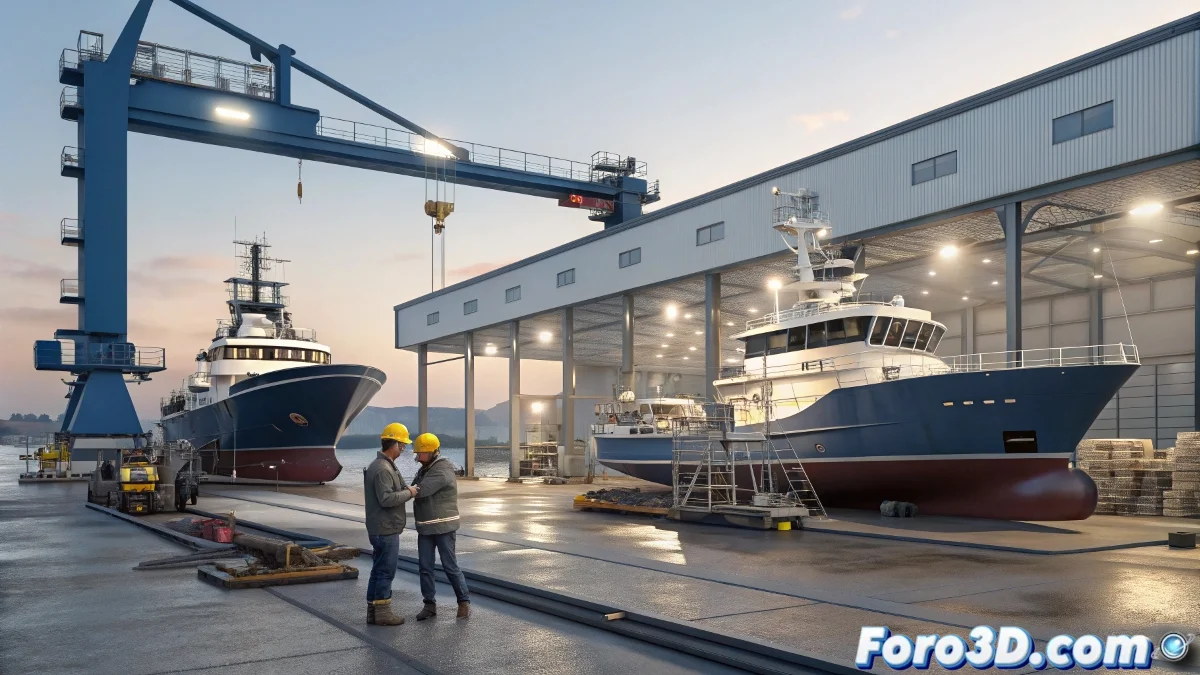
The 3D Printing Revolution Sails to Scotland
The Scottish maritime sector is embarking on an unprecedented technological journey with the implementation of 3D printing for naval components. ⚓ This innovative project, backed by technology centers and local maritime entities, demonstrates the enormous potential of additive manufacturing to transform a traditionally conservative industry. The goal is threefold: significantly reduce costs, shorten production times, and promote more sustainable practices in the maritime field.
The initiative seeks to replace critical parts in ships through additive manufacturing, allowing components to be produced on demand directly in ports or shipyards. 🏭 This drastically reduces dependence on international supply chains, which often cause costly delays in commercial and transport operations. The ability to repair vessels more quickly not only improves operational efficiency but also represents a significant advance in maritime fleet availability.
A paradigm shift that brings manufacturing closer to the point of use, reducing global logistics.
Technical Advantages that Make Any Project Float
The advantages of 3D printing in the naval sector are as numerous as they are compelling. The reduction in production lead times is spectacular, with parts that can be manufactured in hours or days instead of weeks or months. ♻️ Environmental sustainability improves radically thanks to the use of recyclable materials and processes with less material waste compared to traditional subtractive manufacturing methods. Additionally, design flexibility allows for the creation of optimized geometries that would be impossible to produce with conventional techniques.
The most significant benefits include:
- On-demand production at port locations
- Reduction of inventories and storage costs
- Ability to manufacture customized parts quickly
- Lower carbon footprint in component manufacturing
Sailing Toward the Future of Maritime Manufacturing
Project leaders see additive manufacturing as a strategic pathway to modernize the Scottish naval industry, positioning it as a global benchmark in technological innovation. 🌊 In the coming years, they expect to scale these initial tests to larger components with greater mechanical strength, expanding applications in both commercial and military sectors. The adaptation of metal alloys and advanced composites specific to corrosive marine environments represents the next development horizon.
If ships no longer sink due to a lack of spare parts, perhaps sailors will have to invent new creative excuses to justify their delays in arriving at port. ⛵ A modern irony that demonstrates how technology not only solves practical problems but also forces our most ingrained traditions to evolve.