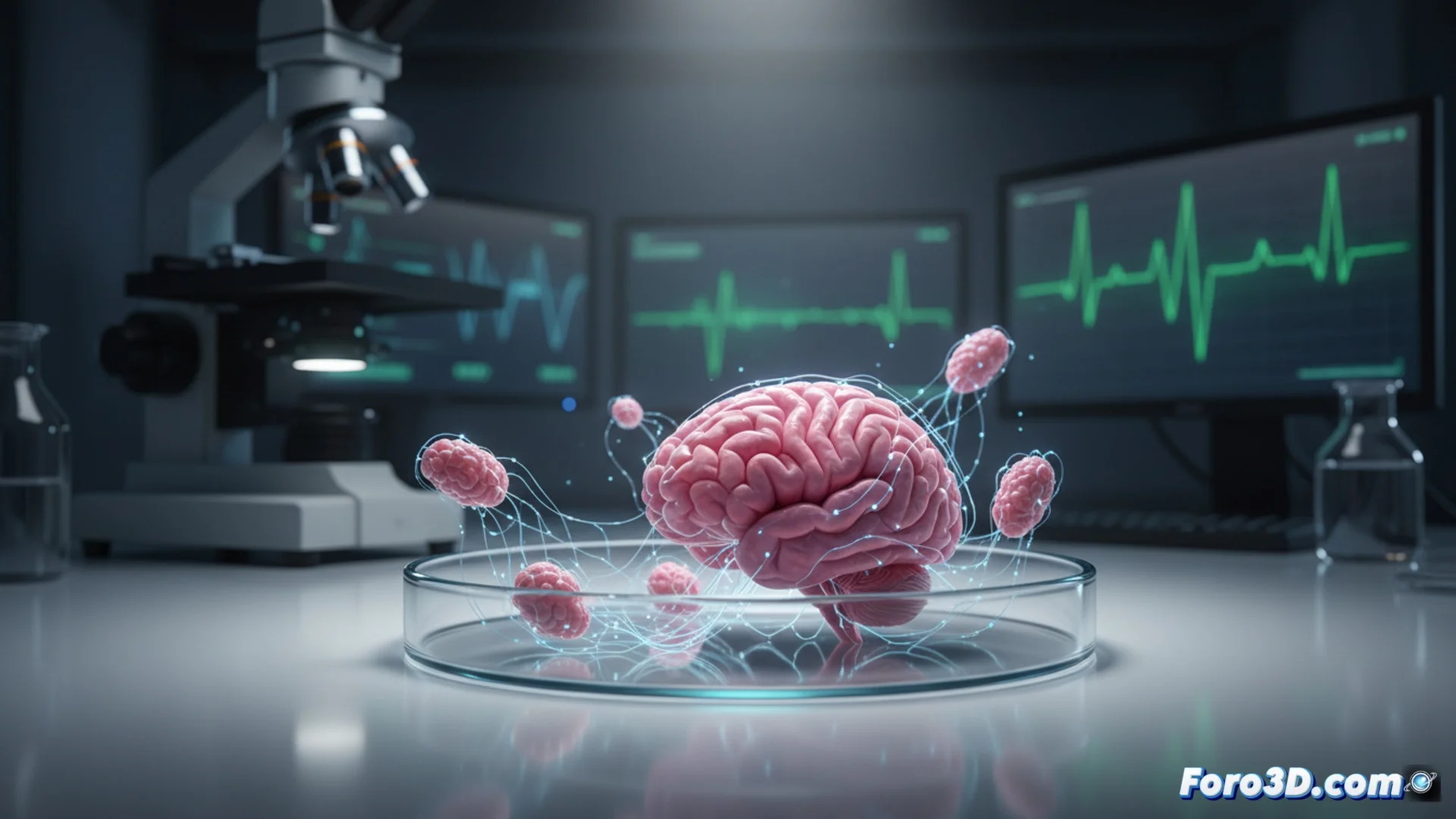
Scientists Assemble Brain Circuits in the Laboratory from Organoids
The field of biomedicine advances by using stem cells to generate miniaturized versions of brain tissues. Now, researchers not only cultivate these regions but connect them to form complex assemblies that interact. These circuits created on a plate exhibit patterns of synchronized electrical activity, mimicking early brain development processes. This breakthrough offers an unprecedented platform to explore neurological disorders and evaluate therapies. 🧠
Organoids Replicate Basic Neural Functions
Although far from being a complete brain or having consciousness, these organoid assemblies represent a remarkable technical leap. They manage to reproduce fundamental architectures and dynamics of the nervous system in a controlled environment. This enables new avenues for experimentation, reducing reliance on animal models and accelerating discovery in neuroscience. Scientists can directly observe how connections between neurons are established.
Main applications of this model:- Analyze the mechanisms of neurological diseases in a human context.
- Test and optimize the effect of potential drugs on neuronal networks.
- Understand how the brain organizes and wires itself in its initial phases.
These tissue assemblies are a window into the developing brain, but it is crucial to remember that they are highly simplified models.
A Progress That Entails a Necessary Ethical Debate
The ability to grow and combine functional brain tissue raises profound questions. The scientific community is actively discussing the ethical limits of this research, especially given the possibility that these models could evolve toward more sophisticated neural activity. Guidelines are being defined to ensure that the work is responsible and its purpose is strictly medical.
Key points of the ethical debate:- Define to what extent it is permissible to develop these neural tissues.
- Establish protocols for handling possible signs of complex activity.
- Ensure that the research focuses on clear therapeutic applications.
The Immediate Future of Assembled Organoids
For now, these brain circuits in culture show elementary activity, such as random "flashes," and are far from solving puzzles. However, their value lies in being a powerful tool for unraveling the mysteries of the brain and seeking cures. The path combines technical innovation with constant ethical reflection to navigate this frontier territory of science. 🔬