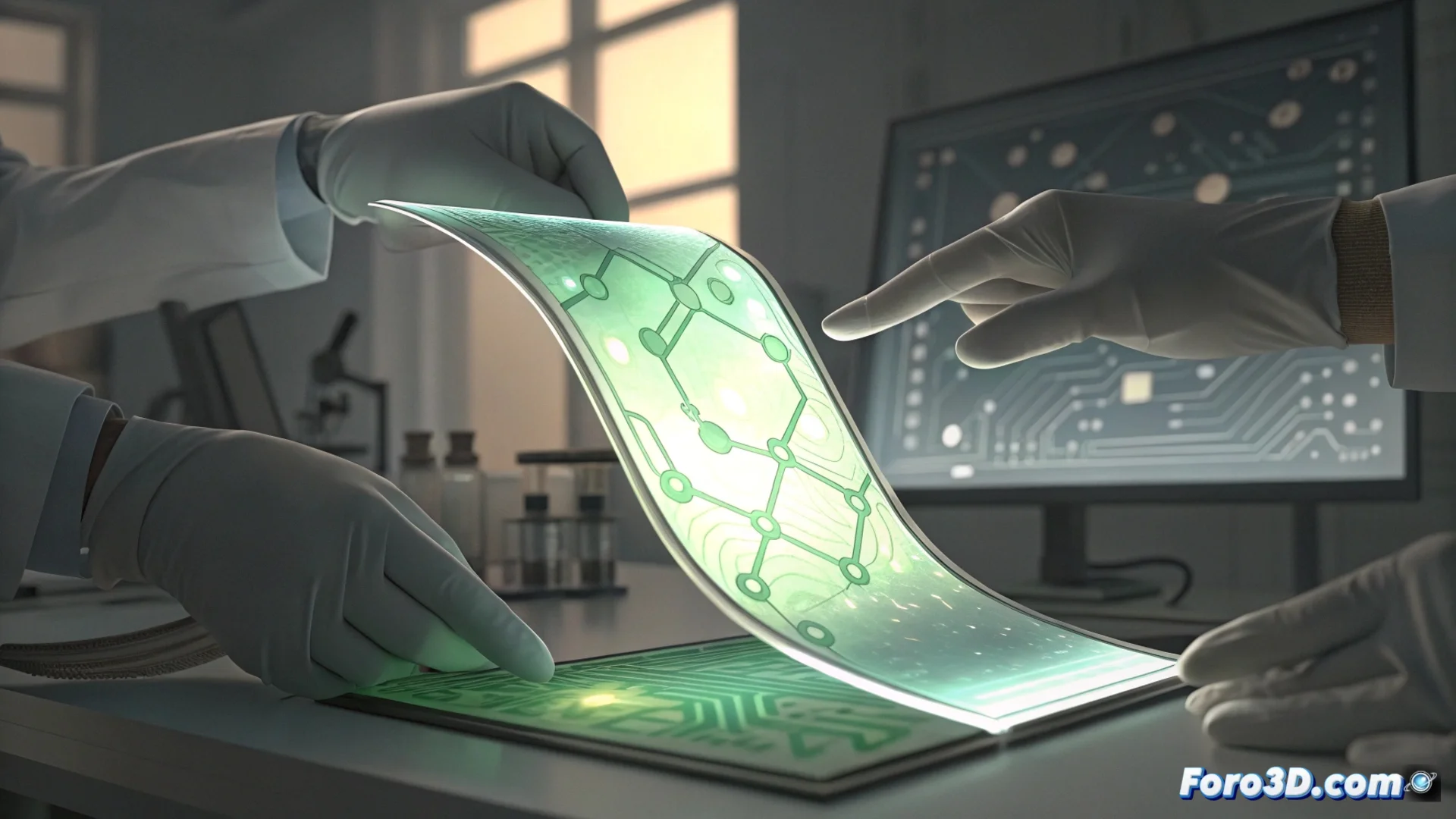
Scientists Seek to Manufacture Flexible and Elastic OLED Screens
For a long period, research teams have tried to create OLED screens that can bend, twist, and above all, stretch, while maintaining bright and stable light emission. This achievement could define a new generation of electronic devices. Imagine integrating these screens into fabrics to project live data, such as running speed or heart rate, directly onto the garment. 🚀
The Fundamental Problem Lies in the Materials
The main barrier to achieving these screens is the composition of the elements used today. Traditional OLEDs are built on rigid bases like glass. To make them flexible, plastics are used instead, but these cannot withstand stretching or deforming many times without the internal components failing and the light degrading.
The strategies being explored are diverse:- Design light-emitting polymers that are elastic by nature.
- Create electrode architectures with snake-like or mesh designs that can expand and contract.
- Investigate how to protect the delicate organic light-emitting materials within flexible matrices that isolate them from oxygen and moisture, their greatest threats.
The future of technological fashion will not only be decided by design, but by how much a pixel can stretch without turning off.
Paving the Way for Revolutionary Applications
Overcoming these obstacles is not just an engineering challenge; it is the gateway to integrating electronics into our daily lives in previously unthinkable ways. Smart clothing is just the beginning.
Possible immediate uses:- Health monitors integrated into clothing that display real-time metrics.
- Portable and adaptable user interfaces for any surface.
- Electronic devices that can be worn and adapt to body movements.
The Road Ahead
Progress in this field depends on combining advances in materials science with new structural designs. Each solution explores a different angle of the same problem: making light survive deformation. The ultimate goal is clear: screens as malleable as fabric and as resistant as the daily need to use them demands. 🔬