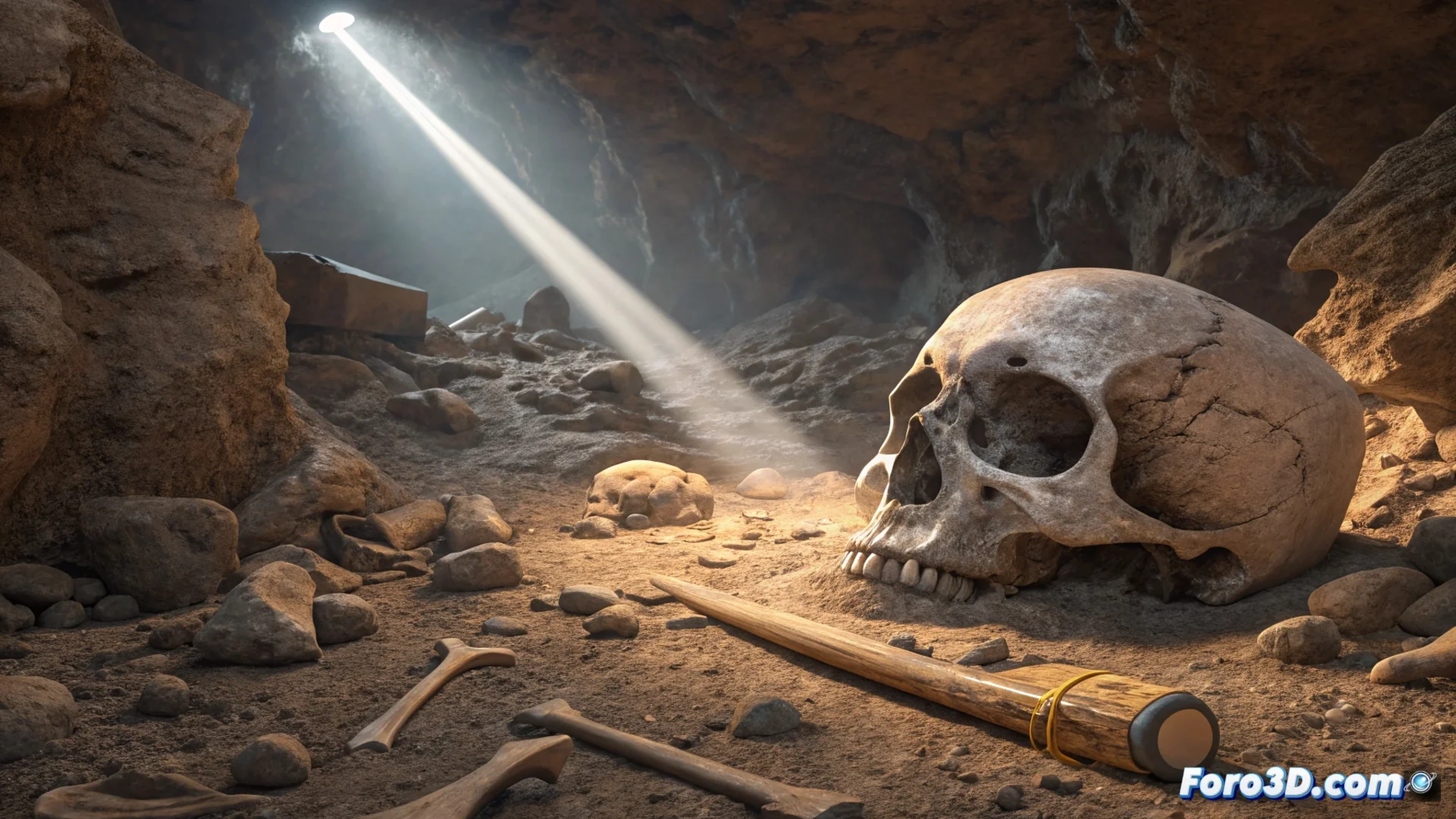
Science Reveals the Origin of a Cubic Skull in Tamaulipas
An archaeological discovery in the state of Tamaulipas, Mexico, initially posed an enigma. The remains of a skull with an unusually square morphology, resembling a cube, appeared in a cave. Initial assumptions linked it to contemporary migratory contexts, but scientific evidence completely rewrote this narrative. 🔍
Forensic Analysis Rules Out Migrant Link
Specialists from the National Institute of Anthropology and History (INAH) took charge of examining the bone remains. They applied methods of physical anthropology and dating techniques to establish its provenance. The results were conclusive: the individual belonged to a prehispanic population, with an estimated age between one thousand and two thousand years. This data outright eliminated the hypothesis that it was a recent migrant.
Key Findings from the Study:- Dating places the remains in a pre-Columbian period, far earlier than contemporary times.
- Osteological examination confirmed no signs of recent trauma or modern causes for the shape.
- The context of the find in a cave points to an ancient funerary practice.
Science prevents a misinterpretation from writing a false history.
Cranial Deformation: An Ancestral Cultural Practice
The explanation for the extreme geometric shape of the skull lies in a Mesoamerican cultural custom. Various prehispanic societies practiced intentional cranial deformation in babies, using wooden tablets, bandages, and other devices to mold the skull bones while they were malleable. This case represents a very pronounced variant of that technique, which sought to achieve an aesthetic ideal or denote a specific social status within the community.
Aspects of Intentional Cranial Deformation:- It was performed during early childhood, when the cranial bones are not fused.
- Methods varied, but commonly involved applying constant pressure with bandages and boards.
- The "cubic" shape is a rare and extreme example of the results they could achieve.
Conclusion: Unraveling the Past
This finding underscores how scientific research is crucial for correctly interpreting the archaeological record. What seemed like a modern mystery has its roots in deep cultural practices. The INAH's work not only clarified the origin of the cubic skull, but also enriches our knowledge about the diversity of customs and the social complexity of the cultures that inhabited Mesoamerica centuries ago. 📜