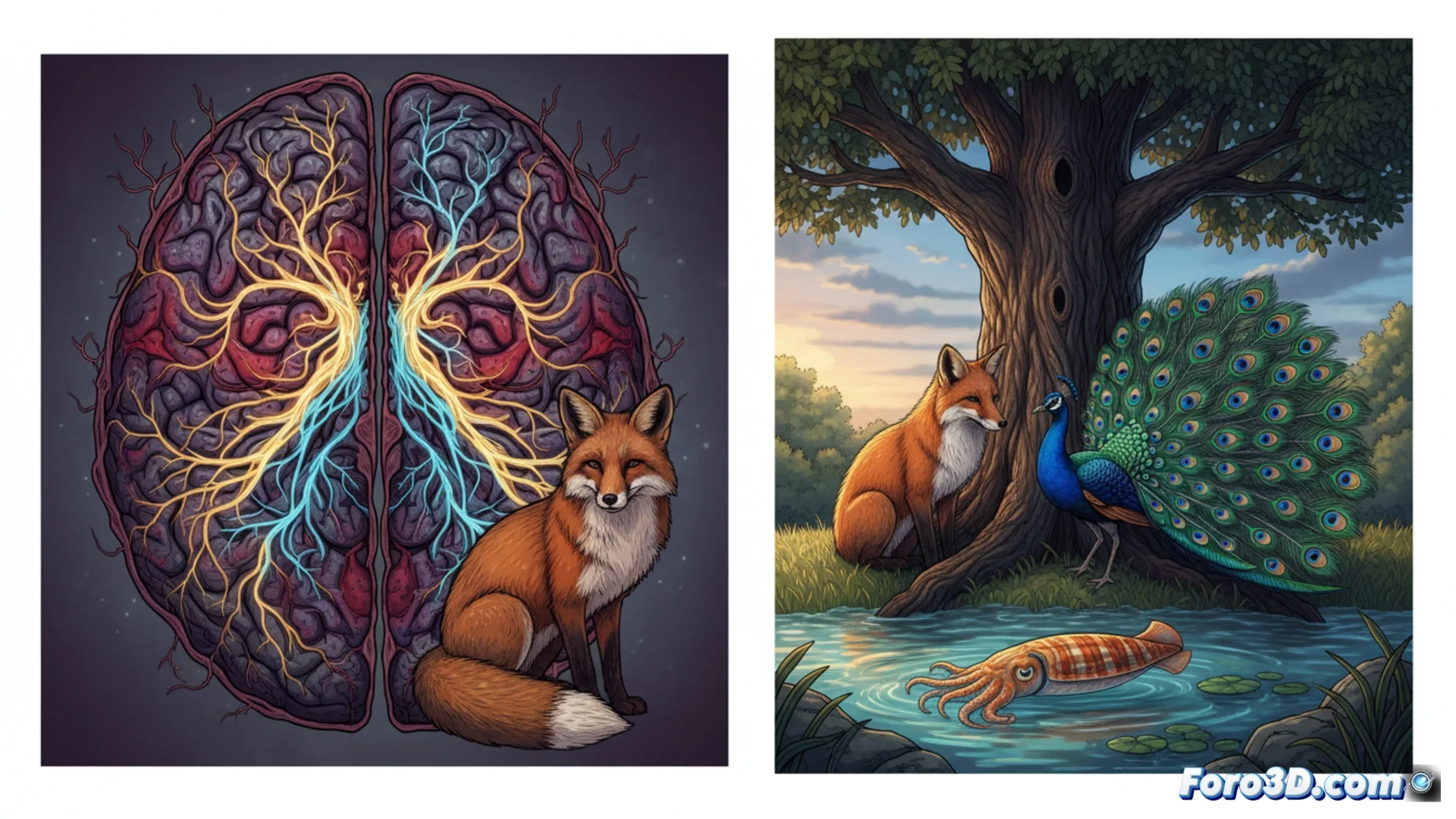
Science Investigates the Mind and Emotions of Animals
Scientific studies no longer just observe how animals behave, but delve deeper to understand how they perceive the world, what they feel, and how they process information. This new approach redefines the established boundaries between humans and other species, showing more sophisticated cognitive and affective abilities than previously believed. Disciplines like neuroscience and modern ethology offer methods to analyze these subjective experiences with greater rigor. 🧠
Indications of Extended Consciousness in the Animal Kingdom
Results from tests where octopuses solve problems, elephants recognize themselves in a mirror, and corvids prepare for future actions indicate that numerous species have some form of consciousness. Researchers examine brain activity, changes in facial expressions, and bodily responses to deduce states like fear, compassion, or sadness. This body of data continues to expand, contradicting the notion that only humans possess a complex inner life.
Examples of Observed Cognitive Abilities:- Octopuses that manipulate tools and open containers to obtain food.
- Elephants that show self-recognition and behaviors suggesting grief.
- Crows and magpies that hide food thinking about future needs, showing planning.
The mind and the capacity to suffer or enjoy are not exclusively human. Science forces us to expand our circle of moral consideration.
Implications for Ethics and a New Model of Thought
Understanding that animals can suffer, experience pleasure, and have subjective perceptions raises important ethical questions. This knowledge prompts us to reconsider how we use them in livestock farming, experimentation, and their natural habitats. There is discussion in the scientific community about avoiding excessive attribution of human characteristics, but the general direction is to admit that consciousness is more distributed in the animal kingdom than anticipated.
Areas Affected by This Change in Perspective:- Animal welfare in industrial farms and production systems.
- Protocols in scientific research with animal models.
- Policies for conservation and management of wildlife.
Rethinking Our Connection with Other Species
This scientific advance invites deep reflection on the bond we maintain with the rest of living beings. If a dog watches us attentively during a meal, it may not just be acting on instinct, but evaluating the situation with a level of complexity that deserves respect. Recognizing the richness of animal inner life is the first step toward building a more ethical and conscious coexistence. 🤔