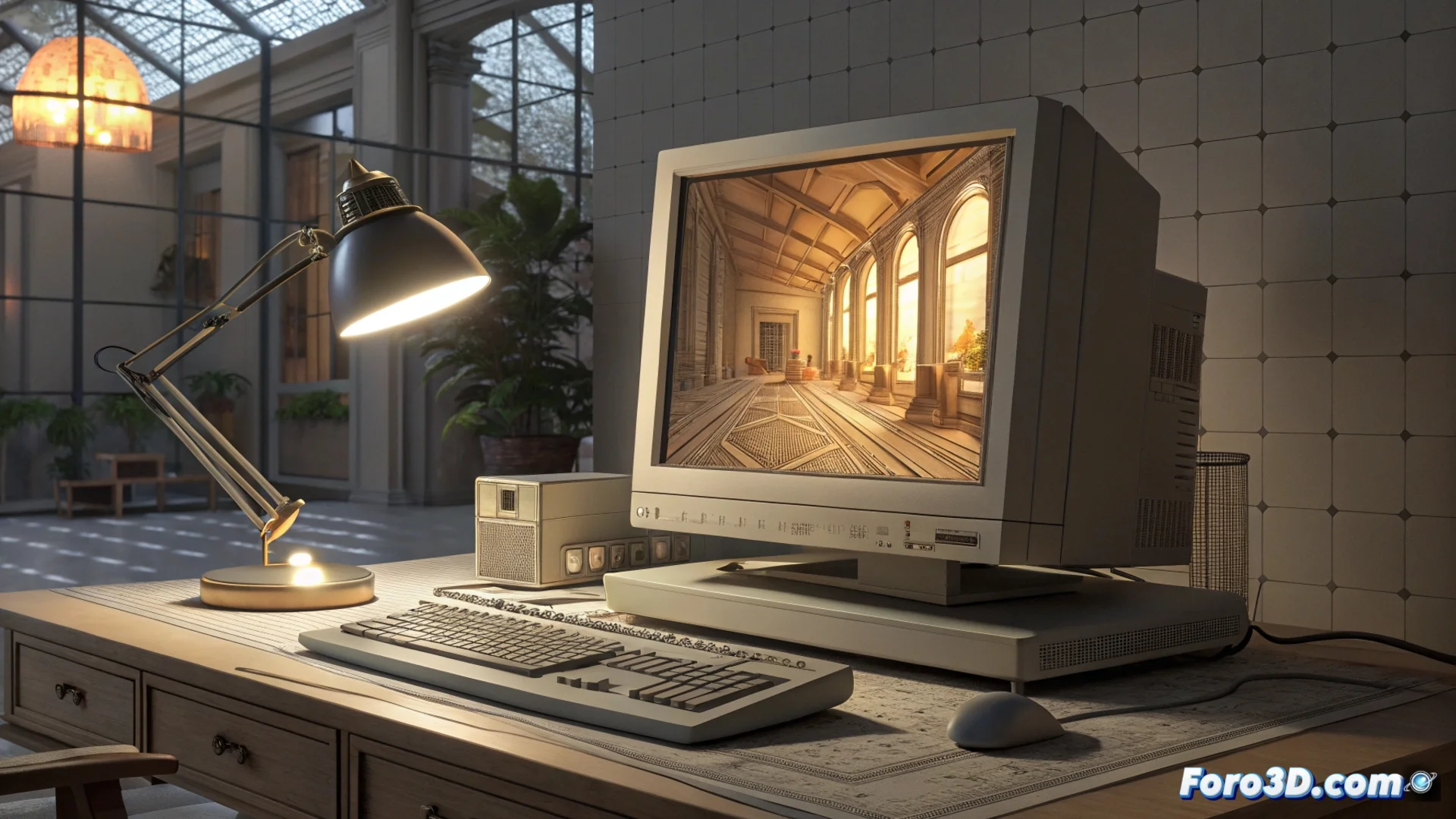
Lightscape and the Radiosity Algorithm for Simulating Global Illumination
Lightscape is a program specialized in processing radiosity, a method that emulates how light behaves within a three-dimensional space. This algorithm not only considers direct light beams but also calculates how photons scatter, reflect, and diffuse upon hitting objects. By solving this complex energy exchange, it generates a fixed lighting solution that does not depend on the camera position, enabling smooth navigation through the scene once the calculation is complete. 🎨
Stages of the Radiosity Process in Lightscape
The radiosity algorithm operates in sequential phases. First, it decomposes the scene geometry into a mesh of tiny elements through a process called tessellation. Then, it determines the initial intensity and distribution of light emanating from each source. The core of the system iterates, progressively propagating luminous energy from one element to another, until the amount of residual light in the system is minimal. The result is a network of luminance values stored in the mesh, responsible for the realism in soft shadows and color bounces.
Key Workflow:- Tessellate the scene: Subdivide all surfaces into a mesh of small elements or patches.
- Distribute initial light: Calculate how direct light from sources illuminates each mesh element.
- Propagate energy: Iterate to simulate how light bounces between elements until equilibrium is reached.
The algorithm iterates, propagating light from one element to another, until the residual energy in the system falls below a defined threshold.
Visualizing the Final Result with Textures and Materials
Once the lighting solution is ready and stored, the user can apply texture maps and modify material parameters, such as brightness or reflectivity. The rendering engine then uses these precalculated light data to generate the final image from any perspective, shading each pixel instantly. This separation between the calculation phase and the visualization phase speeds up testing different finishes without having to repeat the costly radiosity simulation process. ⚡
Advantages of this method:- Viewpoint independence: The light solution is calculated once for the entire scene.
- Real-time visualization: Allows smooth traversal of the rendered scene after calculation.
- Iterative workflow: Facilitates adjusting materials and textures without recalculating lighting from scratch.
The Computational Cost in Its Early Days
On 1990s computers, loading a solution for complete global illumination was a task that demanded a lot of patience. Processing times could be so extensive that they allowed the user to do other activities, like preparing a drink or reading documentation, while the progress bar advanced slowly. This historical aspect underscores the computational intensity required to simulate radiosity accurately, a challenge that modern hardware has mitigated but that defines the essence of this global illumination method. 💾