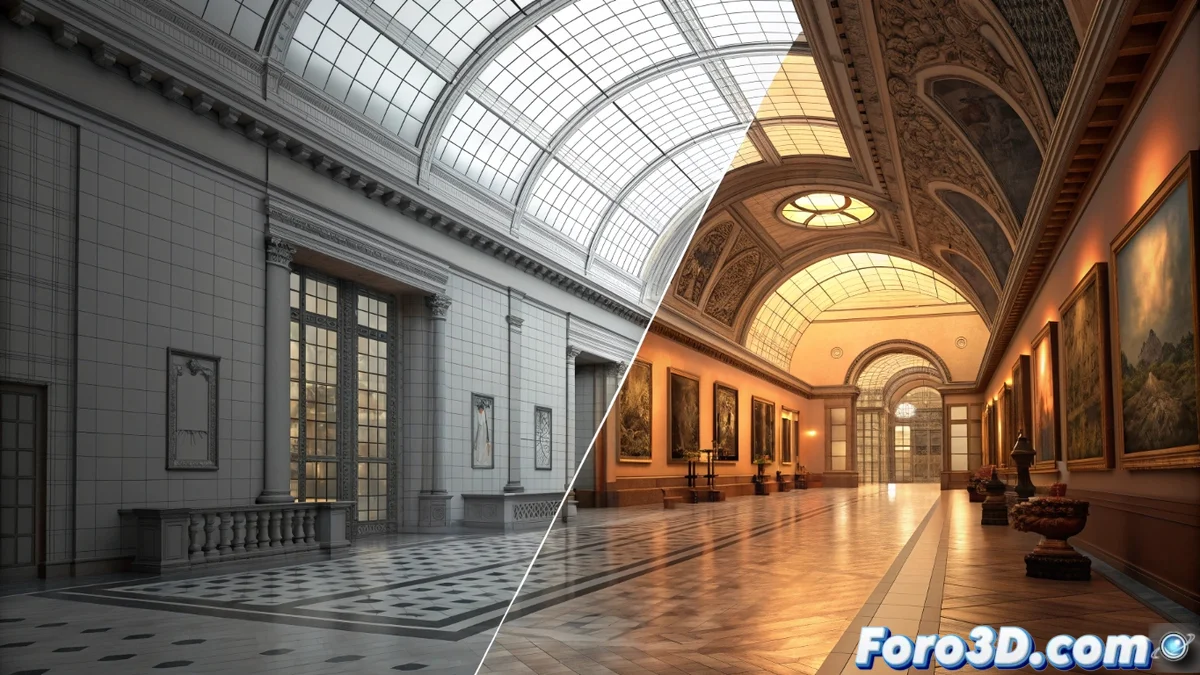
Scanline Renderer vs Lightscape: classic engines in 3ds Max
In the 3ds Max ecosystem, two rendering approaches marked different eras. On one hand, the Scanline Renderer is included natively and processes scenes line by line. On the other, Lightscape represents a historical chapter, specialized in simulating light with a precision that was revolutionary. This article contrasts their philosophies and practical applications. 🎨
The Scanline Renderer approach: speed and direct control
This classic engine operates with an algorithm that calculates each line of the image sequentially. Its main advantage is the speed it offers, making it ideal for testing, iterating designs, or producing animations where total render time is a decisive factor. The artist has absolute control over material and light parameters in each frame, within a linear and predictable workflow. However, it does not simulate complex physical phenomena like light bouncing between surfaces; these effects must be created manually.
Key features of the Scanline Renderer:- Line-by-line processing: Efficient method that demands few system resources.
- Total control per frame: Allows precise adjustment of materials and lights in each frame.
- Ideal for animation: Its speed makes it a practical option for motion sequences.
The Scanline Renderer prioritizes an agile workflow and predictable results, sacrificing the physical realism of lighting.
Lightscape's legacy: precision in light simulation
Lightscape adopted an opposite paradigm, placing the calculation of global illumination at the center of everything. This software solved light distribution in a space using the radiosity method, storing light information directly in the mesh vertices. This process generated extremely realistic and coherent lighting solutions, especially for static interior visualizations. Its integration with 3ds Max was not native; it required exporting and importing models, adding complexity to the pipeline.
Defining aspects of Lightscape:- Calculate radiosity: Method that separates the light solving phase from the final geometry rendering phase.
- Large scene files: Storing lighting data in the mesh generated large file sizes.
- Focus on interiors: Its strength was reproducing natural and artificial light in architectural spaces.
Historical context and current relevance
Many artists remember the long times required to process radiosity in Lightscape, a process that modern global illumination (GI) engines now solve in minutes. Although it is no longer integrated into recent versions of 3ds Max, its influence endures in the importance now given to simulating light physically. While the Scanline Renderer remains a valid tool for specific tasks that value speed, Lightscape's legacy laid the foundations for the lighting realism we now take for granted. The choice between one and the other always depended on choosing between speed and control or precision and physical realism. ⚖️