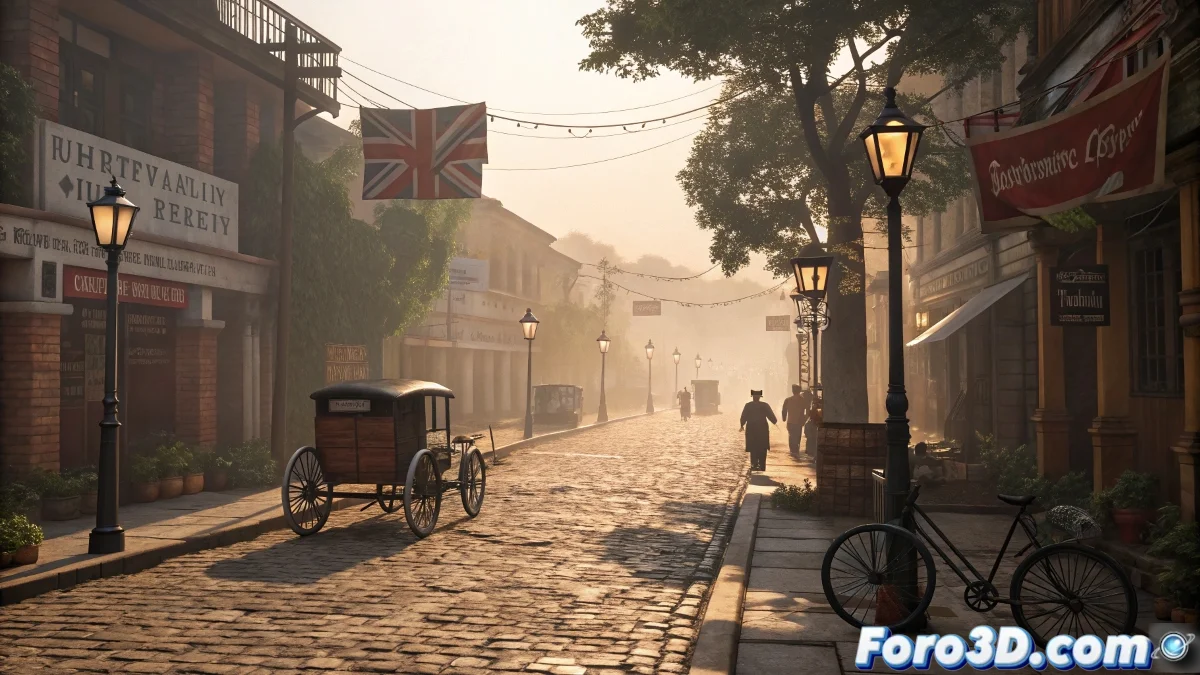
When the Past Gets Rendered 🕰️💻
In Sardar Udham, Bojp didn't create fantastic worlds, but resurrected a real one. Their digital reconstruction of colonial India and 1930s London is a masterclass in VFX that hide in plain sight, where every digital brick looks like it's been there for decades.
Digital Archaeology
Bojp's meticulous process:
- Modeling in 3ds Max of buildings, trains, and streets with historical precision
- Texturing in Substance Painter: Rust, peeling paint, and procedural dirt
- Simulations in Houdini for smoke, dust, and atmospheric effects
Historical Fact: "We used archival photos even for the number of nails on train cars," explains the VFX director.
Techniques That Erase the 21st Century
Ghost Crowds
- Golaem Crowd for historical demonstrations
- Procedural variation in clothing and movements
- Integration with real actors in Nuke
Period Photography
- Custom LUTs emulating old film
- Controlled chromatic aberrations
- Volumetrics simulating vintage lenses
Recreating History in Your Software
In 3ds Max
- Forest Pack - For vegetation and repeated elements
- TyFlow - Deterioration and dust effects
- V-Ray - Aged materials with procedural maps
In Blender
- Geometry Nodes - Debris and dirt distribution
- Eevee - Fast rendering with historical LUTs
- Texture Paint - For manual aging
📜 Tips for Historical VFX:
- Use real references (even black and white photos)
- Add imperfections: asymmetrical cracks, irregular rust
- Test vintage lenses in post-production (vignetting, flare)
Extra: Motion blur defocus must match era cameras (longer and less precise).
The Irony of the Historical Artist
While the team celebrated faithfully recreating Jallianwala Bagh, the audience only commented: "Did you see that 'Tea Room' sign with the spelling mistake?". That's historical VFX: months researching oxidation patterns... for a 2-second design flaw to steal all the attention. ✍️
"In historical cinema, if someone asks 'was this CGI?', it's your greatest failure... and your greatest success." - Anonymous Bojp artist.