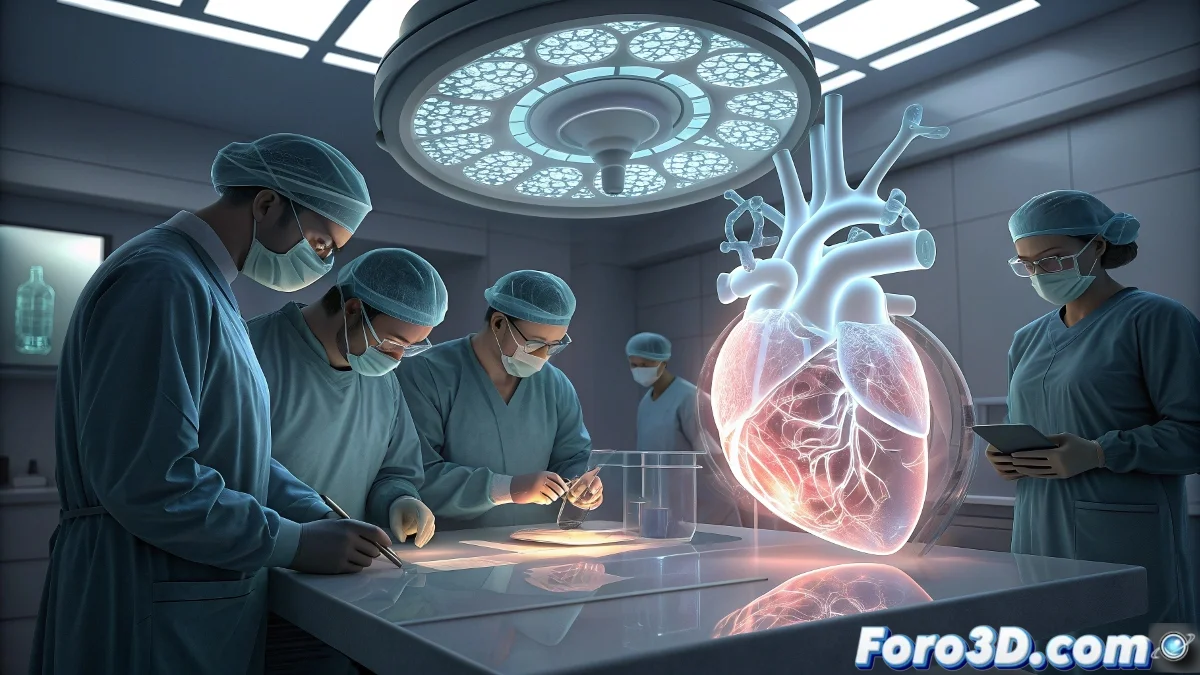
When 3D Printing Beats to the Rhythm of Life
The Sant Pau Hospital in Barcelona is writing a new chapter in the history of medicine by implementing 3D printing of exact replicas of human hearts to plan complex surgical interventions. This technology, which until recently seemed like science fiction, is proving to be an invaluable tool for cardiac surgeons facing the most challenging cases. Each printed replica represents not only a technical advancement, but a concrete opportunity to save lives that were previously at extreme risk.
The most extraordinary aspect of this approach is how it combines advanced medical imaging with the physical tangibility of printed models. Surgeons can now study and practice with replicas identical to the patient's real heart, identifying potential complications and optimizing surgical strategies before entering the operating room. This meticulous preparation is revolutionizing outcomes in high-complexity cardiac surgeries.
A 3D printed heart can be the difference between a routine operation and a medical miracle
Process for Creating Cardiac Replicas
- High-resolution computed tomography of the patient's heart
- Digital segmentation to isolate specific cardiac structures
- 3D printing with materials that simulate real tissues
- Medical validation by comparing the physical model with original images
Precision That Makes the Difference
The printed replicas capture even the smallest anatomical detail, from heart valves to coronary arteries and internal chambers. This submillimeter precision allows surgeons to anticipate challenges specific to each patient, such as congenital malformations, scar tissue from previous operations, or unusual anatomical relationships. The ability to physically manipulate these replicas provides insights that 2D or 3D screen images simply cannot offer.
For pediatric patients with congenital heart disease, this technology is particularly transformative. Children's hearts present unique complexities that require extremely precise surgical approaches. Being able to plan with exact replicas is significantly improving outcomes in these especially delicate cases where every millimeter counts.
Impact on Surgical Practice
- Reduction in operating room times by up to 30%
- Decrease in intraoperative complications
- Improvement in communication within the surgical team
- Exact customization of prostheses and implants
The accelerated learning curve for surgeons in training represents another less obvious but equally valuable benefit. Residents can practice complex procedures on realistic models without risk to real patients, developing skills and confidence before facing real clinical situations. This training capability is raising standards in specialized medical education in cardiac surgery.
At Sant Pau, surgeons don't operate blindly: they have the exact map of the cardiac territory
And while the 3D printers work tirelessly, some patient on the waiting list is unaware that their heart is already being studied meticulously... in a plastic version that could save their original life ❤️