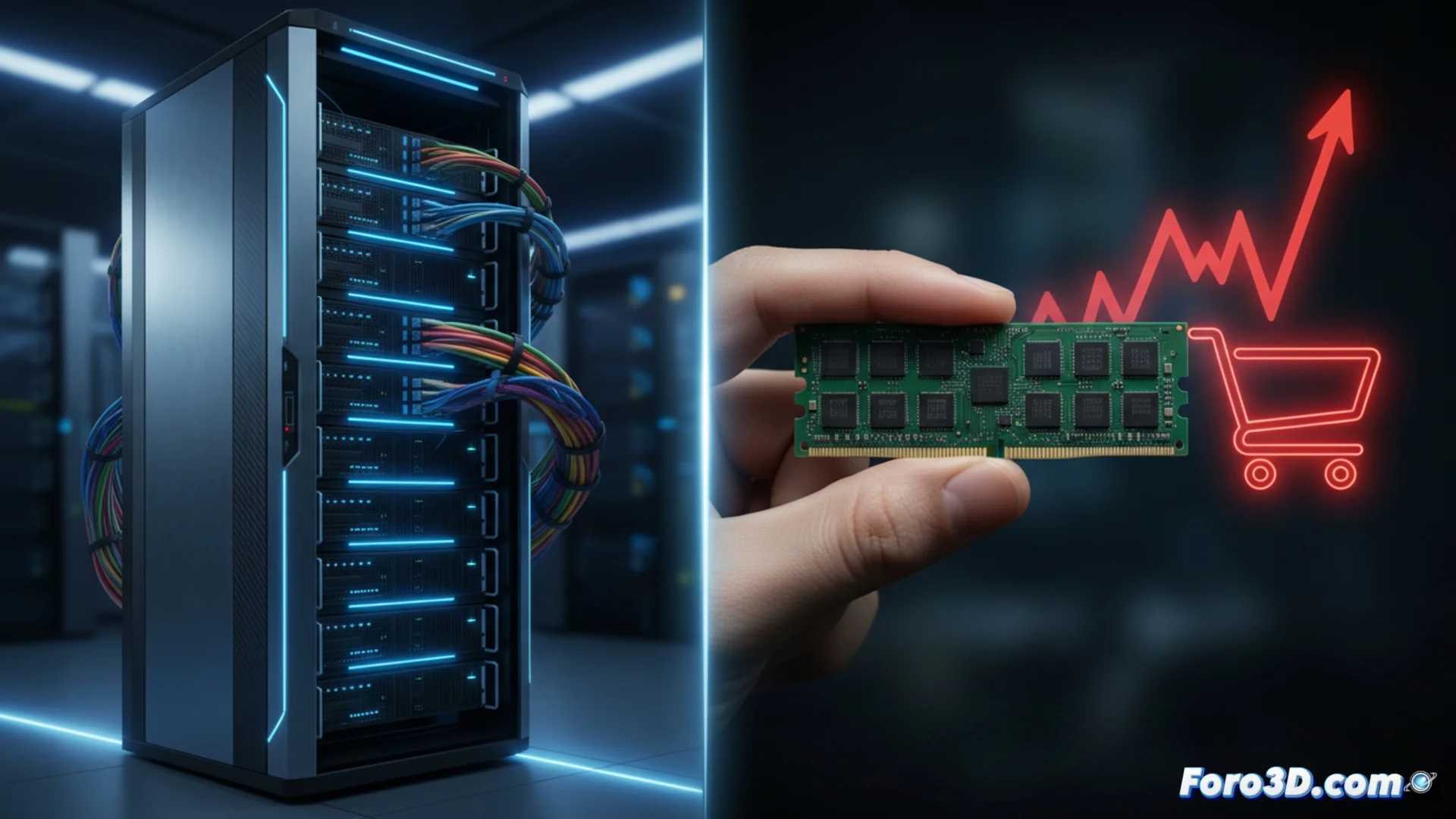
Samsung reports its results and the price of its memory skyrockets
This Thursday, Samsung Electronics releases its complete financial data for the last quarter of the year. South Korean press reports that, since November, the cost of the brand's memory modules for end users has doubled or tripled. This increase occurs because the company has decided to prioritize what the server sector demands, which limits how much is available for the consumer components market. 📈
Samsung's strategic decision alters supply
The Korean corporation has chosen to direct its manufacturing capacity to produce memory modules intended for data centers and corporate servers. This choice is based on achieving higher profitability in that niche and long-term commercial agreements. The immediate effect is that the volume of DRAM and NAND chips allocated to make kits for PCs, laptops, and other personal devices has dropped considerably.
Direct consequences of this change:- The company manufactures more for the enterprise segment, which pays better.
- Long-term contracts with major server clients ensure stable revenue.
- The flow of components like RAM and SSD to the retail channel decreases significantly.
While corporate servers run on the latest memory, computer enthusiasts review their budgets with some resignation.
The end user feels the effect in their pocket
The lower availability in stores has caused prices to rise rapidly in just a few months. Those who want to upgrade their equipment or buy new memory find that RAM kits and solid-state drives now cost much more. This scenario is opposite to the downward price trend observed in the memory market for much of the previous year.
Impact on the consumer market:- PC upgrade prices have become less accessible.
- The law of supply and demand is clearly working against the individual buyer.
- The previous trend of continuous price reduction for storage components is broken.
A divided outlook for the future
Samsung's results presentation highlights a division in its strategy. On one hand, it strengthens its position in the more lucrative enterprise market. On the other, it leaves the consumer segment with less product and higher prices. This situation reminds technology enthusiasts that macroeconomic factors and decisions by major manufacturers can fully influence the availability and cost of key components for their systems. 🖥️