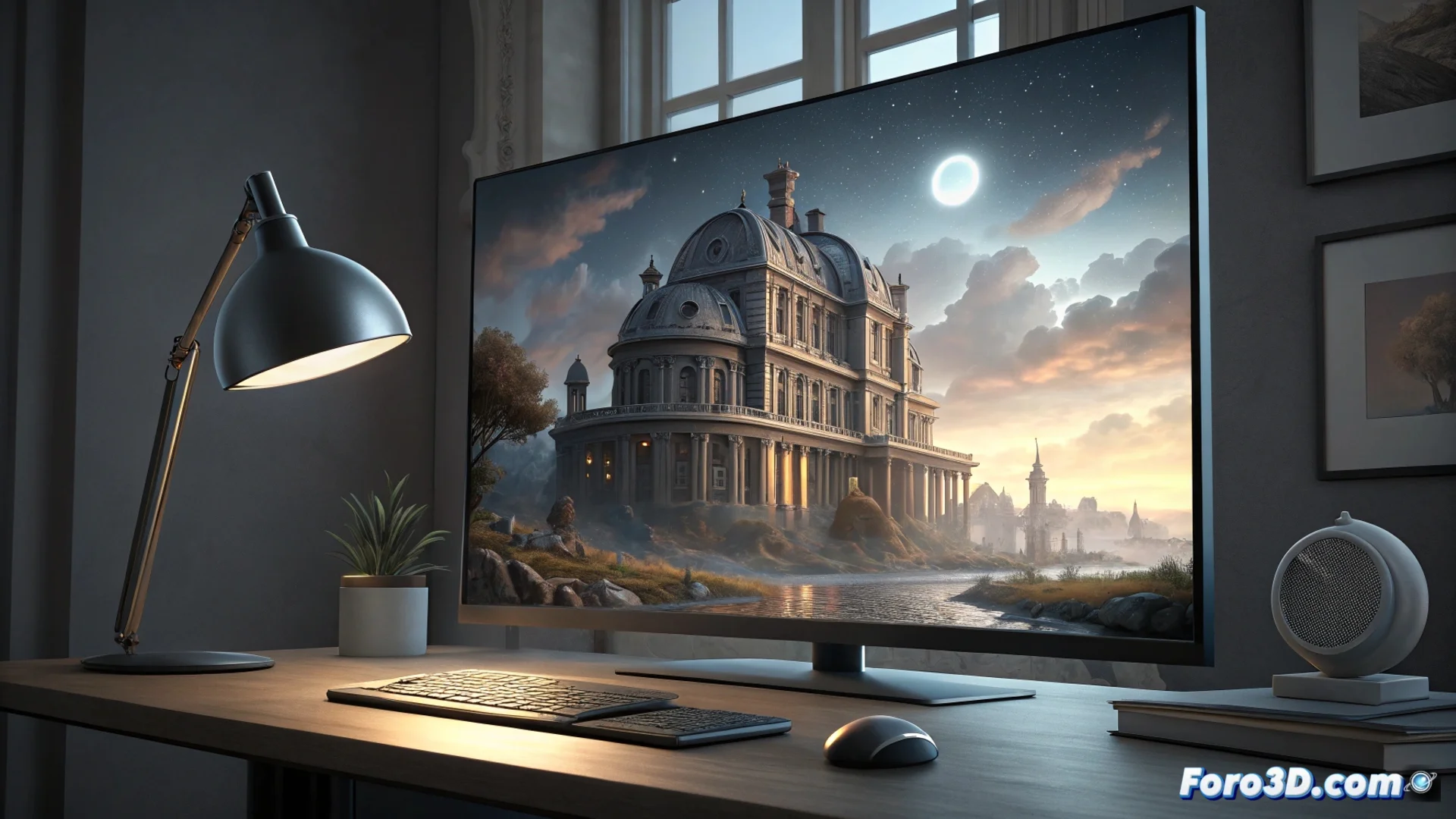
Samsung Develops 6K Monitors with Glasses-Free 3D for 2026
The Samsung Display division has revealed that it is developing a pioneering line of displays. These devices will integrate 6K resolution with the ability to display three-dimensional content natively, eliminating the need for users to wear any special glasses 🚀. The Korean company plans to begin large-scale manufacturing and commercially launch these monitors in 2026.
How Glasses-Free 3D Display Works
This advancement is based on years of research into autostereoscopic displays. The technology employs an advanced optical layer, such as a lenticular lens or a parallax barrier, placed over the base panel, whether OLED or QD-OLED. This layer precisely directs light from specific pixels to the viewer's left or right eye, creating a perception of depth. The current system requires the user to be positioned in a specific viewing zone, although engineers are working to expand this field of view.
Key Requirements for 3D Content:- The material must be recorded or rendered specifically for this autostereoscopic format.
- Alternatively, the monitor can process a conventional 2D signal to convert it in real-time to a stereoscopic signal, which requires a very powerful graphics processing unit.
- The optimal experience depends on the content being mastered to leverage the technology.
This technology represents a significant step in the evolution of displays, initially aimed at professional sectors.
Fields of Application and Market Challenges
The arrival of these monitors could transform several professional fields. Architects, engineers, and surgeons could inspect complex 3D models and visualizations with unprecedented detail and naturalness. For general users, playing video games or watching movies could gain a radically new level of immersion.
Potentially Impacted Industries:- Design and Architecture: Visualization of prototypes and environments.
- Medicine: Analysis of diagnostic images and surgical planning.
- Entertainment and Gaming: Creation of more immersive experiences.
The Future of 3D Content at Home
The main obstacle to its mass adoption lies in the content ecosystem. For the technology to take off, film studios, video game developers, and creators in general need to produce and distribute compatible material. The lingering question is whether 3D content, which lost popularity in cinemas, will find a renaissance in homes driven by these glasses-free screens. Ultimate success will depend on a coordinated transition between innovative hardware and software that leverages it.