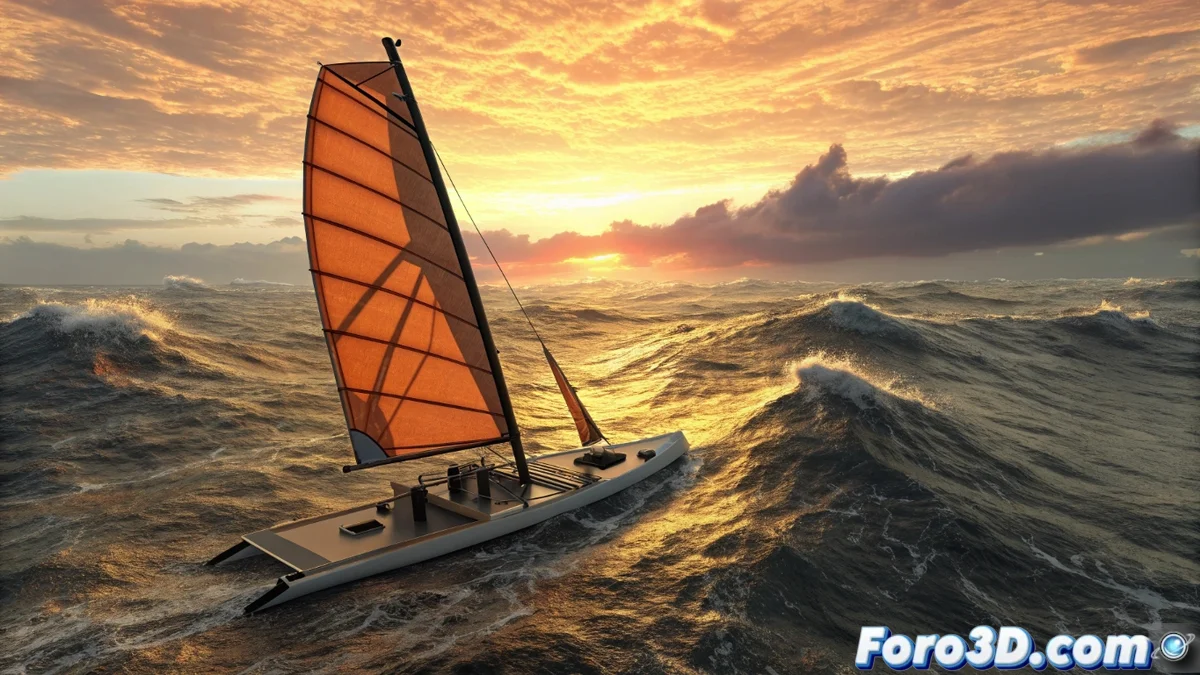
Saildrone manufactures parts for its USVs with 3D printing
The company Saildrone deploys a fleet of Unmanned Surface Vehicles (USVs) that operate autonomously to collect information from the ocean and atmosphere. These marine drones, called Saildrone, withstand extreme conditions in missions that last for months. To endure the salty environment and improve designs quickly, the company produces several essential elements using 3D printing. 🌊
Additive manufacturing accelerates the development of nautical components
This technology allows Saildrone to produce sensor mounts, housings that protect the electronics, and parts of the system that controls the vehicle. Using 3D printing gives them the freedom to create complex geometries that ensure watertightness, protect sensitive equipment, and do not corrode. This method streamlines the cycle of testing new concepts, iterating, and implementing improvements across the entire fleet, without needing conventional molding tools.
Key components manufactured with 3D printing:- Mounts and supports for oceanographic and atmospheric sensors.
- Watertight housings that protect the vehicle's central electronics.
- Elements of the USV's steering and autonomous control system.
The strategy demonstrates how additive manufacturing adapts to specialized engineering challenges.
3D printing materials prepared for the ocean
They select high-performance filaments like ASA, which offers great resistance to UV rays and weathering. For structural parts that need more strength, they use carbon fiber composites. This choice ensures that the printed components do not fail in the middle of the ocean, where repairing a drone is very complicated and costly.
Advantages of the selected materials:- ASA resists degradation from sunlight and severe weather conditions.
- Carbon fiber composites provide rigidity and mechanical strength.
- The combination ensures durability in a salty and hostile environment.
A modern approach to exploring the seas
Saildrone's use of 3D printing optimizes how USVs are manufactured and updated. It allows quick responses to new design needs and ensures that the drones can complete long missions reliably. This case illustrates the crucial role of additive manufacturing in specialized sectors, where the ability to iterate and produce on demand is essential. 🚤