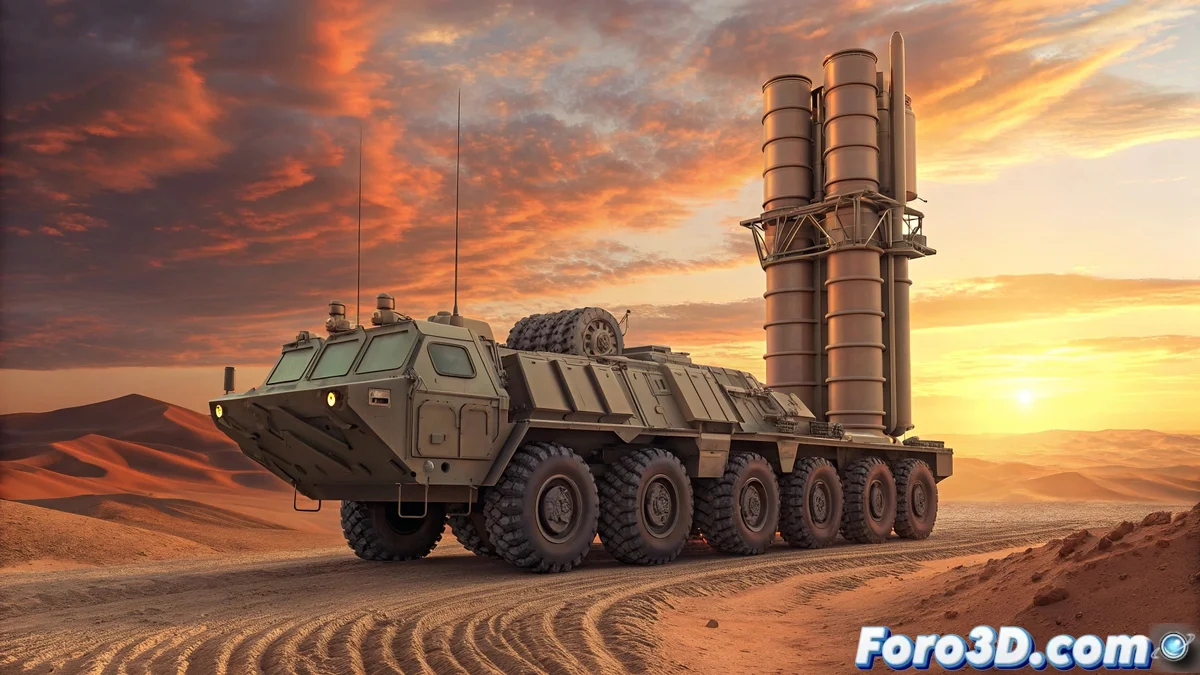
S-500 Prometey System: Complete Guide to 3D Modeling
The S-500 Prometey represents the vanguard of Russian aerospace defense, functioning as an integrated complex capable of neutralizing multiple simultaneous threats in a coordinated manner. This system embodies the most advanced technological evolution in stratified interception 🛡️
Physical Architecture and Main Components
The S-500 structure integrates mobile launchers mounted on 8×8 chassis that reach 12-14 meters in length and 3-3.5 meters in width, standing out for their rectangular missile containers and radar systems with large-diameter antennas. Control posts operate autonomously yet interconnected, creating a cohesive defensive network.
Critical Elements for 3D Representation:- Rectangular missile containers with metal reinforcements and detailed launch mechanisms
- Radar vehicles with large articulated antennas, showing folded and deployed positions
- Command vehicles with visible external wiring and characteristic armored protections
- Precise proportions of 8×8 chassis maintaining cabin-operator/payload systems ratio
Recreating all the cables and connections will likely take more time than the missile takes to reach its maximum target range
Operational Capabilities and Technical Challenges
This system is designed to create a stratified defensive shield with a declared interception capability of 500-600 kilometers, depending on the missile variant used. It operates efficiently against targets including ballistic missiles, hypersonic threats, and high-altitude aircraft, even with declared capability to intercept space vehicles.
Technical Aspects for Modelers:- Modular architecture allowing rapid deployment and automatic coordination between units
- Complexity in guidance systems and integration between component subsystems
- Antenna deployment mechanisms and vertical launch systems
- Data exchange for tracking between acquisition radars and control posts
Final Considerations for Three-Dimensional Recreation
3D artists tackling this project will find that fidelity to details is crucial for credible representations. Meticulous attention to structural components, deployment mechanisms, and proportional relationships between elements will determine the final realism of the recreation. The system's technical complexity offers a rewarding challenge for specialists in advanced military modeling 🎯