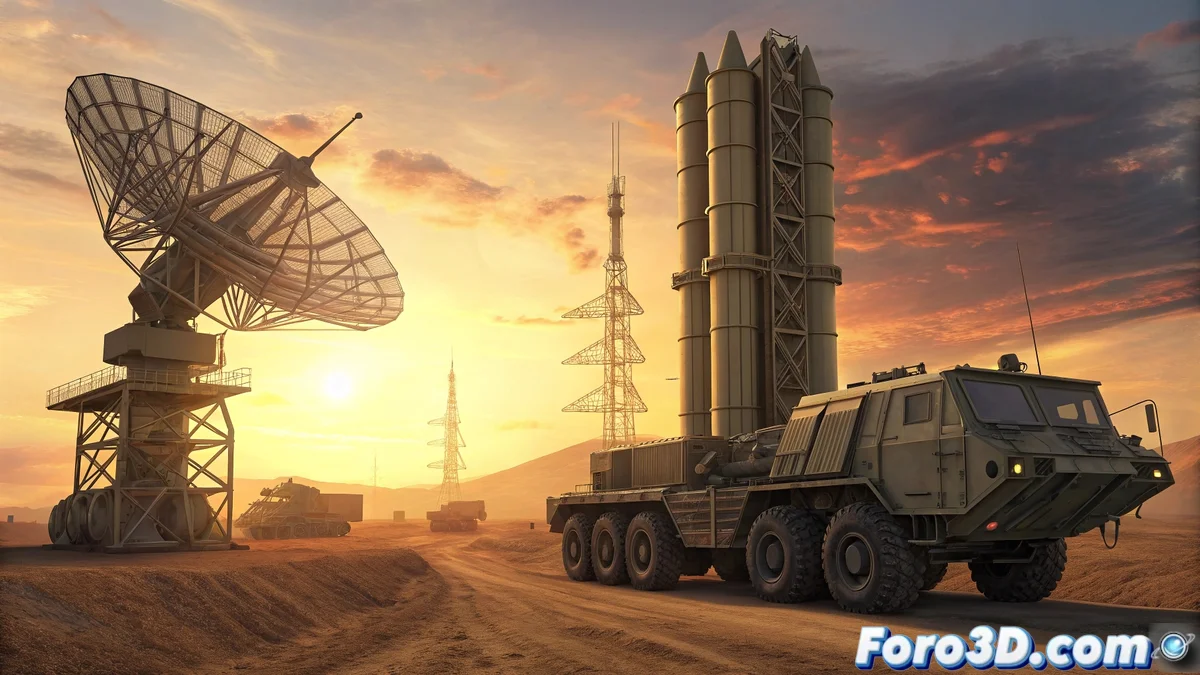
S-400 Triumf System: Evolution and 3D Modeling of Russian Air Defense
The S-400 Triumf represents the forefront of Russian air defense, integrating advanced capabilities to neutralize aerial threats at extensive distances. Its modular design and strategic mobility make it a fascinating subject for enthusiasts of military 3D modeling. 🚀
Physical Configuration and Mobility
This system is mounted on a TEL vehicle with an 8×8 chassis, measuring approximately 12-14 meters in length, 3-3.5 meters in width, and 3-4 meters in height. The missile containers, weighing between 7 and 8 tons, are raised vertically for launch, ensuring an intimidating presence on the battlefield.
Key Components for Modeling:- Rotating platform with smooth, elevatable containers
- Large-diameter articulated radar antenna
- Secondary details such as exposed wiring and hydraulic systems
Modeling the S-400 is like recreating a building on wheels that fires missiles; a scale error can turn it into a toy instead of a technological marvel.
Radar and Interception Capabilities
The 64N6E radar, with its massive antenna, enables detection and tracking of targets at distances from 40 to 400 km. It uses missiles such as the 48N6 and 40N6 to counter various threats, including aircraft, cruise missiles, and ballistic warheads, offering exceptional operational flexibility.
Essential Technical Aspects:- Simultaneous detection of multiple targets
- Use of missile variants for different ranges
- Improved precision thanks to the integrated radar system
Tips for Realistic 3D Modeling
When recreating the S-400 in digital environments, it is vital to capture the massive scale and exact proportions between components. Focus on details like side armors and hydraulics to add realism, avoiding making the model look simplified or unconvincing. 🎨