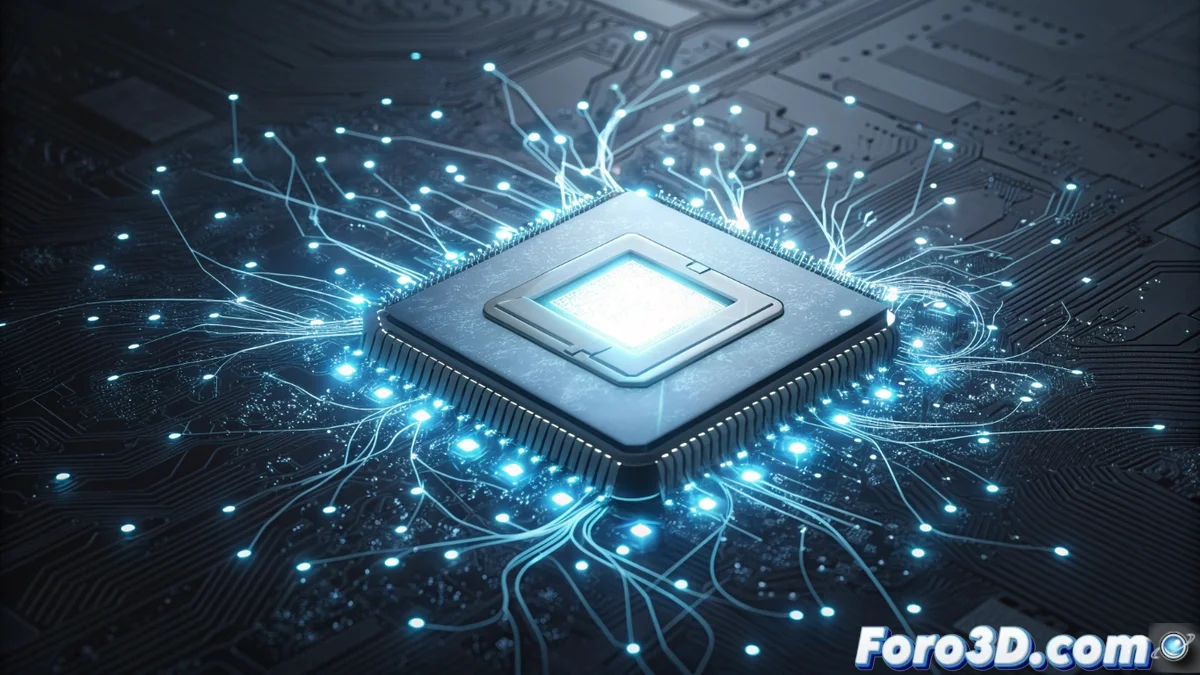
Ryzen AI: The Revolution of Local Artificial Intelligence in Your Processor
The integration of Neural Processing Units (NPUs) into common consumer chips is redefining the computing landscape. AMD leads this transition with its Ryzen AI technology, incorporated into the 7040 and 8040 series, which brings the power of artificial intelligence to the very heart of your device. This specialized component works alongside traditional cores, efficiently handling AI workloads and freeing up resources for other tasks. The major breakthrough is the ability to run complex algorithms directly on the user's hardware, a key concept known as on-device AI or Edge AI. 🚀
Practical Power: Beyond the Technical Concept
The utility of this technology is already tangible in everyday scenarios, optimizing the experience in an imperceptible but significant way. In the realm of productivity and digital creation, the NPU accelerates processes that previously consumed many system resources or relied on the cloud. For content creators, this translates into a more agile and professional workflow, allowing them to focus on pure creativity.
Concrete applications in your daily life:- Professional video calls: Real-time background removal, automatic gaze correction toward the camera, advanced ambient noise suppression, and intelligent webcam lighting adjustment.
- Editing and creation: Quick application of neural filters in photo and video software, image resolution enhancement (upscaling) via AI, and transcription or translation of audio to text almost instantly.
- Entertainment and gaming: Enabling neural network-based image scaling techniques for better visual quality and the possibility of giving more complex behaviors to non-player characters (NPCs).
Ryzen AI is the foundation that allows developers to integrate more advanced AI features with lower latency into their applications, without sacrificing user privacy.
Privacy, Speed, and Autonomy: The Fundamental Advantages
The value of Ryzen AI goes beyond mere speed. It fosters a new paradigm centered on data security and immediate response. By processing sensitive information such as microphone audio or camera video directly on the device, the need to constantly send personal data to remote servers is eliminated.
Key benefits of this approach:- Greater privacy: Personal information does not leave your device, drastically reducing risks associated with leaks or misuse of data.
- Low latency: Without relying on an internet connection for processing, AI function responses are practically instantaneous.
- Offline functionality: Many AI-assisted tools will remain available even without a stable network connection, increasing the versatility of laptops or desktops.
The Near Horizon of Intuitive Computing
As the software ecosystem matures and developers fully leverage this dedicated hardware, a new generation of applications will emerge. These tools will be able to offer more personalized, contextual, and complex experiences, learning from individual usage patterns. While today's capabilities focus on optimizing specific tasks like video calls or basic editing, the path is open for our devices to become more intelligent and proactive digital assistants. The future is not about AI planning your vacations, but about your computer perfectly understanding your work context and assisting you seamlessly and discreetly, making technology more powerful and, above all, more human. 🤖💻