When the Aerospace Industry Embraces Additive Manufacturing
A Russian aerospace plant is taking a significant technological leap by implementing large-scale 3D printing systems for the production of critical composite components. This move represents a strategic shift in traditional aerospace manufacturing, where subtractive fabrication and molding methods have dominated for decades. The adoption of additive technology for structural parts and specialized components not only optimizes production processes but also opens possibilities for designs that would be impossible or prohibitively expensive with conventional techniques.
What makes this transition remarkable is the focus on advanced composite materials that combine the essential lightness for aerospace applications with the strength required for extreme operational environments. The components produced using this technology likely include structural elements, specialized housings, and propulsion system parts where the weight-to-strength ratio is paramount. This approach positions the Russian facility at the forefront of global aerospace manufacturing, competing directly with similar developments in Europe and North America.
Strategic Advantages of Aerospace 3D Printing
- Significant reduction in component weight without sacrificing strength
- Ability to produce complex internal geometries impossible to machine
- Decrease in production times and lead times for specialized parts
- Minimization of waste from expensive composite materials
The Revolution of Composites in Additive Manufacturing
The use of composite materials in large-scale 3D printing represents one of the most significant developments in contemporary aerospace manufacturing. These materials, which traditionally required laborious manual layup and autoclave processes, can now be deposited layer by layer with robotic precision. The technology enables the creation of structures with fiber orientation optimized specifically for expected loads, something that traditional composite manufacturing methods can hardly match in terms of efficiency and consistency.
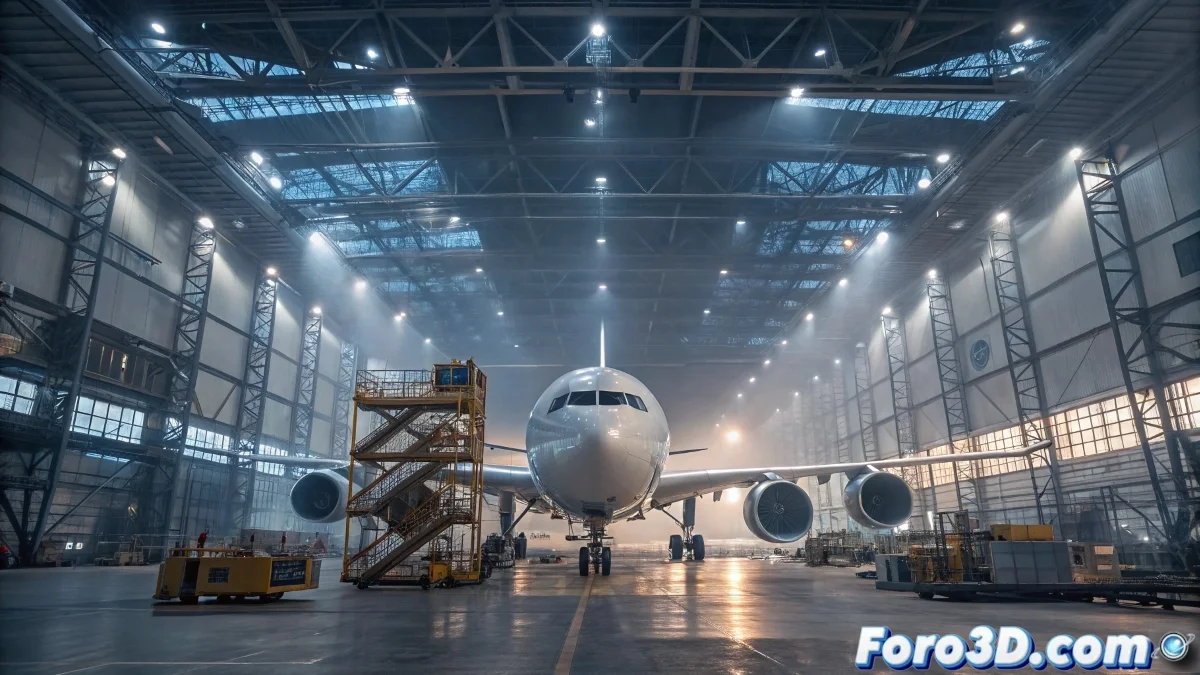
Large-scale 3D printing is redefining what's possible in aerospace composite manufacturing
From a geopolitical perspective, this technological adoption strengthens Russia's strategic autonomy in aerospace production. By developing advanced domestic capabilities to manufacture critical components, Russia reduces its dependence on technology imports and potential international sanctions. This manufacturing sovereignty is particularly crucial for defense programs and space exploration where access to specialized components can determine the success or failure of critical missions.
Specific Applications in the Aerospace Sector
- Structural components for satellites and spacecraft
- Elements for unmanned aircraft and defense systems
- Parts for engines and specialized propulsion systems
- Manufacturing tools and fixtures for conventional production
This transition to large-scale additive manufacturing will likely influence global aerospace production strategies. As more nations recognize the strategic and operational advantages of these technologies, we may witness a quiet race toward dominance in advanced aerospace manufacturing. For engineers and designers, this means new opportunities to innovate in geometries and materials, while for the industry, it represents the next frontier in manufacturing efficiency and design capabilities. 🚀
And so, amid composite filaments and industrial nozzles, the Russian aerospace plant demonstrates that the future of manufacturing is not in workshops full of shavings, but in clean rooms where parts don't get machined, but grow layer by layer toward the sky. ✈️