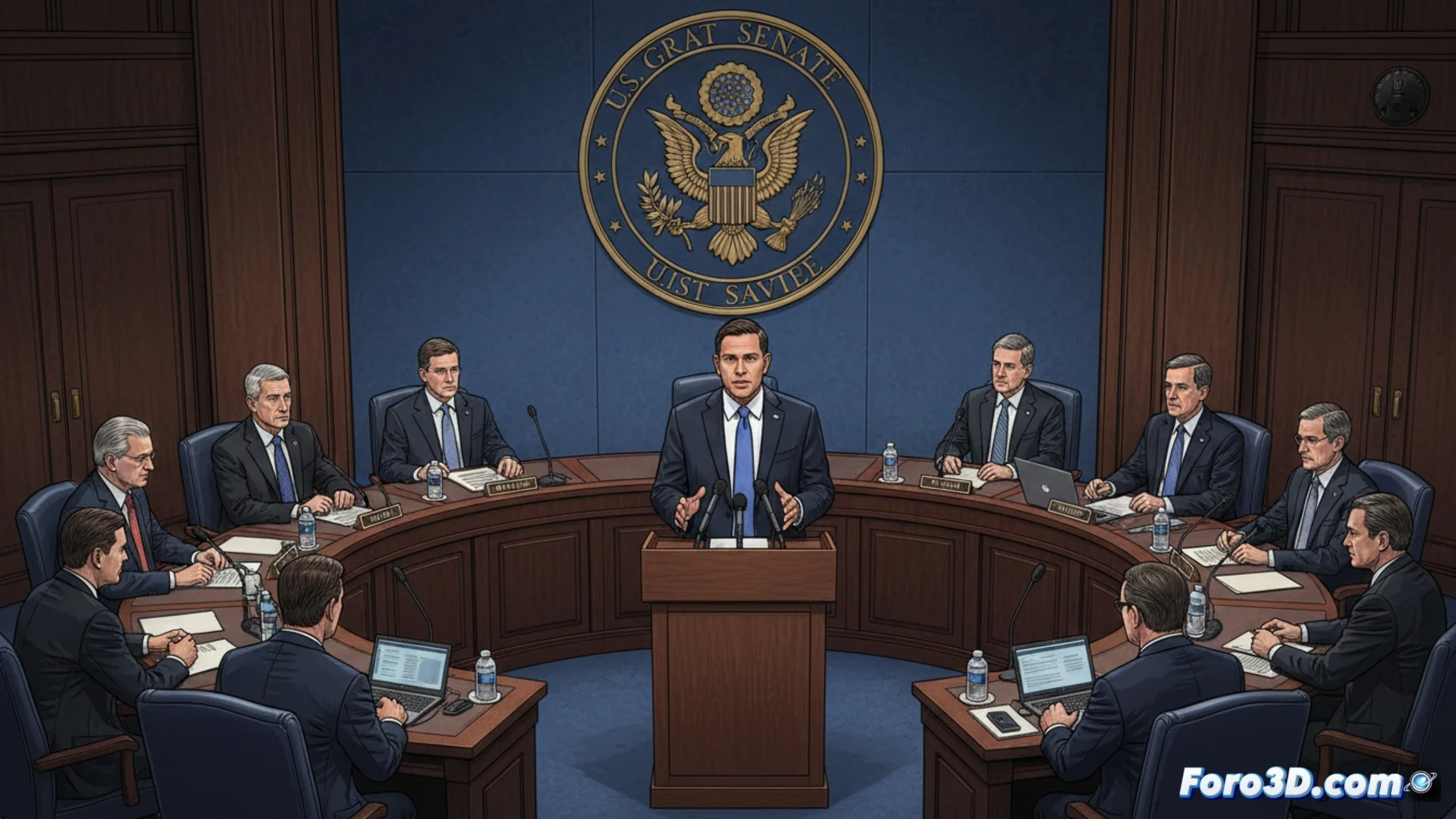
Rubio Outlines U.S. Stance on Venezuela Before the Senate
U.S. Secretary of State Marco Rubio appeared before the Senate Foreign Relations Committee to clarify the U.S. government's position on the situation in Venezuela. This statement comes in the context following the detention of former President Nicolás Maduro by Venezuelan authorities. Rubio firmly stated that his administration does not foresee or anticipate having to deploy further military operations in the South American nation. 🏛️
The Discrepancy Between Oral Remarks and Written Testimony
Although in his verbal intervention the official insisted that Washington seeks to support a stable political change with free elections and to work with the interim government led by Delcy Rodríguez, his written statement introduced a different tone. The official document states that the United States is ready to use force if other avenues fail to achieve its goals in Venezuela. This firmer assertion than his spoken words sparks discussion and questions about the true scope and future direction of U.S. diplomacy in the region.
Key Points of the Controversy:- The apparent contradiction between what was expressed verbally and what was written in the official text fuels the controversy.
- Some analysts perceive the mention of the military option as a warning signal directed at other actors on the Venezuelan scene.
- There is debate over whether this stance represents a pressure strategy or a concrete action plan.
"The United States is prepared to use force if other methods to achieve its objectives in Venezuela fail." - Excerpt from Marco Rubio's written testimony.
The Stated Approach: Supporting a Political Transition
The core of Rubio's presentation was support for a transition process in Venezuela. The representative emphasized that the absolute priority is to achieve stability and organize free elections. To this end, Washington declares that it collaborates with the Venezuelan interim executive. However, the reference to military power as a last resort, although framed as a defensive response, introduces a coercive factor.
Elements of the Presented Strategy:- Prioritize political stability and the holding of free elections.
- Cooperate with the interim government Venezuelan headed by Delcy Rodríguez.
- Maintain a reduced and defined military presence, limited to the Marines protecting the embassy in Caracas.
A Diplomatic Script with Multiple Interpretations
The diplomacy of the Trump Administration appears to be articulated in a dual script that mixes political support with an open door to more forceful measures. This approach keeps numerous international observers in suspense, awaiting the next move. The absolute certainty declared today about not increasing military action could change tomorrow, depending on how events evolve on the ground. Foreign policy thus presents itself as a flexible instrument, where public statements and written reservations play complementary roles in a complex geopolitical chessboard. 🇺🇸🇻🇪