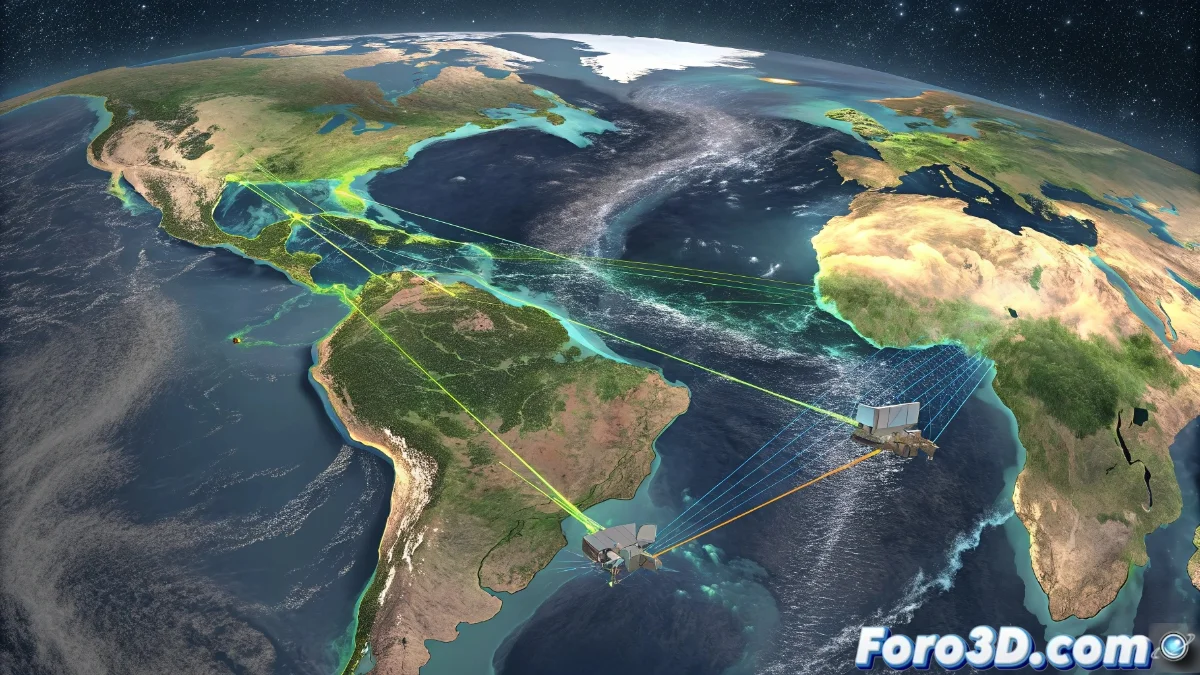
RS-FMD and Remsa: Intelligent Solution for Selecting Foundation Models in Remote Sensing
The current landscape of modern remote sensing faces unprecedented complexity due to the explosion of foundation models trained on diverse image sources, including SAR, multispectral, hyperspectral, and multimodal combinations. This technological richness creates a fragmented ecosystem where each solution presents unique characteristics in resolution, modality, and training objectives, greatly complicating the optimal choice for specific applications 🛰️.
Unification of the Fragmented Ecosystem
To address this issue, the research community has developed RS-FMD, a meticulously structured database that catalogs over 150 foundation models specialized in remote sensing perception. This platform exhaustively documents the technical characteristics of each model, including their training modalities, spatial and spectral ranges, computational architectures, and implemented learning paradigms.
Main Features of RS-FMD:- Complete inventory of over 150 foundation models for remote sensing
- Detailed technical specifications on resolutions, spectral ranges, and temporal coverages
- Documentation of neural architectures and pre-training methodologies implemented
The current fragmentation in foundation models requires systematic solutions for intelligent and efficient selection
Automation through Artificial Intelligence
RS-FMD forms the fundamental base for Remsa, an intelligent agent based on language models that revolutionizes the selection process through natural language queries. The system interprets user needs, automatically identifies missing constraints such as required resolution, sensor type, or operational latency, and generates justified rankings of appropriate models using advanced in-context learning techniques.
Remsa's Operational Capabilities:- Interpretation of natural language queries with identification of implicit constraints
- Generation of reproducible and coherent recommendations tailored to specific tasks
- Democratization of access to advanced technology for users from different specializations
Exhaustive Validation and Practical Advantages
The system's utility is demonstrated through a rigorous validation that includes 75 representative scenarios created by experts, producing 900 combinations of tasks, systems, and models evaluated. In comparative tests, Remsa consistently outperforms multiple reference approaches such as simple agents, dense retrieval-based systems, or classic unstructured RAG strategies.
Highlights of the Validation:- Expert-centered evaluation protocol with 75 representative scenarios
- 900 evaluated combinations of remote sensing tasks, systems, and models
- Exclusive use of public metadata from open models, eliminating risks of sensitive data
Impact on the Research Community
This innovation allows researchers to spend less time on manual model searching and more time on substantive analysis of their applications, representing a luxury that only the current technological abundance can afford. The solution provides scalability and accessibility for the entire remote sensing community, establishing a new standard in the intelligent management of foundation models 🌟.