Main plot
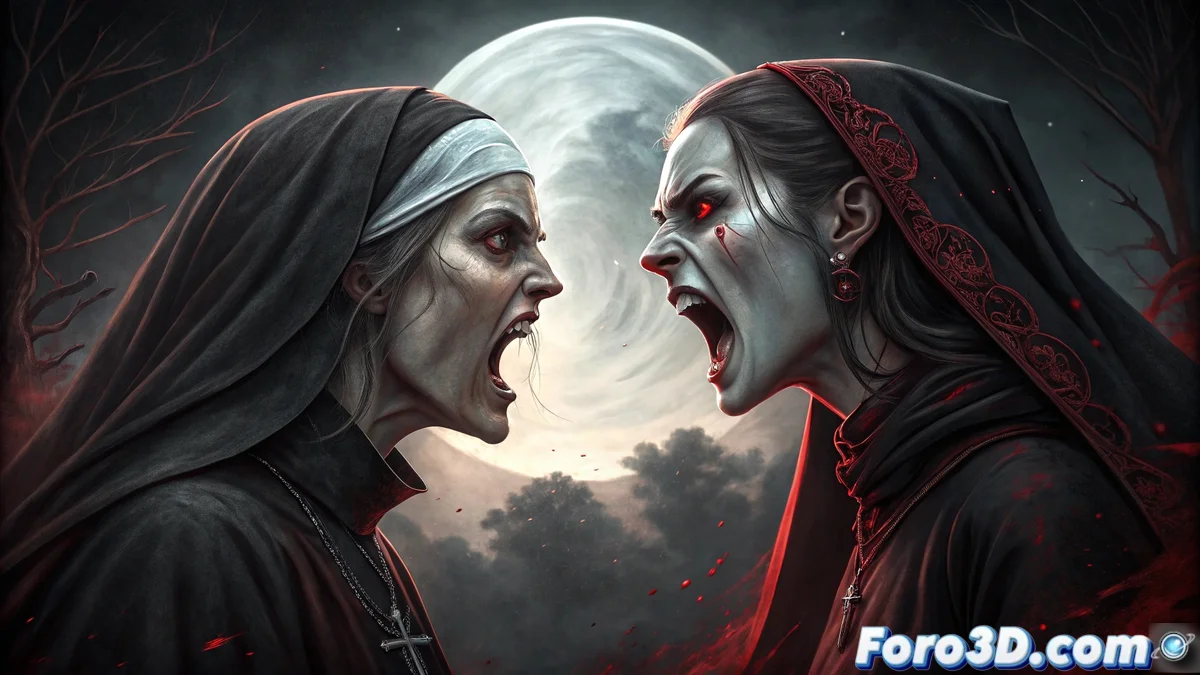
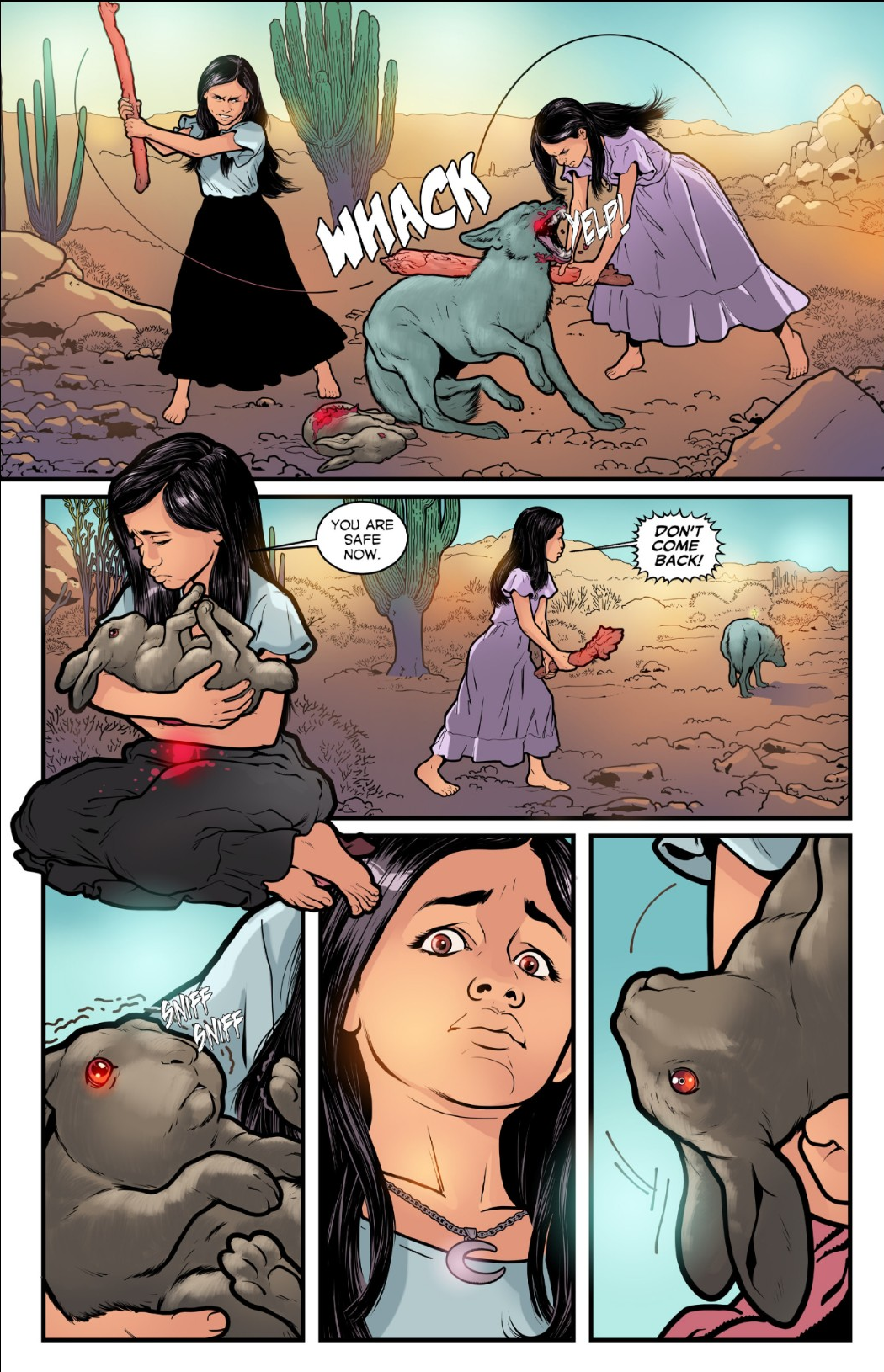
In the heart of an ancestral Latin American tradition beats a family horror story that challenges the boundaries between light and darkness. 📖 Rosario Origins introduces the twin sisters Griselda and Ximenia, heirs to a magical legacy as members of the Sisters of the Crescent Moon, a family of healers whose powers come with an absolute prohibition: never use dark magic. When Ximenia succumbs to the temptation of the forbidden, she unleashes a sinister transformation that threatens not only her own soul, but the stability of her entire community. Griselda, facing the pain of seeing her twin fall into darkness, embarks on a dangerous journey where family faith, ancestral traditions, and sisterly love clash against the corrosive seduction of hidden power.
Connection to cinema
This self-contained comic works simultaneously as an independent work and as the cornerstone of an expanded universe that will soon leap to the big screen. The involvement of David Dastmalchian, an actor recognized for his memorable performances in horror productions and superhero films, adds an extra layer of credibility and anticipation to the project. The strategy of Amp Comics and Chispa Comics seeks to establish a coherent narrative that transcends media, combining rich Latin American folklore with contemporary horror conventions to create a transmedia experience that respects both cultural traditions and modern audience expectations.
Endowed with magical abilities, they are strictly forbidden from using dark magic
Impact and visual style
The unique atmosphere of Rosario Origins is largely due to the powerful synergy between its creative talents. Hugo Petrus brings a detailed and expressive line that perfectly captures the emotional tension between the sisters, while Guillermo Villarreal's color palette establishes a visual contrast between the warmth of family tradition and the cold tones of magical corruption. This artistic collaboration results in pages that not only tell a story, but immerse the reader in a world where every shadow hides ancestral secrets and every glimmer of light represents fragile hope against the darkness.
The paradox of magical prohibition
The central irony that drives the narrative lies in the very nature of family tradition. The Sisters of the Crescent Moon possess intimate and detailed knowledge of dark magic, precisely for that reason they prohibit it so strictly. This prohibition, intended to protect new generations, ends up functioning as a forbidden fruit that exerts an irresistible attraction on Ximenia. The very wisdom that should unite the family becomes the force that divides it, demonstrating how the most dangerous knowledge is that which is hidden rather than consciously understood and mastered.
The Dastmalchian phenomenon: bridge between genres
The choice of David Dastmalchian for the film adaptation represents a notably astute casting decision. The actor has demonstrated unique versatility in fluidly transitioning between superhero blockbusters and psychological horror productions, possessing the ability to convey human vulnerability and supernatural threat equally. His involvement suggests that the producers seek to approach Latin American folklore with the dramatic seriousness it deserves, avoiding caricatures and exploring the psychological complexity of characters trapped between tradition and temptation.
Elements of Latin American folklore
The narrative is rooted in authentic cultural traditions that enrich the story's universe. Each folkloric element contributes to the verisimilitude of the created world.
- Traditional curanderismo: Respectful representation of ancestral Latin American healing practices
- Lunar magic: Connection with natural cycles and celestial forces in magical tradition
- Light-darkness duality: Exploration of the complementarity concept in pre-Hispanic cosmovisions
- Family as institution: Emphasis on family dynamics as the axis of conflict and redemption
Analysis of the sisters' conflict
The relationship between Griselda and Ximenia transcends the simple confrontation between good and evil to explore deeper psychological nuances. Their dynamic represents universal archetypes with specific cultural roots.
- Griselda as tradition: Embodies the preservation of family legacy and community responsibility
- Ximenia as rebellion: Represents intellectual curiosity and challenge to arbitrary prohibitions
- Twinship as mirror: The symbiotic relationship that magnifies both connection and conflict
- Magic as metaphor: Ancestral power as an analogy for conflicting cultural inheritances
Transmedia potential and future expansion
The conceptual design of Rosario Origins suggests careful planning for future developments beyond the comic medium. The established foundations allow for multiple directions of growth.
- Establishment of coherent mythology that can be expanded through prequels and sequels
- Creation of secondary characters with potential to star in independent spin-offs
- Development of distinctive visual elements that facilitate transition to cinematic language
- Integration of authentic cultural elements that offer freshness within the horror genre
As the Sisters of the Crescent Moon struggle to maintain balance between tradition and temptation, the creators demonstrate that the most effective horror arises not from external monsters, but from the demons we inherit with our surname. 🔮 Because, let's be honest, what would be more terrifying than discovering that the most dangerous evil shares your own blood?